Loading page, please wait…
What is the National Green Tribunal? - UPSC Environment And Ecology
What is What is the National Green Tribunal? in UPSC Environment And Ecology?
What is the National Green Tribunal? is a key topic under Environment And Ecology for UPSC Civil Services Examination. Key points include: NGT established in 2010 under the National Green Tribunal Act, 2010.. Specialized body for swift and efficient resolution of environmental cases.. Headed by a Chairperson (appointed by Central Govt. in consultation with CJI) with judicial and expert members.. Understanding this topic is essential for both UPSC Prelims and Mains preparation.
Why is What is the National Green Tribunal? important for UPSC exam?
What is the National Green Tribunal? is a Medium-level topic in UPSC Environment And Ecology. It is tested in both Prelims (factual MCQs) and Mains (analytical answer writing). Previous year UPSC questions have frequently covered aspects of What is the National Green Tribunal?, making it essential for comprehensive IAS preparation.
How to prepare What is the National Green Tribunal? for UPSC?
To prepare What is the National Green Tribunal? for UPSC: (1) Study the comprehensive notes covering all key concepts on Vaidra. (2) Practice previous year questions on this topic. (3) Connect it with current affairs using daily updates. (4) Revise using key takeaways and mind maps available for Environment And Ecology. (5) Write practice answers linking What is the National Green Tribunal? to related GS Paper topics.
Key takeaways of What is the National Green Tribunal? for UPSC
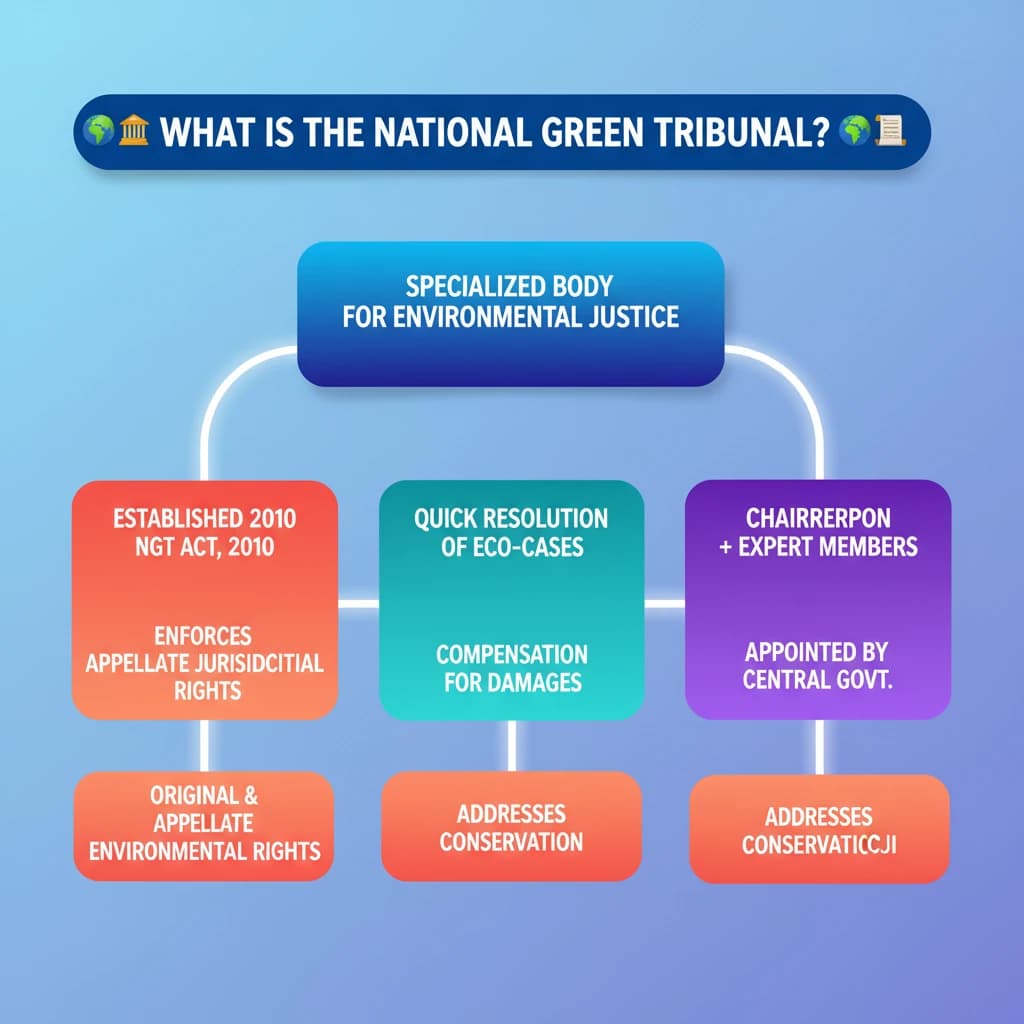
- NGT established in 2010 under the National Green Tribunal Act, 2010.
- Specialized body for swift and efficient resolution of environmental cases.
- Headed by a Chairperson (appointed by Central Govt. in consultation with CJI) with judicial and expert members.
- Possesses both original and appellate jurisdiction for environmental matters.
- Enforces environmental rights, grants compensation for damages, and addresses conservation.
- Crucial for environmental justice and sustainable development in India.
What is the National Green Tribunal?
Medium⏱️ 7 min read
environment and ecology
📖 Introduction
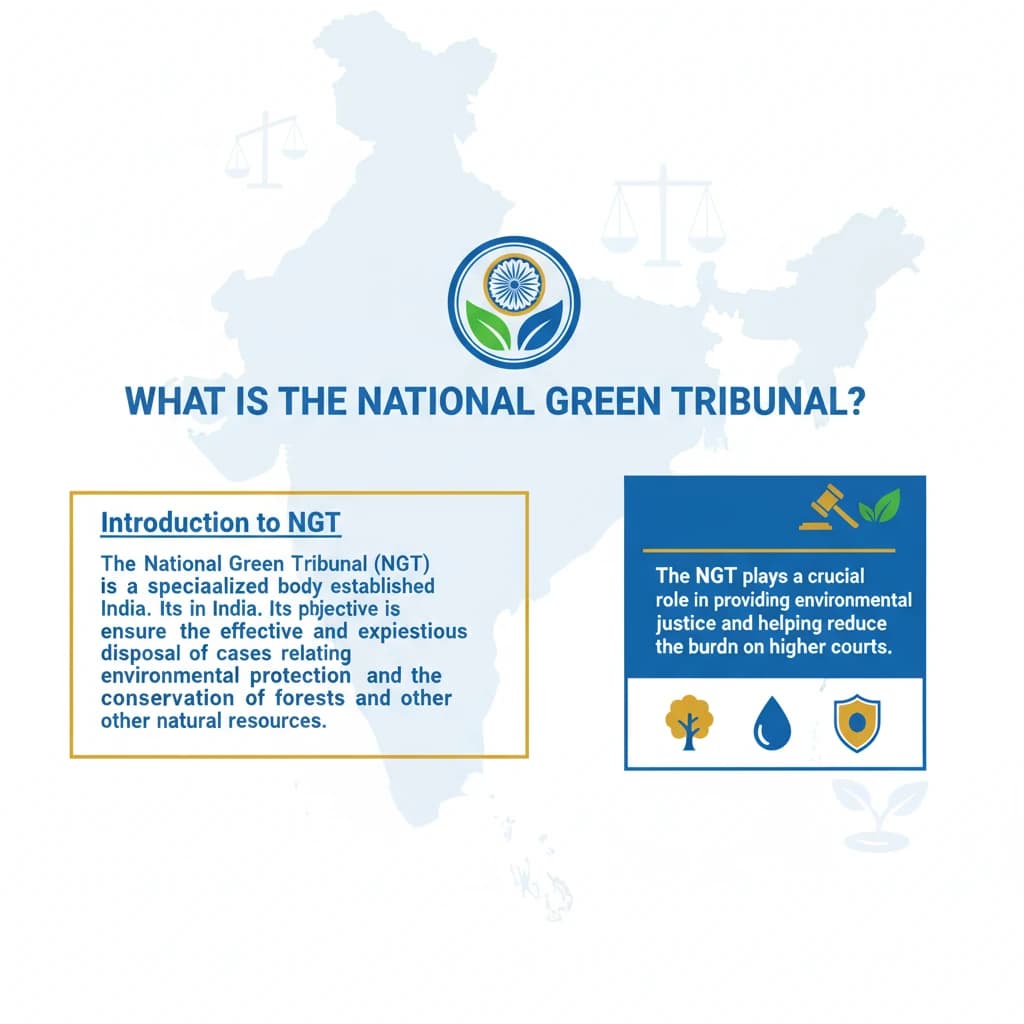
Introduction to NGT
The National Green Tribunal (NGT) is a specialized judicial body established in India. Its primary objective is to ensure the effective and expeditious disposal of cases relating to environmental protection and the conservation of forests and other natural resources.
The NGT plays a crucial role in providing environmental justice and helping reduce the burden on higher courts regarding environmental disputes.
Establishment and Mandate
The NGT was formally established in 2010. This was done under the provisions of the National Green Tribunal Act, 2010, an Act of the Parliament of India.
Establishment: 2010
Enabling Legislation: National Green Tribunal Act, 2010
Its core mandate is to facilitate the swift and efficient resolution of cases. This includes matters pertaining to environmental protection, the conservation of forests, and the preservation of India's vital natural resources.
Composition of the Tribunal
The Tribunal is headed by a Chairperson. This individual is appointed by the Central Government in consultation with the Chief Justice of India (CJI), ensuring judicial independence and expertise.
Head: Chairperson
Appointment: Central Government in consultation with CJI
The Chairperson presides over the Principal Bench of the NGT. In addition to the Chairperson, the Tribunal comprises a specified number of judicial members and expert members.
- The Act mandates a minimum of 10 judicial members and 10 expert members.
- The maximum strength can go up to 20 judicial members and 20 expert members.
The presence of expert members is a unique feature, allowing for technically sound decisions on complex environmental issues.
Scope of Jurisdiction
The NGT's jurisdiction is broad, encompassing various aspects of environmental governance. It is empowered to enforce environmental legal rights of individuals and communities.
Furthermore, the Tribunal can grant relief and compensation for damages caused to individuals and property due to environmental harm. This includes restitution for victims of pollution and environmental degradation.
Key Areas:
1. Enforcement of environmental rights
2. Granting relief and compensation for damages
3. Addressing environmental protection and conservation matters
Types of Jurisdiction
The NGT exercises both original and appellate jurisdiction, making it a powerful body for environmental adjudication.
- Original Jurisdiction: This allows individuals or organizations to directly file applications before the NGT for environmental disputes.
- Appellate Jurisdiction: The NGT also has the authority to hear appeals against certain orders or decisions made by other environmental authorities or courts, functioning as an appellate tribunal.
Understanding the dual nature of original and appellate jurisdiction is crucial for UPSC. It highlights the NGT's comprehensive role in environmental justice.
💡 Key Takeaways
- •NGT established in 2010 under the National Green Tribunal Act, 2010.
- •Specialized body for swift and efficient resolution of environmental cases.
- •Headed by a Chairperson (appointed by Central Govt. in consultation with CJI) with judicial and expert members.
- •Possesses both original and appellate jurisdiction for environmental matters.
- •Enforces environmental rights, grants compensation for damages, and addresses conservation.
- •Crucial for environmental justice and sustainable development in India.
🧠 Memory Techniques

95% Verified Content
📚 Reference Sources
•Official website of the National Green Tribunal (www.greentribunal.gov.in)
•Ministry of Environment, Forest and Climate Change (MoEFCC) publications
•Reports on environmental law and governance in India