Loading page, please wait…
BioE3 Policy and Biotechnology in India - UPSC Science And Technology
What is BioE3 Policy and Biotechnology in India in UPSC Science And Technology?
BioE3 Policy and Biotechnology in India is a key topic under Science And Technology for UPSC Civil Services Examination. Key points include: BioE3 Policy aims to boost India's bioeconomy through high-performance biomanufacturing for Economy, Environment, and Employment.. It aligns with national goals like Net Zero carbon economy and a circular bioeconomy.. Key objectives include R&D innovation, establishing Bio-hubs, expanding skilled workforce, and ethical biosafety.. Understanding this topic is essential for both UPSC Prelims and Mains preparation.
Why is BioE3 Policy and Biotechnology in India important for UPSC exam?
BioE3 Policy and Biotechnology in India is a Medium-level topic in UPSC Science And Technology. It is tested in both Prelims (factual MCQs) and Mains (analytical answer writing). Previous year UPSC questions have frequently covered aspects of BioE3 Policy and Biotechnology in India, making it essential for comprehensive IAS preparation.
How to prepare BioE3 Policy and Biotechnology in India for UPSC?
To prepare BioE3 Policy and Biotechnology in India for UPSC: (1) Study the comprehensive notes covering all key concepts on Vaidra. (2) Practice previous year questions on this topic. (3) Connect it with current affairs using daily updates. (4) Revise using key takeaways and mind maps available for Science And Technology. (5) Write practice answers linking BioE3 Policy and Biotechnology in India to related GS Paper topics.
Key takeaways of BioE3 Policy and Biotechnology in India for UPSC
- BioE3 Policy aims to boost India's bioeconomy through high-performance biomanufacturing for Economy, Environment, and Employment.
- It aligns with national goals like Net Zero carbon economy and a circular bioeconomy.
- Key objectives include R&D innovation, establishing Bio-hubs, expanding skilled workforce, and ethical biosafety.
- Core themes cover bio-based chemicals, functional foods, precision biotherapeutics, climate-resilient agriculture, carbon capture, and marine/space research.
- Vigyan Dhara Scheme, with Rs 10,579 crore outlay, merges three S&T schemes to support holistic scientific development.
- The policy focuses on generating employment in Tier-II/III cities by utilizing local biomass.
BioE3 Policy and Biotechnology in India
Medium⏱️ 10 min read
science and technology
📖 Introduction
Introduction to BioE3 Policy and Biotechnology in India
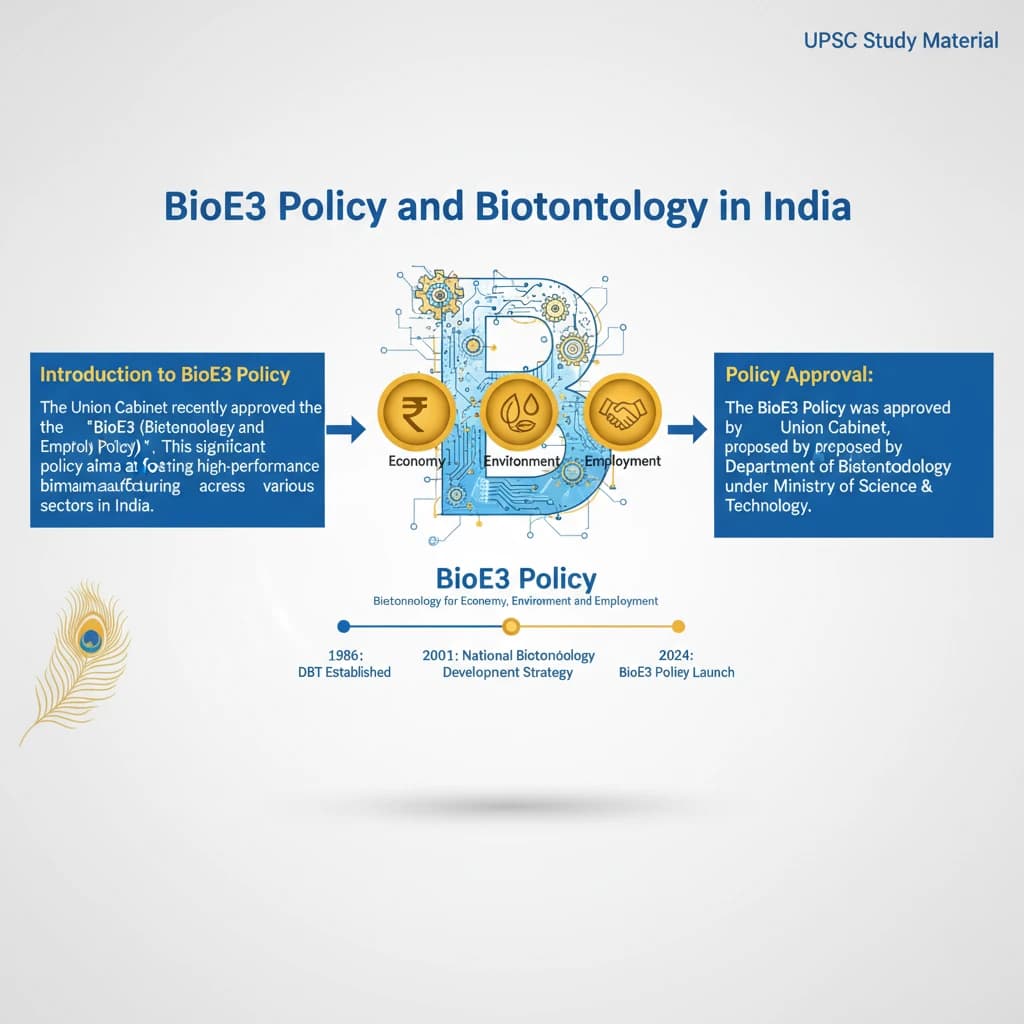
The Union Cabinet recently approved the 'BioE3 (Biotechnology for Economy, Environment and Employment) Policy'. This significant policy aims at fostering high-performance biomanufacturing across various sectors in India.
Policy Approval: The BioE3 Policy was approved by the Union Cabinet, proposed by the Department of Biotechnology.
Simultaneous Merger: Three existing schemes of the Science & Technology Ministry were merged into a single scheme named Vigyan Dhara, with an outlay of Rs 10,579 crore until 2025-26.
Understanding the BioE3 Policy
The BioE3 Policy is designed to propel India's capabilities in biomanufacturing. This involves the sustainable production of bio-based products across diverse industrial applications.
The policy's vision extends beyond economic growth, aiming for a holistic impact on the nation's future.
Alignment with National Goals
The BioE3 Policy is strategically aligned with several other critical national objectives. These include ambitious targets for environmental sustainability and economic resilience.
Key National Alignments:
- Achieving a ‘Net Zero’ carbon economy.
- Promoting sustainable growth through a circular bioeconomy.
- Contributing to India's overall developmental agenda.
Key Objectives of BioE3
The policy outlines a multi-faceted approach to strengthen India's biotechnology sector. It emphasizes both foundational research and practical implementation.
- Innovation and Entrepreneurship: Fostering cutting-edge research and development (R&D) and supporting new ventures.
- Infrastructure Development: Establishing dedicated Biomanufacturing & Bio-hubs and advanced Biofoundries.
- Workforce Expansion: Expanding India’s highly skilled biotechnology workforce to meet industry demands.
- Environmental Harmony: Aligning with ‘Lifestyle for Environment’ (LiFE) programs to promote sustainable living.
- Regenerative Models: Targeting the development of regenerative bioeconomy models for long-term sustainability.
Employment Generation and Regional Growth
A significant objective of the BioE3 Policy is to create substantial employment opportunities. This focus is particularly directed towards tier-II and tier-III cities.
The establishment of biomanufacturing hubs in these regions will utilize local biomass, thereby fostering equitable development and regional economic growth.
Ethical and Regulatory Framework
The policy places strong emphasis on responsible biotechnology development. It ensures that advancements are made within a robust ethical and regulatory framework.
This includes adherence to ethical biosafety standards and achieving global regulatory alignment to enhance India’s international competitiveness.
Core Themes of the BioE3 Policy
The policy focuses on six key areas that are crucial for advancing India's biomanufacturing capabilities and addressing contemporary challenges.
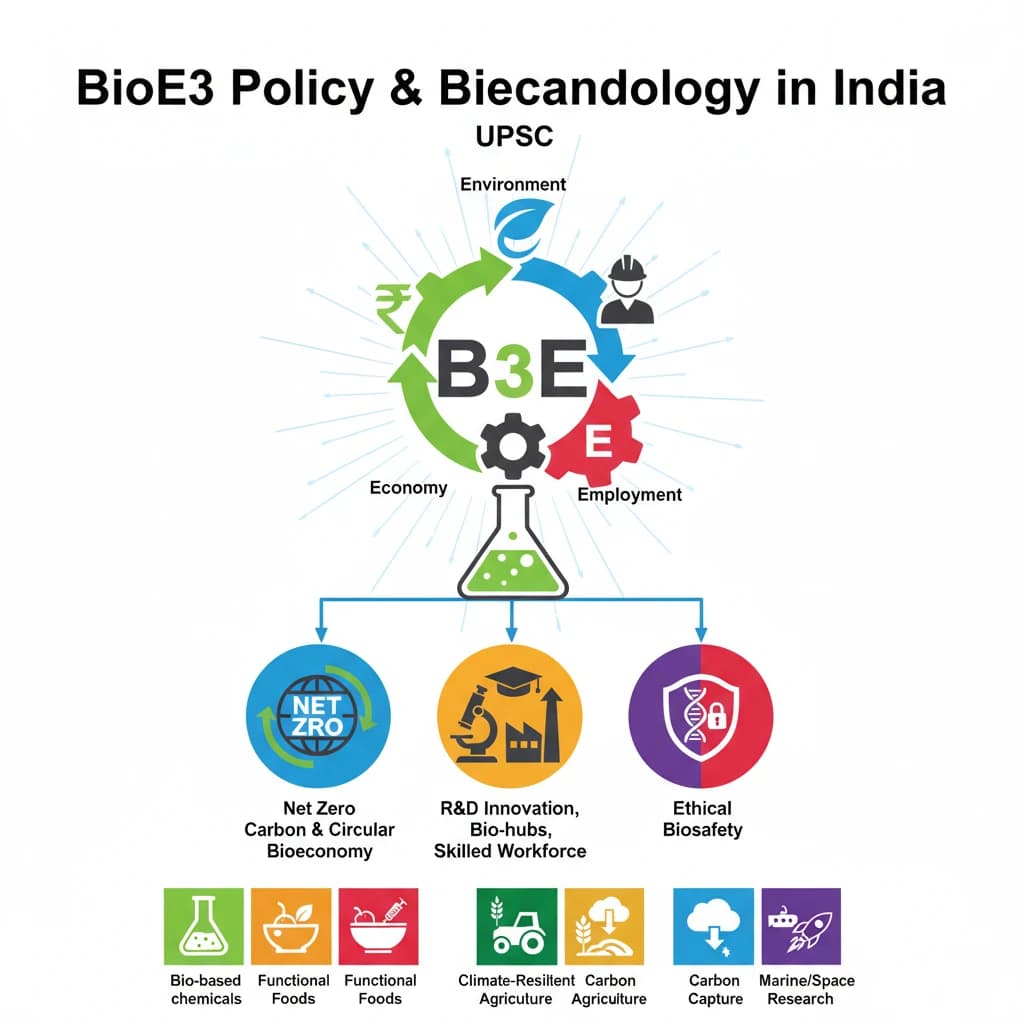
- Bio-Based Chemicals and Enzymes: Developing advanced alternatives to reduce environmental impact.
- Functional Foods and Smart Proteins: Innovating to enhance nutrition and ensure food security.
- Precision Biotherapeutics: Advancing personalized medicine and improving healthcare outcomes.
- Climate Resilient Agriculture: Promoting practices that can withstand climate change for food security.
- Carbon Capture and Utilization: Fostering technologies for efficient carbon management.
- Futuristic Marine and Space Research: Exploring new frontiers in biomanufacturing through novel research.
The Vigyan Dhara Scheme
The Vigyan Dhara Scheme is a consolidated effort to streamline and enhance science and technology initiatives in India.
Background and Purpose
The Department of Science & Technology (DST) serves as the central nodal department. Its role is to organize, coordinate, and promote all science, technology, and innovation activities nationwide.
Scheme Merger and Financial Outlay
Three previously separate central sector umbrella schemes implemented by the DST have been unified. These schemes focused on S&T Institutional and Human Capacity Building, R&D and Innovation, and Technology Development and Deployment.
Vigyan Dhara Merger: The three schemes were merged into the single, unified scheme called ‘Vigyan Dhara’.
Financial Commitment: The scheme has a substantial financial outlay of Rs 10,579 crore, allocated until the fiscal year 2025-26.
💡 Key Takeaways
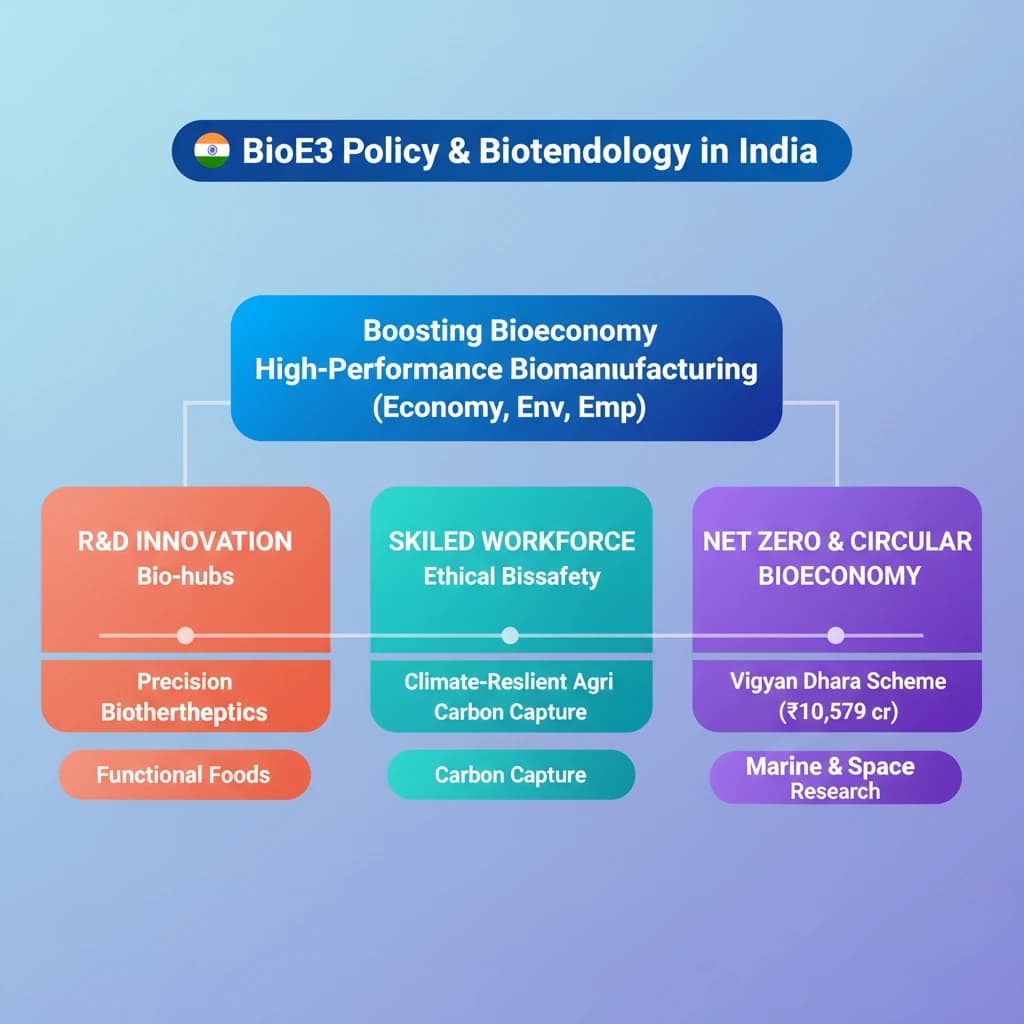
- •BioE3 Policy aims to boost India's bioeconomy through high-performance biomanufacturing for Economy, Environment, and Employment.
- •It aligns with national goals like Net Zero carbon economy and a circular bioeconomy.
- •Key objectives include R&D innovation, establishing Bio-hubs, expanding skilled workforce, and ethical biosafety.
- •Core themes cover bio-based chemicals, functional foods, precision biotherapeutics, climate-resilient agriculture, carbon capture, and marine/space research.
- •Vigyan Dhara Scheme, with Rs 10,579 crore outlay, merges three S&T schemes to support holistic scientific development.
- •The policy focuses on generating employment in Tier-II/III cities by utilizing local biomass.
🧠 Memory Techniques
95% Verified Content
📚 Reference Sources
•Press Information Bureau (PIB) releases on Union Cabinet decisions (for policy approval and Vigyan Dhara merger)
•Department of Biotechnology (DBT), Ministry of Science & Technology, Government of India official website
•Reports and documents related to India's National Biotechnology Development Strategy