Overview
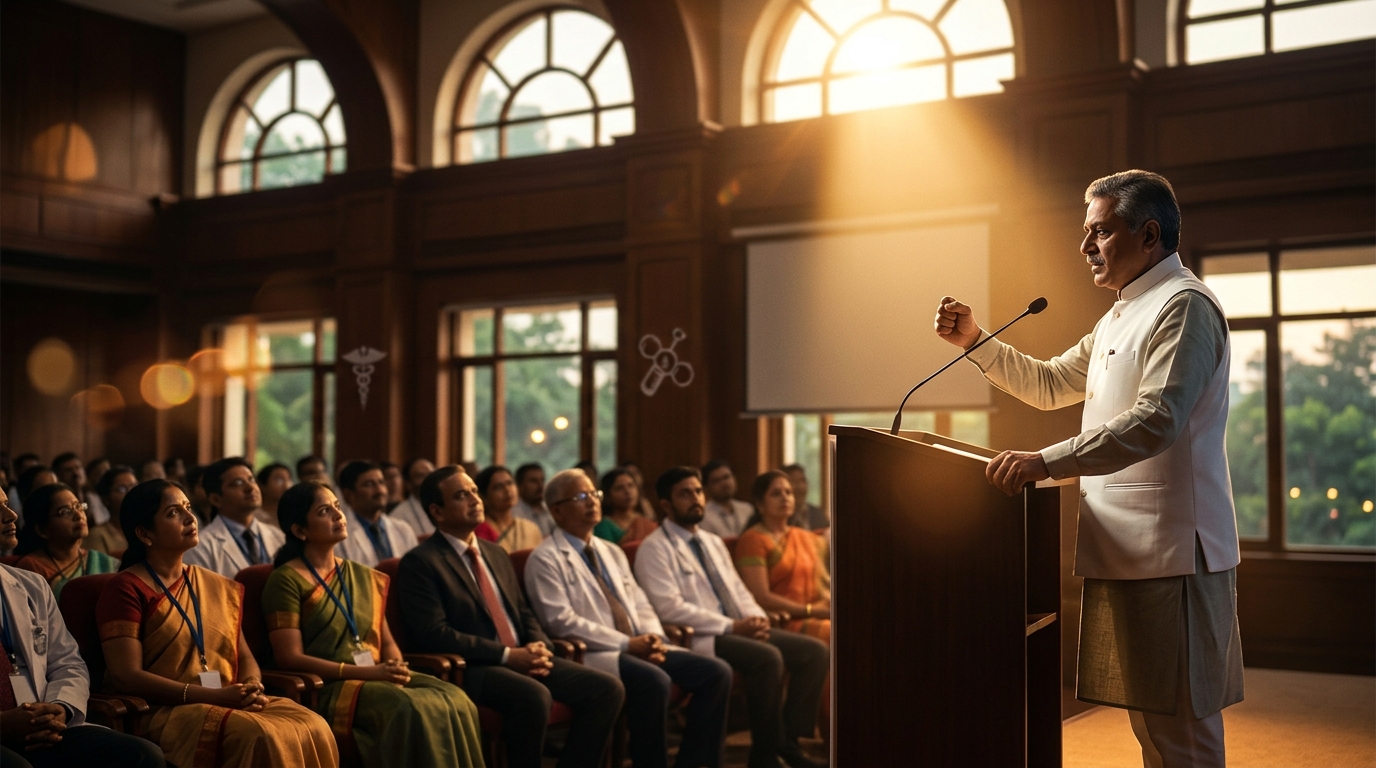
Union Minister of State Dr. Jitendra Singh addressed the Bengaluru Diabetes Conference on October 24, 2025, emphasizing the need to move away from over-dependence on government funding in the healthcare sector. He advocated for increased private-sector participation to foster synergized healthcare, philanthropy, and collaboration to achieve global benchmarks in healthcare research. The conference, named "TREAT-DM 2025 – Translational Research, Adiposopathy, Technology for Diabetes and Metabolic Diseases," was inaugurated through a virtual address.
Key Points
- Integration: Dr. Singh stressed the importance of integrating academia, research, and industry.
- Public-Private Partnership: He noted the blurring lines between public and private sectors due to reforms initiated by Prime Minister Modi, opening sectors like space, nuclear, and biotechnology for wider participation.
- Economic Growth: India’s space economy has grown significantly, projected to reach 40–45 billion USD within the next decade.
Key Developments
Breakthroughs in Healthcare
- Gene Therapy: India achieved its first successful indigenous gene-therapy trial for Hemophilia, conducted under the Department of Biotechnology in collaboration with Christian Medical College, Vellore, with a 60–70 percent correction rate.
- Antibiotic Development: India developed its first indigenously discovered antibiotic, Nafithromycin, effective against resistant respiratory infections, particularly in diabetic and immunocompromised patients.
- Vaccine Research: India has supplied indigenously developed DNA vaccines to nearly 200 countries, reflecting its commitment to self-reliance and global welfare.
Anusandhan National Research Foundation (ANRF)
The ANRF is structured to ensure sustainable funding with ₹50,000 crore earmarked for five years, of which ₹36,000 crore will come from non-governmental sources. This aims to build a self-sustainable research model.
Bio-manufacturing Sector
India ranks third in the Indo-Pacific region and twelfth globally in the biomanufacturing sector. Medical devices developed at institutes like Sree Chitra Tirunal Institute for Medical Sciences & Technology, Thiruvananthapuram, are being exported.
International Space Station Experiments
Life-science experiments were conducted aboard the International Space Station by astronaut Subhanshu Sharma using kits developed by the Department of Biotechnology, including studies on muscle regeneration.
Exam Relevance
GS Paper 3: Science and Technology
This article is relevant to GS Paper 3, specifically focusing on advancements in science and technology, indigenization of technology, and the role of government policies in promoting research and development.
GS Paper 2: Health and Government Policies
The content also aligns with GS Paper 2, addressing issues related to health, government policies and interventions for development in various sectors, and the importance of public-private partnerships in healthcare.
Important Facts
- Conference: TREAT-DM 2025 – Translational Research, Adiposopathy, Technology for Diabetes and Metabolic Diseases
- Gene Therapy Success: 60-70% correction rate in Hemophilia trials
- ANRF Funding: ₹50,000 crore earmarked, ₹36,000 crore from non-governmental sources
- India's Rank: 3rd in Indo-Pacific, 12th globally in biomanufacturing