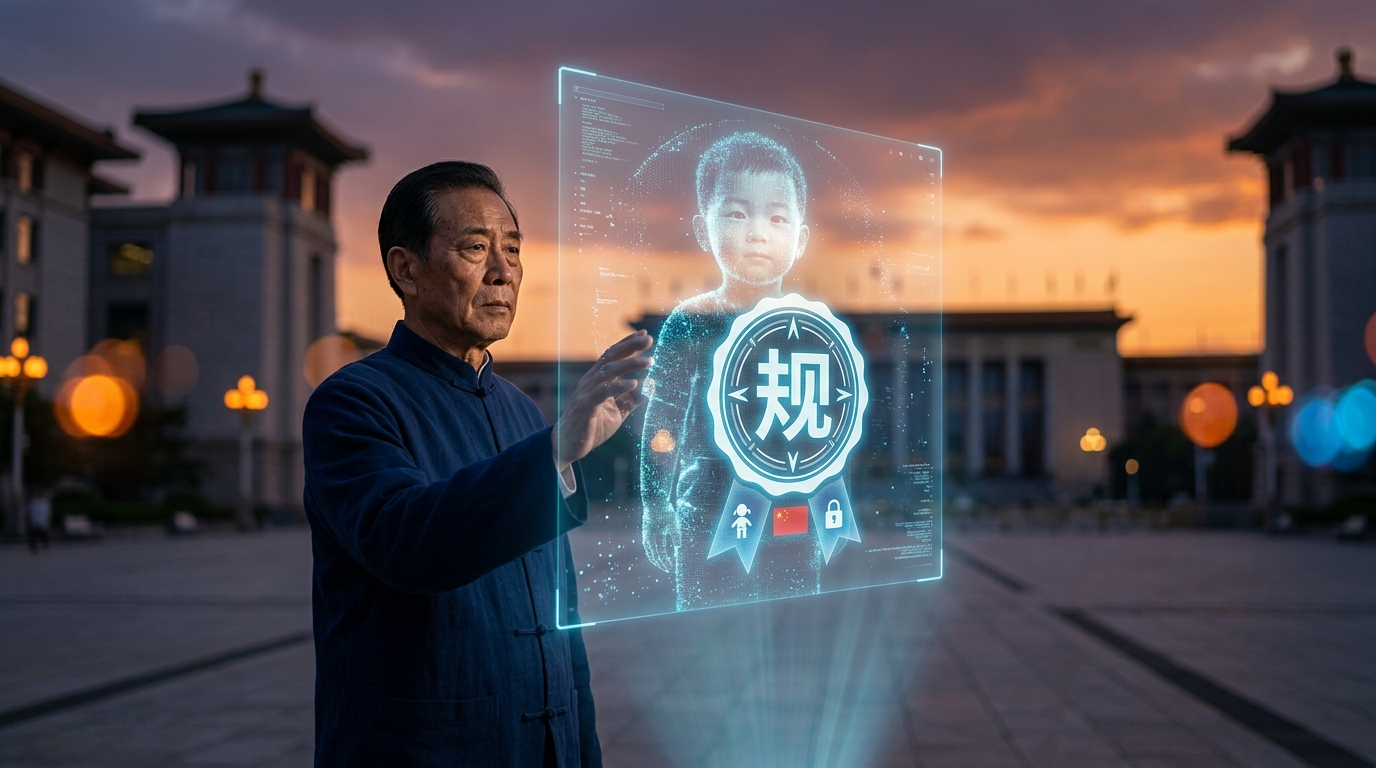
China's Cyberspace Administration Drafts Regulations for Digital Humans — Labelling, Child Protection, and National Security
On 4 April 2026, China's Cyberspace Administration released draft regulations for digital humans, mandating clear labelling, banning virtual intimate services for minors, and prohibiting content that threatens national security. The rules, part of the 2026 five‑year AI push, illustrate the state's effort to steer emerg…
Regulation of Digital Humans in China The Cyberspace Administration of China (CAC) released a draft set of rules on 4 April 2026 to govern the rapidly expanding sector of digital humans . The draft, open for public comment until 6 May 2026, seeks to impose clear labelling, protect minors, and safeguard national security as China pushes the integration of AI across its economy. Key Developments All content featuring digital humans must carry a prominent “digital human” label . Providing “virtual intimate relationships” to users under 18 is prohibited. Creating digital humans using another person’s personal data without consent is banned. Digital humans cannot be used to circumvent identity‑verification mechanisms. Content that threatens national security , incites subversion, promotes secession, or undermines unity is strictly forbidden. Providers must block sexually suggestive, horror‑type, cruel, or discriminatory content. Platforms are required to intervene and offer professional help when users show suicidal or self‑harm tendencies. Important Provisions The draft fills a regulatory vacuum in the digital‑human ecosystem, establishing “red lines” for healthy industry growth. It aligns with the five‑year policy blueprint released in March 2026, which emphasizes aggressive AI adoption. Regulation is framed as a strategic scientific issue, linking cyberspace security, public interest, and high‑quality digital‑economy development. UPSC Relevance Understanding these regulations is vital for GS 2 (Polity) and GS 3 (Technology & Economy). The draft illustrates how a major power uses legal instruments to steer emerging technologies, protect minors, and enforce ideological conformity. It also highlights the intersection of technology governance with national security—a recurring theme in contemporary international relations and domestic policy analysis. Way Forward Stakeholders, including tech firms and civil society, should engage in the public‑comment process before 6 May 2026 to shape practical implementation. For aspirants, tracking the evolution of China’s AI policy offers insights into global regulatory trends, the balance between innovation and control, and the broader implications for digital sovereignty.
Quick Reference
Key Insight
China mandates labeling and child‑safety rules for AI‑generated digital humans, citing national security.
Key Facts
- Draft regulations on digital humans were released by the Cyberspace Administration of China (CAC) on 4 April 2026, with public comments invited until 6 May 2026.
- Every piece of content featuring a digital human must carry a prominent "digital human" label.
- Providing virtual intimate relationships to users under 18 years of age is expressly prohibited.
- Creating digital humans using an individual's personal data without their consent is banned.
- Digital humans cannot be employed to bypass identity‑verification mechanisms or to disseminate content that threatens national security, incites subversion, promotes secession or undermines national unity.
- Platforms must block sexually suggestive, horror‑type, cruel or discriminatory content and must intervene with professional help when users exhibit suicidal or self‑harm tendencies.
- The draft aligns with China’s 2026 five‑year AI policy blueprint that emphasizes aggressive AI adoption and high‑quality digital‑economy development.
Background
The regulations fill a legal vacuum in China's rapidly growing digital‑human ecosystem, reflecting the state's broader strategy of steering emerging technologies through policy instruments. They intersect with UPSC‑relevant themes of cyberspace governance, child protection, national security, and the balance between innovation and ideological control.
UPSC Syllabus
- GS2 — Government policies and interventions for development
- Essay — Science, Technology and Society
- Essay — Media, Communication and Information
- Prelims_GS — National Current Affairs
- Essay — Democracy, Governance and Public Administration
- Essay — Economy, Development and Inequality
- Prelims_GS — Science and Technology Applications
- GS3 — IT, Space, Computers, Robotics, Nano-technology, Bio-technology and IPR
- GS2 — Welfare schemes for vulnerable sections
Mains Angle
In a Mains answer, candidates can analyse how China uses statutory measures to regulate AI‑generated avatars, linking GS 2 (Polity) and GS 3 (Technology & Economy) by discussing implications for digital sovereignty, security and societal welfare.