Loading page, please wait…
HomeCurrent AffairsEditorialsGovt SchemesLearning ResourcesUPSC SyllabusPricingAboutBest UPSC AIUPSC AI ToolAI for UPSCUPSC ChatGPT

© 2026 Vaidra. All rights reserved.

PrivacyTerms
Vaidra Logo
Vaidra

Top 4 items + smart groups

UPSC GPT
New
Current Affairs
Daily Solutions
Daily Puzzle
Mains Evaluator

Version 2.0.0 • Built with ❤️ for UPSC aspirants

EU‑Hungary‑Slovakia Standoff Over Russian Oil via Druzhba Pipeline – Policy & Geopolitics — UPSC Current Affairs | February 26, 2026
EU‑Hungary‑Slovakia Standoff Over Russian Oil via Druzhba Pipeline – Policy & Geopolitics
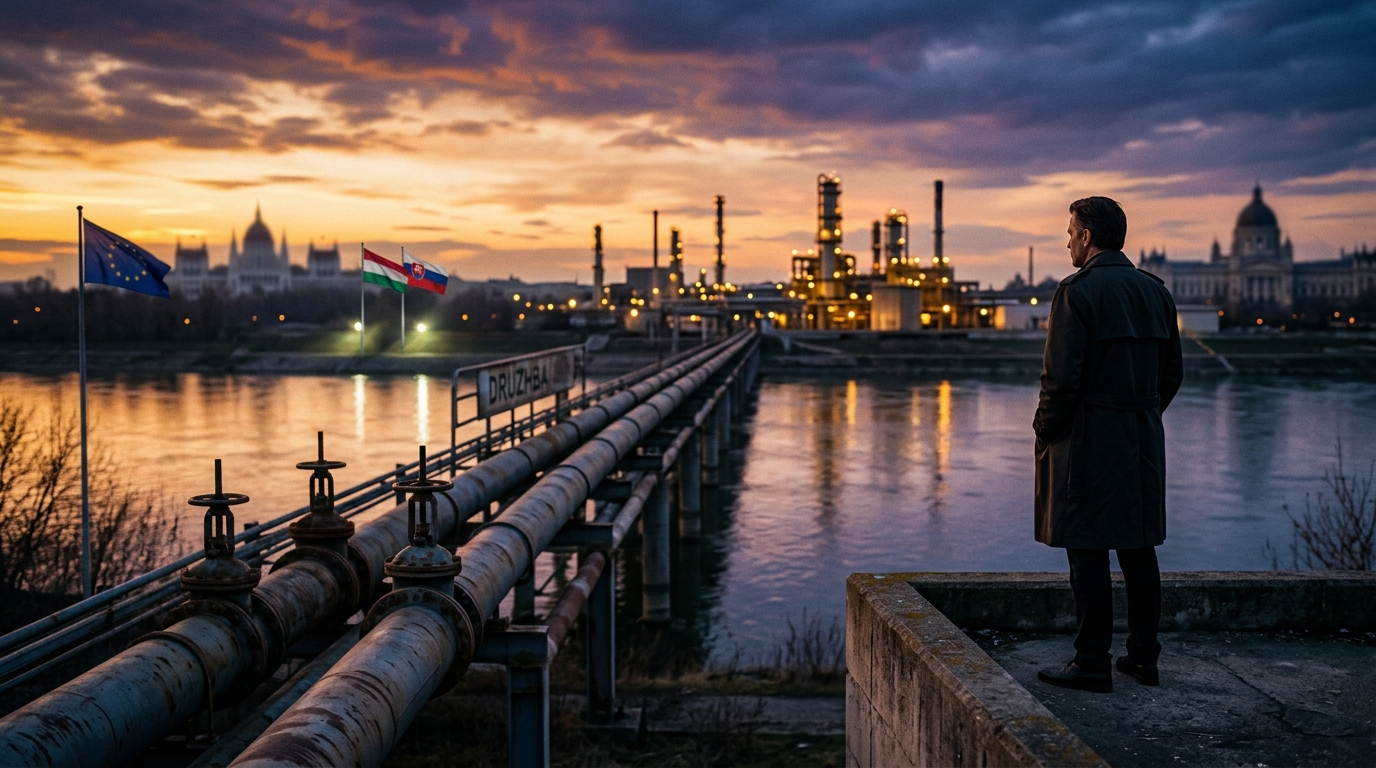
Hungary and Slovakia, still importing 87% of their crude from Russia via the Druzhba pipeline, are clashing with the EU’s REPowerEU agenda, prompting threats over loans and electricity supplies. The standoff highlights the political choices behind energy dependence and underscores the challenges for India’s UPSC aspirants in understanding EU energy security, sanctions, and geopolitical alignments.
Background Ukraine faces renewed pressure from two EU neighbours – Hungary and Slovakia – over the Druzhba pipeline . Hungary threatens to block a €90‑billion EU loan to Kyiv, while Slovakia warns of halting emergency electricity supplies, accusing Kyiv of politicising the pipeline’s restart after a Russian drone strike. Key Developments Hungary and Slovakia continue to import > 87% of their crude from Russia in 2024, despite EU‑wide efforts to wean off Russian fuels. The EU granted temporary derogations to Hungary, Slovakia, Czechia and Bulgaria, which have now become de‑facto permanent for the first two. Alternative supply routes exist: the Adria pipeline , the Odesa‑Brody line, and the ability of MOL to run on non‑Russian oil. Reports by the CSD argue that price advantages from Russian oil have not translated into cheaper fuel for consumers. Important Facts • The 2022 Versailles Declaration and the subsequent REPowerEU set the roadmap for energy independence. • By Q3 2025, Russia’s share in EU oil imports fell to ~1 % and gas imports to 15 %, with Norway and the United States becoming major suppliers. However, Russia remains the EU’s second‑largest LNG source. • Hungarian Prime Minister Viktor Orban has repeatedly linked energy security to political alignment with Moscow, even vetoing a €50‑billion aid package for Ukraine in Dec 2023. • Slovak Prime Minister Robert Fico halted military aid to Ukraine in Oct 2023, framing the EU as a potential peacemaker rather than an arms supplier. UPSC Relevance Understanding this standoff is crucial for GS III (Economy & Environment) – it illustrates the challenges of policy implementation, sanctions efficacy, and energy security. For GS II (Polity & International Relations), the episode reflects how bilateral ties (Hungary‑Russia, Slovakia‑Russia) can clash with collective EU decisions, affecting diplomatic negotiations and aid dynamics. GS IV (Ethics) can explore the moral dimensions of prioritising national energy costs over solidarity with a war‑torn neighbour. Way Forward Accelerate utilisation of the Adria and Odesa‑Brody pipelines to reduce political leverage of Russian oil. EU should tighten the temporary derogation framework and monitor compliance. Promote regional cooperation on renewable projects and storage to lower dependence on imported fossil fuels. Encourage transparent pricing mechanisms so that any discount on Russian oil translates into consumer benefits, mitigating domestic political resistance. Addressing the energy‑politics nexus in Hungary and Slovakia will test the EU’s resolve to achieve genuine energy independence while maintaining internal cohesion.
  1. Home
  2. Prepare
  3. Current Affairs
  4. EU‑Hungary‑Slovakia Standoff Over Russian Oil via Druzhba Pipeline – Policy & Geopolitics
Must Review
Login to bookmark articles
Login to mark articles as complete

Overview

EU’s energy independence clash with Hungary & Slovakia tests sanctions on Russian oil

Key Facts

  1. Hungary and Slovakia import >87% of their crude oil from Russia in 2024 despite EU sanctions.
  2. EU granted temporary derogations to Hungary, Slovakia, Czechia and Bulgaria; for Hungary and Slovakia they have become de‑facto permanent.
  3. The Druzhba pipeline (~4,000 km) supplies Russian crude to Central Europe; alternatives include the 14.4 Mt/yr Adria pipeline and the Odesa‑Brody corridor.
  4. Hungary threatens to block a €90 billion EU loan to Kyiv; Slovakia warned of halting emergency electricity supplies to Ukraine.
  5. The 2022 Versailles Declaration and REPowerEU aim to cut Russian oil share in EU to ~1% by Q3 2025, yet Russia remains the EU’s second‑largest LNG supplier.
  6. CSD’s ‘Cutting the Chord’ report finds price advantage of Russian oil has not translated into cheaper fuel for Hungarian and Slovak consumers.
  7. Prime Ministers Viktor Orbán and Robert Fico link energy ties with Moscow to broader political alignment, influencing EU‑Ukraine aid decisions.

Background & Context

The standoff highlights the tension between EU collective energy‑security policies (Versailles Declaration, REPowerEU) and individual member‑state reliance on Russian oil via the Druzhba pipeline. It underscores challenges in sanction enforcement, energy diversification, and the geopolitics of EU‑Ukraine relations—core themes of GS III (Economy & Environment) and GS II (International Relations).

UPSC Syllabus Connections

Prelims_GS•Social and Economic Geography of IndiaGS1•Distribution of Key Natural ResourcesGS3•Infrastructure - Energy, Ports, Roads, Airports, RailwaysEssay•Environment and SustainabilityPrelims_GS•Constitution and Political SystemGS2•Effect of policies of developed and developing countries on India

Mains Answer Angle

In GS II, candidates can discuss how divergent national interests of Hungary and Slovakia strain EU cohesion on sanctions and aid to Ukraine. In GS III, the focus can shift to policy implementation gaps in EU’s energy diversification strategy.

Full Article

Read Original on hindu

Analysis

Practice Questions

Prelims
Medium
Prelims MCQ

EU energy policy & sanctions

1 marks
4 keywords
GS2
Easy
Mains Short Answer

Geopolitics of EU‑Ukraine energy relations

10 marks
6 keywords
GS2
Hard
Mains Essay

EU energy diversification and geopolitics

250 marks
7 keywords
Related:Daily•Weekly

Loading related articles...

Loading related articles...

Tip: Click articles above to read more from the same date, or use the back button to see all articles.

Explore:Current Affairs·Editorial Analysis·Govt Schemes·Study Materials·Previous Year Questions·UPSC GPT