Overview
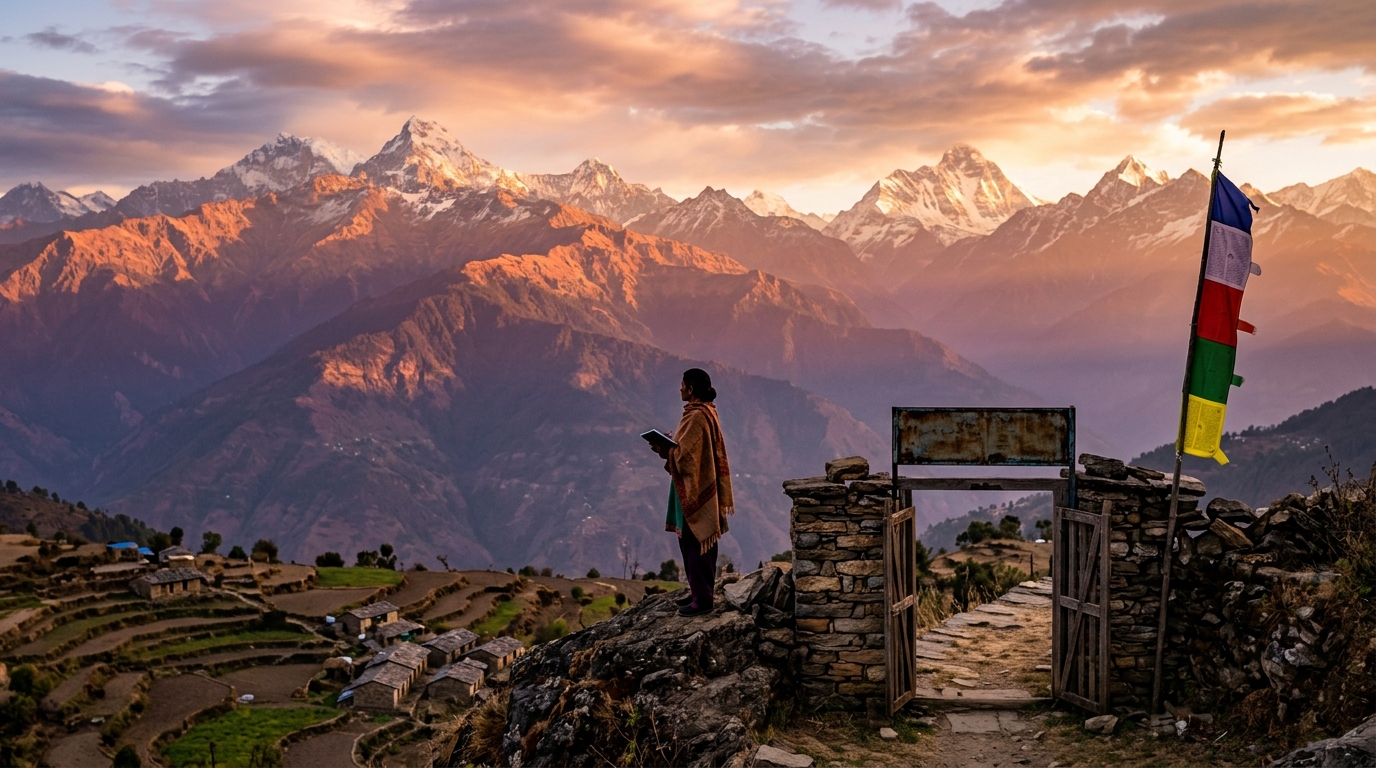
The G.B. Pant National Institute of Himalayan Environment (NIHE), an autonomous institute under the Union Ministry of Environment, Forest, and Climate Change, is set to organize a three-day Himalayan Conclave titled ‘Indian Himalayan Region–2047: Environmental Conservation with Sustainable Socio-Economic Growth’. The event will take place from 13th - 15th November, 2025, at its headquarters in Kosi-Katarmal, Almora, Uttarakhand. The primary aim of the conclave is to develop a strategic vision for the Indian Himalayan Region (IHR) by 2047, aligning with India's ‘Viksit Bharat 2047’ vision, which envisions transforming India into a developed and sustainable economy by its centenary of independence.
Key Developments
Conclave Objectives
- Strategic Vision: Develop a comprehensive strategy for the IHR by 2047.
- Alignment: Align the IHR's development with India's broader ‘Viksit Bharat 2047’ vision.
- Stakeholder Engagement: Bring together scientists, academicians, policymakers, administrators, NGOs, and communities.
- Focus Areas: Address environmental conservation, climate change adaptation, sustainable livelihoods, and regional cooperation.
Thematic Areas
The conclave will feature deliberations across six major thematic areas, encompassing 21 sessions:
- Himalayan Biodiversity: Assessing biodiversity under changing climate conditions.
- Land, Water, and Atmosphere Interactions: Understanding the complex interactions within the Himalayan ecosystem.
- Environmental Sustainability: Promoting climate actions for resilience building.
- Socio-Economic Development: Fostering sustainable livelihoods in the IHR.
- Policy and Governance: Strengthening regional cooperation through effective frameworks.
- Gender Equality and Social Inclusion: Mainstreaming these aspects for sustainable development.
Expected Outcomes
- Revised Action Plan: Update the existing action plan for the Himalaya in light of emerging challenges.
- Climate Resilience: Strengthen actions for climate resilience.
- Sustainable Livelihoods: Promote sustainable livelihoods and a green economy.
- Enhanced Governance: Improve governance and regional collaboration.
- Inclusivity: Mainstream gender equality and social inclusion in development planning.
- Ecosystem-Based Strategies: Promote ecosystem-based climate strategies.
- Responsible Tourism: Encourage responsible tourism practices.
- Community Support: Support mountain communities through green entrepreneurship.
- Regional Cooperation: Explore mechanisms to harmonize conservation and development initiatives.
Exam Relevance
This event is highly relevant for the UPSC Civil Services Exam, particularly for the following areas:
- GS Paper 1: Geography (Himalayan Region)
- GS Paper 2: Government Policies and Interventions
- GS Paper 3: Environment, Conservation, Sustainable Development, Economic Development
Key Organizations Involved
- G.B. Pant National Institute of Himalayan Environment (NIHE)
- United Nations Development Programme (UNDP)
- Union Ministry of Environment, Forest and Climate Change
- Department of Science and Technology (DST)
- Integrated Centre for Mountain Development (ICIMOD)
- International Union for Conservation of Nature (IUCN)
- IIT Roorkee
Important Facts
- The Indian Himalayan Region (IHR) covers 11 states and 2 Union Territories.
- The conclave aims to align with India's ‘Viksit Bharat 2047’ vision.
- The event will feature 21 sessions across 6 thematic areas.
- The conclave is co-hosted by the United Nations Development Programme (UNDP).