India Approves ₹31,000 crore for Myanmar Border Fencing – Implications for Manipur Security — UPSC Current Affairs | March 27, 2026
India Approves ₹31,000 crore for Myanmar Border Fencing – Implications for Manipur Security
The Union government has approved a ₹31,000 crore project to fence the 1,643‑km India‑Myanmar border, with 30 km already completed, aiming to curb cross‑border insurgency and address the ethnic violence in Manipur. Significant security forces, including CRPF and CAPF units, have been deployed, and the Free Movement Regime has been scrapped, highlighting the policy’s relevance to UPSC GS 2 (Polity) and GS 3 (Economy).
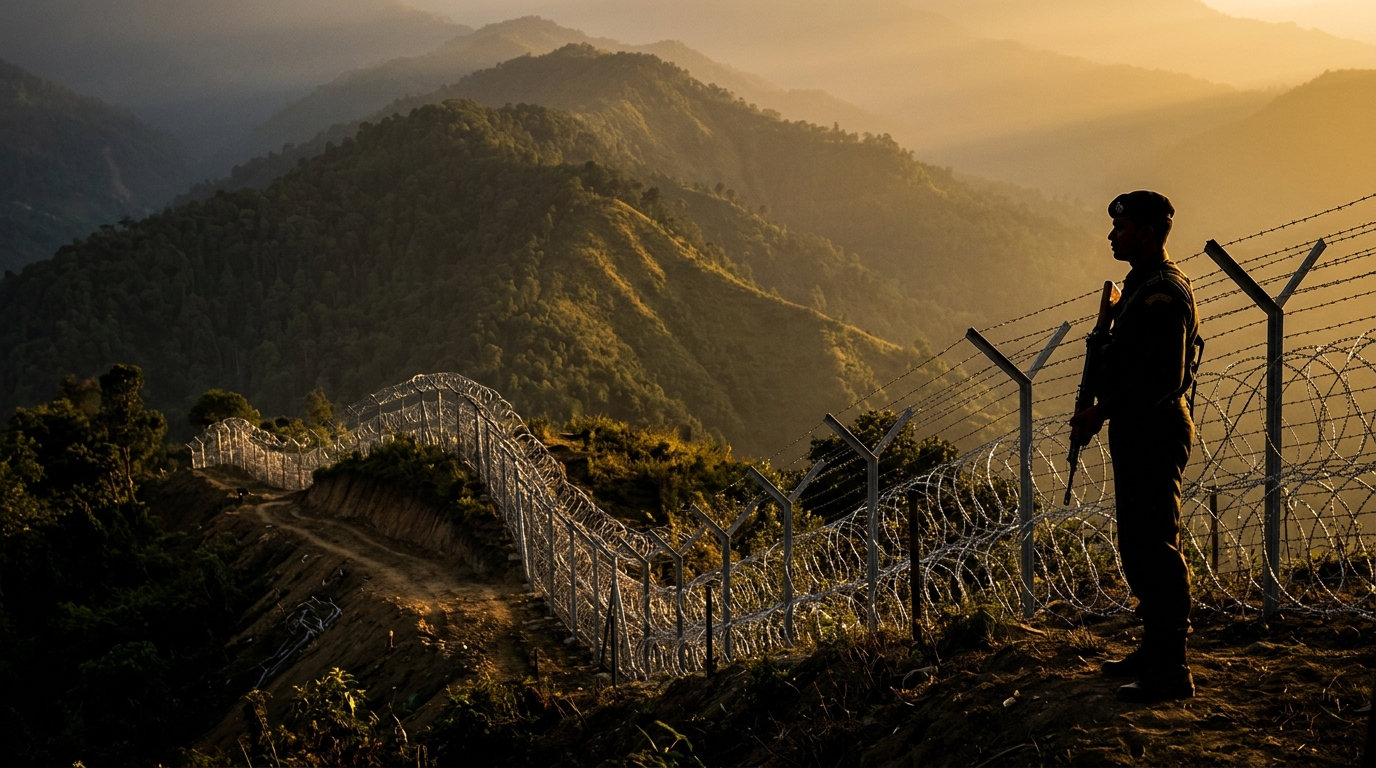
The Union government has sanctioned an estimated ₹31,000 crore to construct a fence and associated roads along the 1,643‑km international border with Myanmar . The move follows the Cabinet Committee on Security ’s in‑principle approval and is aimed at curbing cross‑border insurgency and the ethnic violence that has plagued Manipur . Key Developments Union Home Ministry official confirmed the ₹31,000 crore allocation. Union Home Minister Amit Shah announced that 30 km of fencing has been completed, labeling the porous border as a root cause of the Manipur violence. Approximately 10 km of fence near Moreh is finished; another 21 km is under construction. The earlier Free Movement Regime has been revoked. Security deployment includes two CRPF battalions, 200 companies of other CAPF (≈22,000 personnel), plus state police and army units. Important Facts The border stretches across four states: Arunachal Pradesh (520 km) , Nagaland (215 km) , Manipur (398 km) and Mizoram (510 km) . Since 3 May 2023 , ethnic clashes between the Meitei and Kuki‑Zo communities have claimed 237 lives and displaced over 60,000 people . UPSC Relevance Understanding this development touches upon multiple GS papers: GS 2 (Polity & International Relations) – border management, federal‑state security coordination, and India‑Myanmar diplomatic ties; GS 3 (Economy) – the fiscal outlay and its impact on regional development; GS 4 (Ethics & Integrity) – handling communal violence and human rights concerns. The case also illustrates the role of the CCS in translating security strategy into budgetary approval. Way Forward For sustained peace, the government must combine physical infrastructure with: Continued dialogue between Meitei and Kuki‑Zo leaders to address underlying grievances. Strengthening border surveillance using technology (drones, sensors) to complement fencing. Socio‑economic programmes in border districts to reduce dependence on cross‑border trade and insurgent recruitment. Regular review of the security deployment to ensure proportional use of force and respect for civil liberties. Effective implementation will not only curb illegal movement but also create a stable environment conducive to development in the Northeast.
Must Review
Login to bookmark articles
Login to mark articles as complete
Overview
₹31,000 crore fence on Myanmar border aimed at curbing Manipur insurgency and securing the Northeast
Key Facts
Union government approved ₹31,000 crore in 2026 for fencing the 1,643‑km India‑Myanmar border.
The border traverses Arunachal Pradesh (520 km), Nagaland (215 km), Manipur (398 km) and Mizoram (510 km).
30 km of fence is completed; 10 km near Moreh finished, 21 km under construction (as of 2026).
Free Movement Regime with Myanmar, in force since 1979, was revoked in 2024.
Security deployment includes 2 CRPF battalions and 200 CAPF companies (~22,000 personnel) plus state police and army units.
Ethnic clashes in Manipur (since 3 May 2023) have caused 237 deaths and displaced over 60,000 people.
Cabinet Committee on Security (CCS) gave in‑principle approval for the project.
Background & Context
The project links border management (GS 2) with internal security (GS 3) and federal‑state coordination, reflecting India's strategic shift to physical infrastructure and technology to counter cross‑border insurgency and stabilize the volatile Northeast, while also impacting India‑Myanmar diplomatic ties.
UPSC Syllabus Connections
GS3•Border management and organized crimeGS2•Functions and responsibilities of Union and StatesGS3•Various security forces and agenciesGS2•India and its neighborhood relations
Mains Answer Angle
GS 2 – Discuss how large‑scale border infrastructure projects like the Myanmar fence influence internal security, federal‑state cooperation, and neighbourhood relations; likely framed as a question on "border management as a tool for counter‑insurgency".