Loading page, please wait…
HomeCurrent AffairsEditorialsGovt SchemesLearning ResourcesUPSC SyllabusPricingAboutBest UPSC AIUPSC AI ToolAI for UPSCUPSC ChatGPT

© 2026 Vaidra. All rights reserved.

PrivacyTerms
Vaidra Logo
Vaidra

Top 4 items + smart groups

UPSC GPT
New
Current Affairs
Daily Solutions
Daily Puzzle
Mains Evaluator

Version 2.0.0 • Built with ❤️ for UPSC aspirants

India’s Foreign Secretary Raises Concern Over IRGC Blockade of Energy Vessels in Strait of Hormuz (18 April 2026) | GS2 UPSC Current Affairs April 2026
India’s Foreign Secretary Raises Concern Over IRGC Blockade of Energy Vessels in Strait of Hormuz (18 April 2026)
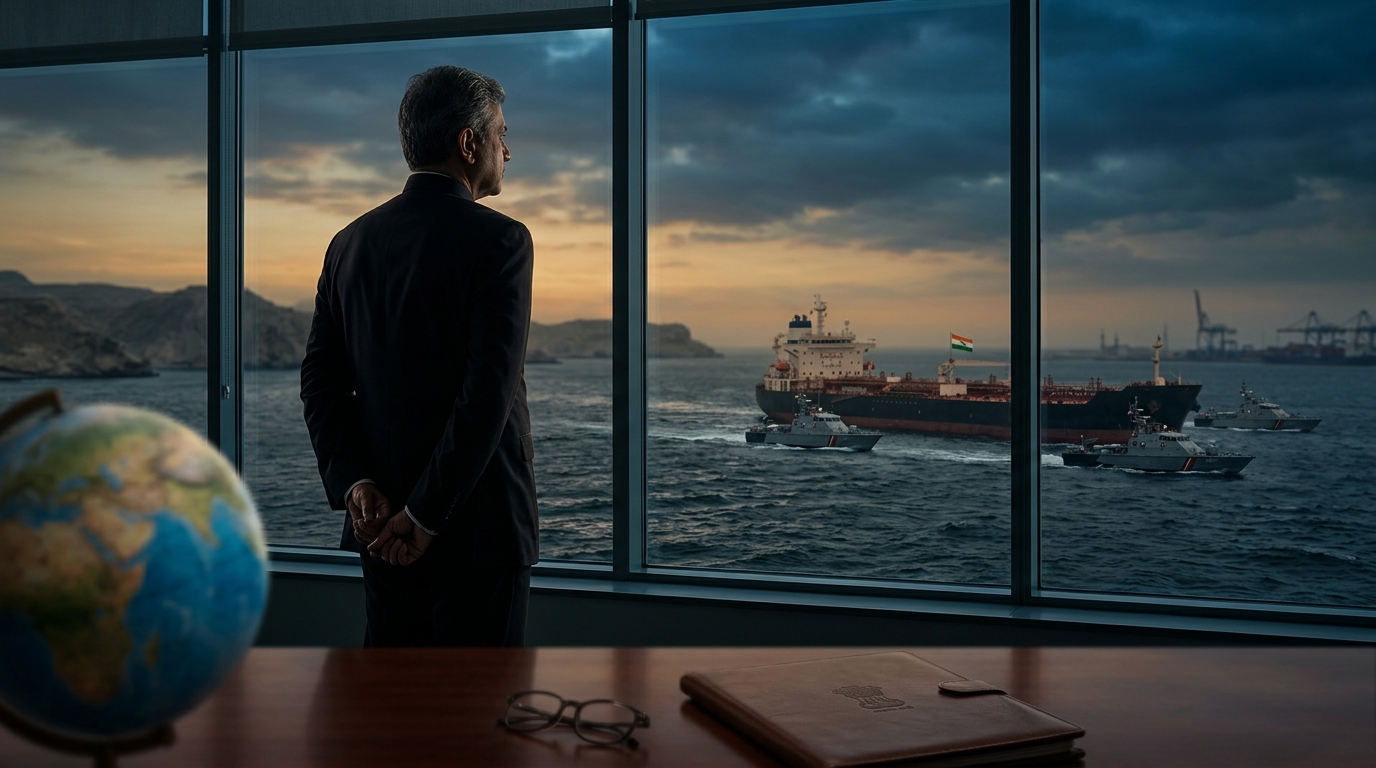
On 18 April 2026, India’s <span class="key-term" data-definition="Foreign Secretary — senior diplomat heading a country’s external affairs ministry; in India, the Foreign Secretary is the top civil servant in the Ministry of External Affairs (GS2: Polity)">Foreign Secretary</span> Vikram Misri met Iran’s ambassador <span class="key-term" data-definition="Mohammad Fathali — Iran’s ambassador to India, representing Iranian diplomatic interests in New Delhi (GS2: Polity)">Mohammad Fathali</span> to convey India’s deep concern after two India‑bound <span class="key-term" data-definition="Energy‑carrying vessels — tankers or ships transporting crude oil or petroleum products; crucial for India’s energy imports (GS3: Economy)">energy‑carrying vessels</span> were blocked by the <span class="key-term" data-definition="Islamic Revolutionary Guard Corps (IRGC) — elite branch of Iran’s armed forces responsible for internal security and external operations; its naval units control parts of the Persian Gulf (GS2: Polity, GS3: Security)">IRGC</span> in the <span class="key-term" data-definition="Strait of Hormuz — a narrow waterway between Oman and Iran through which a significant portion of the world’s oil passes; strategic chokepoint in global energy security (GS3: Economy, GS1: Geography)">Strait of Hormuz</span>. The incident occurred despite Iran’s Foreign Minister <span class="key-term" data-definition="Seyed Abbas Araghchi — Iran’s Foreign Minister, responsible for the country’s foreign policy (GS2: Polity)">Seyed Abbas Araghchi</span> declaring the waterway “completely open” for the ongoing <span class="key-term" data-definition="Ceasefire — a temporary suspension of hostilities agreed by warring parties; in this context, a fortnight‑long pause in the U.S.-Iran conflict starting 8 April 2026 (GS3: International Relations)">ceasefire</span> that began on 8 April 2026.
Overview On 18 April 2026 , Foreign Secretary Vikram Misri met Iran’s ambassador to India, Mohammad Fathali , to convey India’s “deep concern” after two India‑bound energy‑carrying vessels were prevented from transiting the Strait of Hormuz by naval guards of the IRGC . This is the first such incident during the fortnight‑long ceasefire between the United States and Iran that began on 8 April 2026 . Key Developments Two Indian‑destined oil tankers were stopped by IRGC naval units in the Strait of Hormuz . India’s top diplomat expressed “deep concern” to Iran’s ambassador, seeking clarification and assurance of safe passage. Iran’s Foreign Minister Seyed Abbas Araghchi had earlier assured that the waterway would remain “completely open” for the duration of the cease‑fire. The incident marks the first direct interference with India‑bound energy shipments by the IRGC since the cease‑fire took effect. Important Facts The Strait of Hormuz handles roughly one‑fifth of global oil trade, making any disruption a matter of international concern. The IRGC has a dual role of safeguarding Iran’s revolutionary ideals and projecting power in the Persian Gulf. The ongoing ceasefire was brokered to de‑escalate tensions after a series of aerial and naval skirmishes between the United States and Iran. UPSC Relevance Geopolitics & Energy Security: Control over the Strait of Hormuz influences global oil prices and India’s energy imports (GS3). India’s Foreign Policy: The diplomatic engagement by the Foreign Secretary reflects India’s approach to safeguarding maritime trade routes (GS2). Maritime Security: The incident underscores the role of non‑state armed forces like the IRGC in regional security dynamics (GS3, GS4). International Law: Blocking commercial vessels during a cease‑fire raises questions about the applicability of the United Nations Convention on the Law of the Sea (UNCLOS) and customary international law (GS2). Way Forward India is likely to pursue a multi‑track diplomatic response: intensifying dialogue with Tehran through the ambassador, coordinating with the United States and Gulf Cooperation Council (GCC) nations to ensure freedom of navigation, and preparing contingency measures for energy imports via alternative routes. Monitoring the implementation of the ceasefire will be crucial for assessing future risks to maritime trade and regional stability.
  1. Home
  2. Prepare
  3. Current Affairs
  4. India’s Foreign Secretary Raises Concern Over IRGC Blockade of Energy Vessels in Strait of Hormuz (18 April 2026)
Login to bookmark articles
Login to mark articles as complete

Overview

gs.gs279% UPSC Relevance

India protests IRGC blockade in Hormuz, underscoring maritime security & energy diplomacy

Key Facts

  1. 18 April 2026: Foreign Secretary Vikram Misri met Iran’s ambassador Mohammad Fathali in New Delhi.
  2. IRGC naval units stopped two oil tankers destined for India in the Strait of Hormuz.
  3. The Strait of Hormuz carries roughly 20% of global oil trade, crucial for India’s energy imports.
  4. The blockade occurred during the US‑Iran cease‑fire that began on 8 April 2026.
  5. India expressed “deep concern” and sought assurances of free navigation; Iran’s FM Seyed Abbas Araghchi had earlier pledged the waterway would remain open.
  6. Potential disruption may force India to explore alternative oil routes, affecting trade balance and energy security.

Background & Context

The incident sits at the intersection of geopolitics, energy security and maritime law. Control of the Hormuz chokepoint influences global oil prices, while actions by the IRGC—a non‑state armed force—raise questions under UNCLOS about the freedom of navigation during a cease‑fire. India’s diplomatic response reflects its broader foreign‑policy priority of safeguarding trade routes vital for economic growth.

Mains Answer Angle

GS2/GS3: Discuss how regional maritime security challenges, exemplified by the IRGC blockade, impact India’s energy security and foreign‑policy strategy, and suggest policy measures to mitigate such risks.

Full Article

<h2>Overview</h2> <p>On <strong>18 April 2026</strong>, <span class="key-term" data-definition="Foreign Secretary — senior diplomat heading a country’s external affairs ministry; in India, the Foreign Secretary is the top civil servant in the Ministry of External Affairs (GS2: Polity)">Foreign Secretary</span> <strong>Vikram Misri</strong> met Iran’s ambassador to India, <span class="key-term" data-definition="Mohammad Fathali — Iran’s ambassador to India, representing Iranian diplomatic interests in New Delhi (GS2: Polity)">Mohammad Fathali</span>, to convey India’s “deep concern” after two India‑bound <span class="key-term" data-definition="Energy‑carrying vessels — tankers or ships transporting crude oil or petroleum products; crucial for India’s energy imports (GS3: Economy)">energy‑carrying vessels</span> were prevented from transiting the <span class="key-term" data-definition="Strait of Hormuz — a narrow waterway between Oman and Iran through which a significant portion of the world’s oil passes; strategic chokepoint in global energy security (GS3: Economy, GS1: Geography)">Strait of Hormuz</span> by naval guards of the <span class="key-term" data-definition="Islamic Revolutionary Guard Corps (IRGC) — elite branch of Iran’s armed forces responsible for internal security and external operations; its naval units control parts of the Persian Gulf (GS2: Polity, GS3: Security)">IRGC</span>. This is the first such incident during the fortnight‑long <span class="key-term" data-definition="Ceasefire — a temporary suspension of hostilities agreed by warring parties; in this context, a fortnight‑long pause in the U.S.-Iran conflict starting 8 April 2026 (GS3: International Relations)">ceasefire</span> between the United States and Iran that began on <strong>8 April 2026</strong>.</p> <h3>Key Developments</h3> <ul> <li>Two Indian‑destined oil tankers were stopped by IRGC naval units in the <span class="key-term" data-definition="Strait of Hormuz — a narrow waterway between Oman and Iran through which a significant portion of the world’s oil passes; strategic chokepoint in global energy security (GS3: Economy, GS1: Geography)">Strait of Hormuz</span>.</li> <li>India’s top diplomat expressed “deep concern” to Iran’s ambassador, seeking clarification and assurance of safe passage.</li> <li>Iran’s <span class="key-term" data-definition="Seyed Abbas Araghchi — Iran’s Foreign Minister, responsible for the country’s foreign policy (GS2: Polity)">Foreign Minister</span> <strong>Seyed Abbas Araghchi</strong> had earlier assured that the waterway would remain “completely open” for the duration of the cease‑fire.</li> <li>The incident marks the first direct interference with India‑bound energy shipments by the <span class="key-term" data-definition="Islamic Revolutionary Guard Corps (IRGC) — elite branch of Iran’s armed forces responsible for internal security and external operations; its naval units control parts of the Persian Gulf (GS2: Polity, GS3: Security)">IRGC</span> since the cease‑fire took effect.</li> </ul> <h3>Important Facts</h3> <p>The <span class="key-term" data-definition="Strait of Hormuz — a narrow waterway between Oman and Iran through which a significant portion of the world’s oil passes; strategic chokepoint in global energy security (GS3: Economy, GS1: Geography)">Strait of Hormuz</span> handles roughly one‑fifth of global oil trade, making any disruption a matter of international concern. The <span class="key-term" data-definition="Islamic Revolutionary Guard Corps (IRGC) — elite branch of Iran’s armed forces responsible for internal security and external operations; its naval units control parts of the Persian Gulf (GS2: Polity, GS3: Security)">IRGC</span> has a dual role of safeguarding Iran’s revolutionary ideals and projecting power in the Persian Gulf. The ongoing <span class="key-term" data-definition="Ceasefire — a temporary suspension of hostilities agreed by warring parties; in this context, a fortnight‑long pause in the U.S.-Iran conflict starting 8 April 2026 (GS3: International Relations)">ceasefire</span> was brokered to de‑escalate tensions after a series of aerial and naval skirmishes between the United States and Iran.</p> <h3>UPSC Relevance</h3> <ul> <li><strong>Geopolitics & Energy Security:</strong> Control over the <span class="key-term" data-definition="Strait of Hormuz — a narrow waterway between Oman and Iran through which a significant portion of the world’s oil passes; strategic chokepoint in global energy security (GS3: Economy, GS1: Geography)">Strait of Hormuz</span> influences global oil prices and India’s energy imports (GS3).</li> <li><strong>India’s Foreign Policy:</strong> The diplomatic engagement by the <span class="key-term" data-definition="Foreign Secretary — senior diplomat heading a country’s external affairs ministry; in India, the Foreign Secretary is the top civil servant in the Ministry of External Affairs (GS2: Polity)">Foreign Secretary</span> reflects India’s approach to safeguarding maritime trade routes (GS2).</li> <li><strong>Maritime Security:</strong> The incident underscores the role of non‑state armed forces like the <span class="key-term" data-definition="Islamic Revolutionary Guard Corps (IRGC) — elite branch of Iran’s armed forces responsible for internal security and external operations; its naval units control parts of the Persian Gulf (GS2: Polity, GS3: Security)">IRGC</span> in regional security dynamics (GS3, GS4).</li> <li><strong>International Law:</strong> Blocking commercial vessels during a cease‑fire raises questions about the applicability of the United Nations Convention on the Law of the Sea (UNCLOS) and customary international law (GS2).</li> </ul> <h3>Way Forward</h3> <p>India is likely to pursue a multi‑track diplomatic response: intensifying dialogue with Tehran through the ambassador, coordinating with the United States and Gulf Cooperation Council (GCC) nations to ensure freedom of navigation, and preparing contingency measures for energy imports via alternative routes. Monitoring the implementation of the <span class="key-term" data-definition="Ceasefire — a temporary suspension of hostilities agreed by warring parties; in this context, a fortnight‑long pause in the U.S.-Iran conflict starting 8 April 2026 (GS3: International Relations)">ceasefire</span> will be crucial for assessing future risks to maritime trade and regional stability.</p>
Read Original on hindu

Analysis

Practice Questions

GS3
Easy
Prelims MCQ

Energy security & strategic chokepoints

1 marks
3 keywords
GS2
Medium
Mains Short Answer

India‑Iran diplomatic engagement

5 marks
5 keywords
GS2
Hard
Mains Essay

Maritime security, energy security, foreign policy

20 marks
7 keywords
Related:Daily•Weekly

Loading related articles...

Loading related articles...

Tip: Click articles above to read more from the same date, or use the back button to see all articles.

Quick Reference

Key Insight

India protests IRGC blockade in Hormuz, underscoring maritime security & energy diplomacy

Key Facts

  1. 18 April 2026: Foreign Secretary Vikram Misri met Iran’s ambassador Mohammad Fathali in New Delhi.
  2. IRGC naval units stopped two oil tankers destined for India in the Strait of Hormuz.
  3. The Strait of Hormuz carries roughly 20% of global oil trade, crucial for India’s energy imports.
  4. The blockade occurred during the US‑Iran cease‑fire that began on 8 April 2026.
  5. India expressed “deep concern” and sought assurances of free navigation; Iran’s FM Seyed Abbas Araghchi had earlier pledged the waterway would remain open.
  6. Potential disruption may force India to explore alternative oil routes, affecting trade balance and energy security.

Background

The incident sits at the intersection of geopolitics, energy security and maritime law. Control of the Hormuz chokepoint influences global oil prices, while actions by the IRGC—a non‑state armed force—raise questions under UNCLOS about the freedom of navigation during a cease‑fire. India’s diplomatic response reflects its broader foreign‑policy priority of safeguarding trade routes vital for economic growth.

Mains Angle

GS2/GS3: Discuss how regional maritime security challenges, exemplified by the IRGC blockade, impact India’s energy security and foreign‑policy strategy, and suggest policy measures to mitigate such risks.

Explore:Current Affairs·Editorial Analysis·Govt Schemes·Study Materials·Previous Year Questions·UPSC GPT