Loading page, please wait…
HomeCurrent AffairsEditorialsGovt SchemesLearning ResourcesUPSC SyllabusPricingAboutBest UPSC AIUPSC AI ToolAI for UPSCUPSC ChatGPT

© 2026 Vaidra. All rights reserved.

PrivacyTerms
Vaidra Logo
Vaidra

Top 4 items + smart groups

UPSC GPT
New
Current Affairs
Daily Solutions
Daily Puzzle
Mains Evaluator

Version 2.0.0 • Built with ❤️ for UPSC aspirants

India Evacuates 22 Energy‑Critical Vessels from Persian Gulf to Safeguard Energy Security — UPSC Current Affairs | March 18, 2026
India Evacuates 22 Energy‑Critical Vessels from Persian Gulf to Safeguard Energy Security
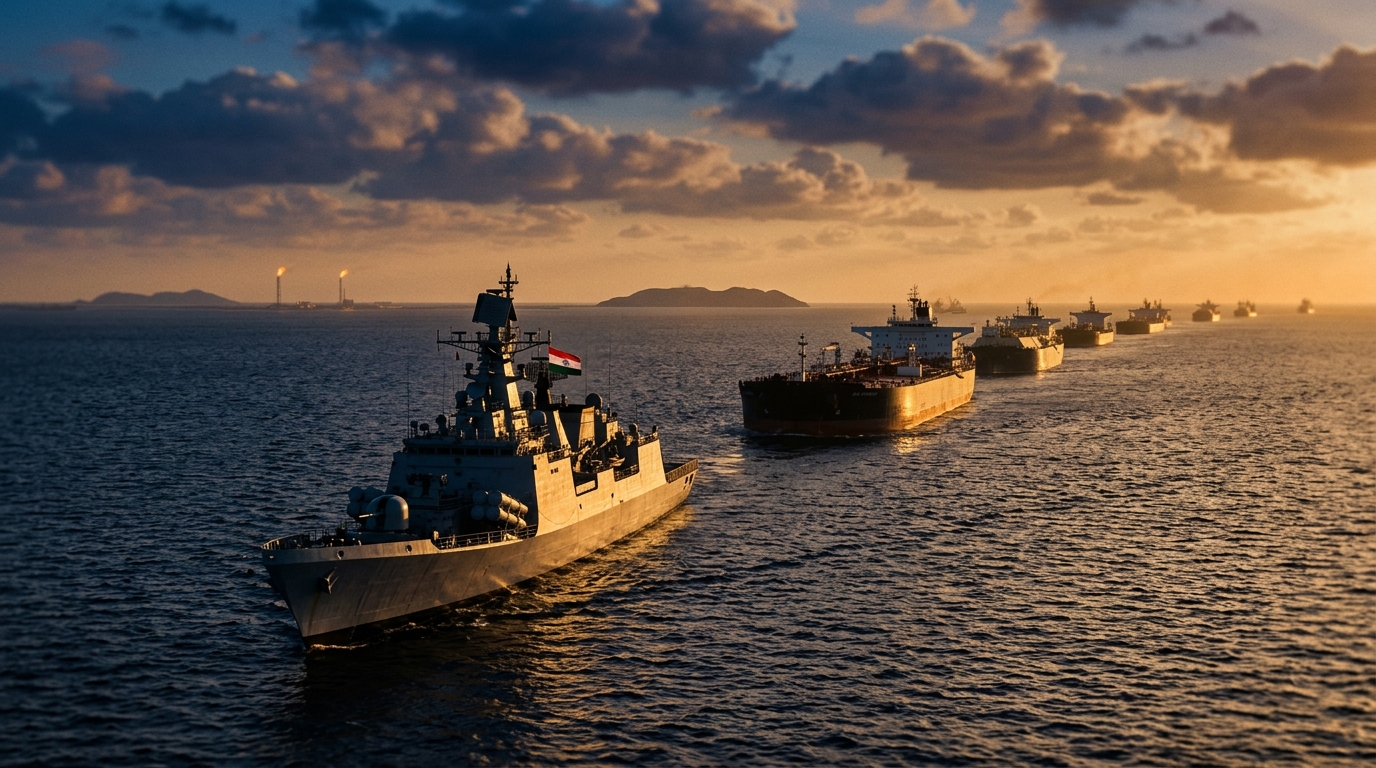
The Indian government has identified 22 vessels in the Persian Gulf, including 20 energy‑critical ships carrying LNG, LPG and crude oil, for evacuation and safe passage through the Strait of Hormuz. Coordinated efforts involving the Navy, ministries and the Information Fusion Centre aim to protect India’s energy security and stranded seafarers amid the Iran‑Israel conflict.
Key Developments The Ministry of Ports, Shipping and Waterways, in coordination with the DNO , the MoPNG and the IFCIOR , has earmarked 22 vessels for evacuation from the Persian Gulf . The move is aimed at averting disruption to India’s energy imports amid the ongoing Iran‑Israel hostilities. Vessels Identified for Evacuation 20 energy‑critical vessels carrying 2.15 lakh metric tonnes of LNG , 3.21 lakh tonnes of LPG and 16.76 lakh tonnes of crude oil . Among them, 10 are Indian‑flagged (including three LNG carriers, ten LPG carriers and seven crude oil tankers). Other flags include Marshall Islands, Liberia, Greece, Malta and Portugal . Two Indian‑flagged container ships are also slated for safe passage. Recent Escorts and Arrivals Shivalik (LPG carrier) – partially discharged at Mundra , awaiting ship‑to‑ship transfer with IOC. Nanda Devi (LPG carrier) – docked at Vadinar , double‑banked with BW Birch for cargo transfer. Jag Laadki (crude oil tanker) – arrived at Mundra Port with ~ 81,000 metric tonnes of Murban crude from UAE; escaped damage when the loading terminal at Fujairah was attacked. Humanitarian Aspect Approximately 23,000 Indian seafarers are stranded in the region, including 658 on Indian‑flagged vessels . To date, 472 seafarers have been evacuated by shipping companies. Tragically, three Indian seafarers have died, four were injured and one remains missing on foreign‑flagged ships. Geographical Distribution of Indian Vessels 22 vessels in the Persian Gulf (west of the Strait of Hormuz). 2 vessels in the Gulf of Oman (east of the strait). 1 vessel in the Gulf of Aden. 2 vessels in the Red Sea. The government‑owned Shipping Corporation of India owns six of these ships. UPSC Relevance The episode illustrates several themes frequently examined in the UPSC syllabus: Energy security – dependence on imported LNG, LPG and crude oil; the need for safe maritime corridors. Maritime strategy – role of the Indian Navy and inter‑ministerial coordination in protecting commercial shipping. Geopolitics of the Middle East – impact of regional conflicts (Iran‑Israel) on global energy markets and Indian trade routes. International maritime law – freedom of navigation through the Strait of Hormuz and the legal basis for naval escorts. Way Forward To mitigate future disruptions, the government may consider: Strengthening maritime domain awareness through expanded cooperation with regional partners and satellite monitoring. Diversifying energy import sources and routes, including greater reliance on LNG terminals in the east coast. Developing contingency protocols for rapid evacuation of vessels and seafarers during geopolitical crises. Enhancing the capacity of the Indian Navy for sustained escort missions in high‑risk zones. These steps will bolster India’s resilience against external shocks and safeguard its critical energy supplies.
  1. Home
  2. Prepare
  3. Current Affairs
  4. India Evacuates 22 Energy‑Critical Vessels from Persian Gulf to Safeguard Energy Security
Login to bookmark articles
Login to mark articles as complete

Overview

India evacuates 22 energy‑critical vessels to protect energy security amid Gulf tensions

Key Facts

  1. 22 vessels (20 energy‑critical + 2 Indian‑flagged container ships) earmarked for evacuation from the Persian Gulf (2026).
  2. Cargo includes 2.15 lakh MT LNG, 3.21 lakh MT LPG and 16.76 lakh MT crude oil.
  3. 10 of the energy‑critical vessels are Indian‑flagged; the rest fly Marshall Islands, Liberia, Greece, Malta and Portugal flags.
  4. Coordinating agencies: Ministry of Ports, Shipping & Waterways, DNO (Indian Navy), MoPNG and IFCIOR.
  5. Approximately 23,000 Indian seafarers are stranded; 472 have been evacuated, with three fatalities reported.
  6. Geographical spread: 22 vessels west of Strait of Hormuz, 2 in Gulf of Oman, 1 in Gulf of Aden, 2 in Red Sea.
  7. Shipping Corporation of India owns six of the identified vessels.

Background & Context

The evacuation underscores India's reliance on imported LNG, LPG and crude oil and the vulnerability of sea lanes like the Strait of Hormuz to geopolitical shocks. It also highlights the role of inter‑ministerial coordination and naval power in safeguarding energy security, a core theme of GS2 (International Relations & Economy).

UPSC Syllabus Connections

Prelims_GS•Social and Economic Geography of IndiaPrelims_GS•Physical Geography of IndiaPrelims_CSAT•Reading ComprehensionEssay•International Relations and Geopolitics

Mains Answer Angle

In GS2, candidates can discuss how maritime strategy and diplomatic engagement can mitigate energy‑security risks, linking it to India's broader foreign‑policy and economic resilience objectives.

Full Article

Read Original on hindu

Analysis

Practice Questions

GS2
Easy
Prelims MCQ

Energy security and maritime strategy

1 marks
5 keywords
GS2
Medium
Mains Short Answer

Maritime security and energy imports

5 marks
5 keywords
GS2
Hard
Mains Essay

Energy security, geopolitics of the Middle East, maritime strategy

20 marks
6 keywords
Related:Daily•Weekly

Loading related articles...

Loading related articles...

Tip: Click articles above to read more from the same date, or use the back button to see all articles.

Explore:Current Affairs·Editorial Analysis·Govt Schemes·Study Materials·Previous Year Questions·UPSC GPT