Loading page, please wait…
HomeCurrent AffairsEditorialsGovt SchemesLearning ResourcesUPSC SyllabusPricingAboutBest UPSC AIUPSC AI ToolAI for UPSCUPSC ChatGPT

© 2026 Vaidra. All rights reserved.

PrivacyTerms
Vaidra Logo
Vaidra

Top 4 items + smart groups

UPSC GPT
New
Current Affairs
Daily Solutions
Daily Puzzle
Mains Evaluator

Version 2.0.0 • Built with ❤️ for UPSC aspirants

Iran-backed Hackers Pause US Cyberattacks Post Ceasefire, Continue Targeting Israel — UPSC Current Affairs | April 9, 2026
Iran-backed Hackers Pause US Cyberattacks Post Ceasefire, Continue Targeting Israel
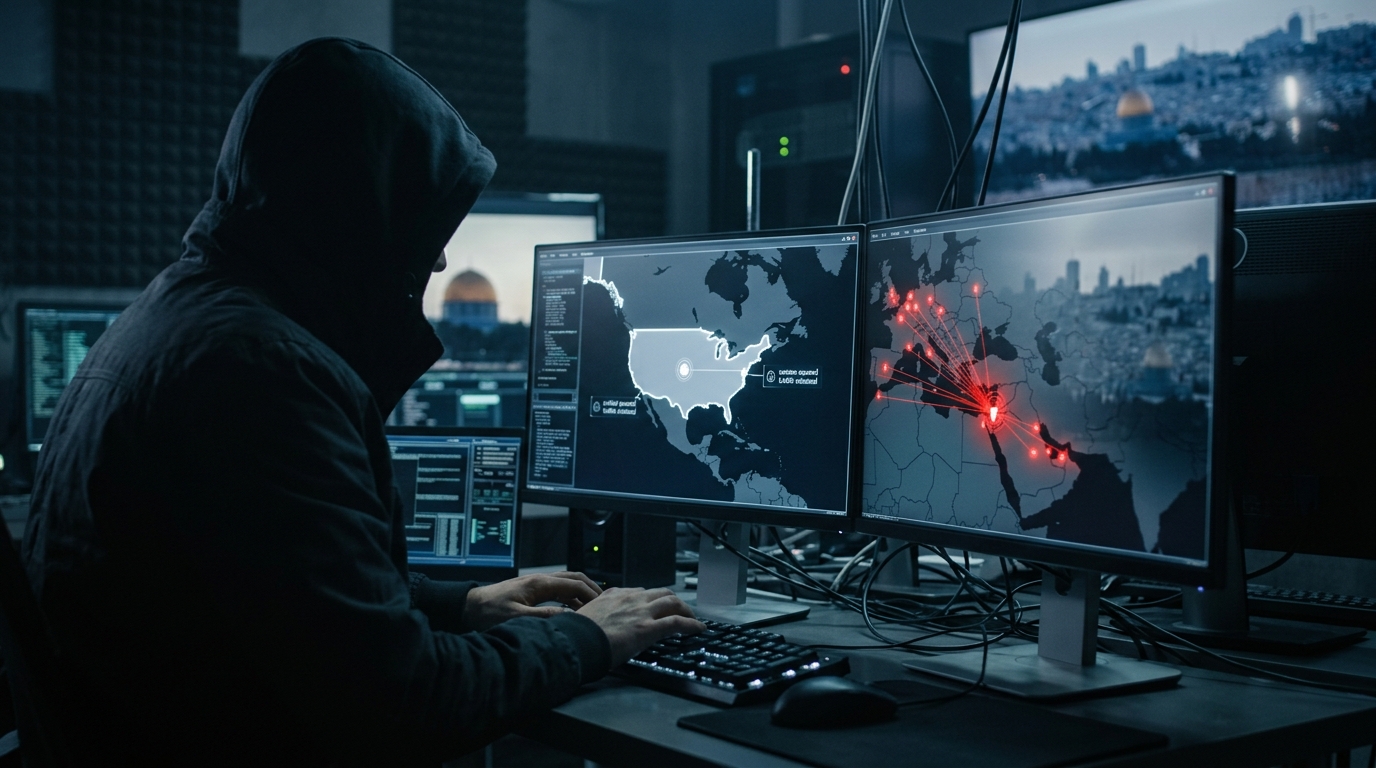
Tehran‑backed hacking group Handala announced a temporary halt to its cyber‑attacks on the United States following the recent ceasefire between Iran, the US and Israel, but it will keep targeting Israeli interests. The episode underscores the growing role of digital warfare in geopolitical conflicts, a key area for UPSC aspirants to study.
Overview The announcement of a tentative ceasefire between Iran and the United States and Israel has not halted the cyber‑campaigns of Tehran‑backed hackers. The group Handala announced a temporary pause on attacks against the US, while pledging to continue pressure on Israeli assets. Key Developments Handala said it will postpone US‑focused cyberattacks until conditions become favorable. The group reaffirmed its commitment to target Israel despite the ceasefire talks. US and Israeli cybersecurity experts warned that the pause is tactical, not a strategic withdrawal. The two‑week ceasefire is already showing signs of strain due to unresolved disputes over territorial claims and proxy engagements. Important Facts • The ceasefire was announced on 2026‑04‑08 , following intense diplomatic pressure. • Handala’s statement was released within 24 hours of the ceasefire announcement. • The group’s past operations have included ransomware, data exfiltration, and disruption of critical infrastructure in both the US and Israel. • Analysts note that digital warfare now forms an integral part of conventional military strategy, blurring the line between state and non‑state actors. UPSC Relevance Understanding the interplay between digital warfare and traditional diplomacy is essential for GS1 (International Relations) and GS2 (Polity). The episode illustrates how cyber‑capabilities can be leveraged as a coercive tool, influencing peace negotiations and regional stability. Aspirants should note the role of non‑state hacking groups in shaping security dynamics, a topic frequently examined in the ethics and security sections of GS4. Way Forward Policymakers should strengthen bilateral cyber‑defence coordination, develop clear norms for state‑linked cyber‑operations, and integrate cyber‑risk assessments into ceasefire monitoring mechanisms. Building resilient critical infrastructure and enhancing public‑private partnerships will mitigate the impact of future cyberattacks . Continuous dialogue with regional allies can help contain the spill‑over effects of such digital campaigns.
  1. Home
  2. Prepare
  3. Current Affairs
  4. Iran-backed Hackers Pause US Cyberattacks Post Ceasefire, Continue Targeting Israel
Login to bookmark articles
Login to mark articles as complete

Overview

gs.gs278% UPSC Relevance

Iran-backed Handala pauses US attacks, keeps cyber pressure on Israel amid ceasefire

Key Facts

  1. Ceasefire between Iran, the United States and Israel was announced on 8 April 2026.
  2. Within 24 hours, the Tehran‑based hacking collective Handala declared a temporary halt to US‑focused cyberattacks.
  3. Handala reaffirmed its commitment to continue targeting Israeli digital assets despite the ceasefire.
  4. Earlier operations by Handala have involved ransomware, data exfiltration and disruption of critical infrastructure in both the US and Israel.
  5. US and Israeli cybersecurity agencies warned that the pause is tactical, not a strategic withdrawal.
  6. The ceasefire is a two‑week truce but is already showing strain over unresolved territorial and proxy disputes.
  7. Analysts note that digital warfare now forms an integral part of conventional military strategy, blurring lines between state and non‑state actors.

Background & Context

The episode underscores how cyber capabilities are being weaponised as coercive tools in international relations, a key theme under GS1 (International Relations) and GS2 (Polity). It also highlights the growing relevance of cyber‑security and digital warfare in the ethics & security component of GS4, reflecting the convergence of technology with traditional statecraft.

UPSC Syllabus Connections

Essay•International Relations and Geopolitics

Mains Answer Angle

GS2 – Discuss how non‑state hacking groups like Handala influence diplomatic negotiations and regional stability, and evaluate the need for robust cyber‑norms in ceasefire monitoring mechanisms.

Full Article

<h2>Overview</h2> <p>The announcement of a tentative <span class="key-term" data-definition="Ceasefire — a temporary suspension of hostilities between warring parties, often used as a diplomatic tool to de‑escalate conflicts (GS1: International Relations)">ceasefire</span> between Iran and the <span class="key-term" data-definition="United States — a global superpower whose strategic interests often intersect with cyber‑security concerns (GS1: International Relations)">United States</span> and <span class="key-term" data-definition="Israel — a key strategic partner of the United States in the Middle East, frequently targeted in regional cyber‑conflicts (GS1: International Relations)">Israel</span> has not halted the cyber‑campaigns of Tehran‑backed hackers. The group <span class="key-term" data-definition="Handala — a Tehran-based hacking collective that claims responsibility for cyber‑attacks against US and Israeli targets; its activities illustrate the nexus of cyber‑warfare and state policy (GS2: Polity)">Handala</span> announced a temporary pause on attacks against the US, while pledging to continue pressure on Israeli assets.</p> <h3>Key Developments</h3> <ul> <li>Handala said it will <strong>postpone</strong> US‑focused <span class="key-term" data-definition="cyberattack — a hostile attempt to breach, disrupt or damage computer systems, increasingly considered a component of modern warfare (GS4: Ethics & Security)">cyberattacks</span> until conditions become favorable.</li> <li>The group reaffirmed its commitment to target <span class="key-term" data-definition="Israel — a key strategic partner of the United States in the Middle East, frequently targeted in regional cyber‑conflicts (GS1: International Relations)">Israel</span> despite the ceasefire talks.</li> <li>US and Israeli <span class="key-term" data-definition="cybersecurity experts — professionals who assess and mitigate digital threats, providing critical intelligence for national security (GS3: Economy & GS4: Ethics)">cybersecurity experts</span> warned that the pause is tactical, not a strategic withdrawal.</li> <li>The two‑week ceasefire is already showing signs of strain due to unresolved disputes over territorial claims and proxy engagements.</li> </ul> <h3>Important Facts</h3> <p>• The ceasefire was announced on <strong>2026‑04‑08</strong>, following intense diplomatic pressure.<br> • Handala’s statement was released within 24 hours of the ceasefire announcement.<br> • The group’s past operations have included ransomware, data exfiltration, and disruption of critical infrastructure in both the US and Israel.<br> • Analysts note that <span class="key-term" data-definition="digital warfare — the use of information technology to conduct offensive and defensive operations, blurring lines between civilian and military domains (GS2: Polity)">digital warfare</span> now forms an integral part of conventional military strategy, blurring the line between state and non‑state actors.</p> <h3>UPSC Relevance</h3> <p>Understanding the interplay between <span class="key-term" data-definition="digital warfare — the use of information technology to conduct offensive and defensive operations, blurring lines between civilian and military domains (GS2: Polity)">digital warfare</span> and traditional diplomacy is essential for GS1 (International Relations) and GS2 (Polity). The episode illustrates how cyber‑capabilities can be leveraged as a coercive tool, influencing peace negotiations and regional stability. Aspirants should note the role of non‑state hacking groups in shaping security dynamics, a topic frequently examined in the ethics and security sections of GS4.</p> <h3>Way Forward</h3> <p>Policymakers should strengthen bilateral cyber‑defence coordination, develop clear norms for state‑linked cyber‑operations, and integrate cyber‑risk assessments into ceasefire monitoring mechanisms. Building resilient critical infrastructure and enhancing public‑private partnerships will mitigate the impact of future <span class="key-term" data-definition="cyberattack — a hostile attempt to breach, disrupt or damage computer systems, increasingly considered a component of modern warfare (GS4: Ethics & Security)">cyberattacks</span>. Continuous dialogue with regional allies can help contain the spill‑over effects of such digital campaigns.</p>
Read Original on hindu

Analysis

Practice Questions

Prelims
Easy
Prelims MCQ

International Relations – Ceasefire agreements

1 marks
5 keywords
GS2
Medium
Mains Short Answer

Polity – Cyber‑warfare and diplomatic negotiations

10 marks
6 keywords
GS2
Hard
Mains Essay

International Relations – Cyber‑security and peace processes

250 marks
7 keywords
Related:Daily•Weekly

Loading related articles...

Loading related articles...

Tip: Click articles above to read more from the same date, or use the back button to see all articles.

Explore:Current Affairs·Editorial Analysis·Govt Schemes·Study Materials·Previous Year Questions·UPSC GPT