Overview
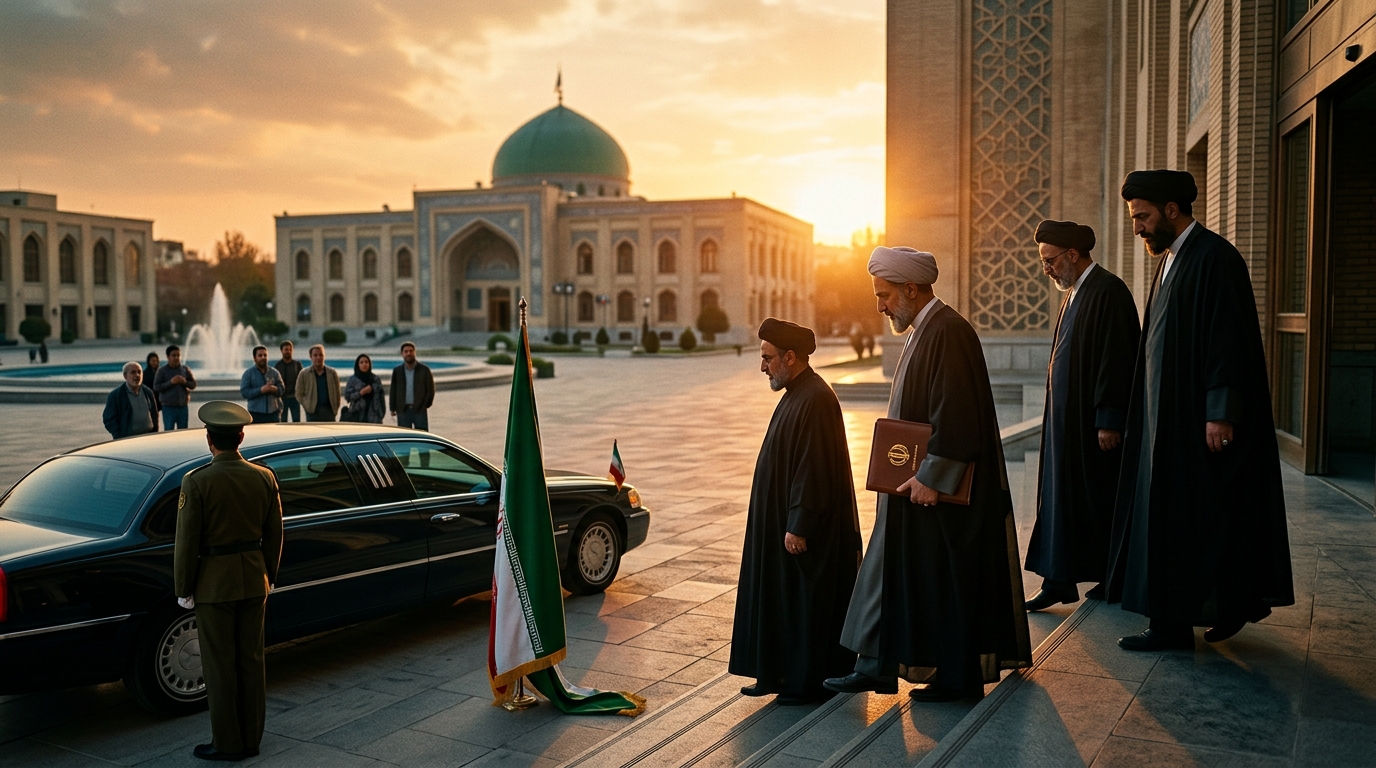
On Sunday, 1 March 2026, Iran announced the creation of an interim leadership council. The council includes Ayatollah Alireza Arafi, the President, and the head of the judiciary, and will steer the country after the assassination of Ayatollah Ali Khamenei.
Key Developments
- The interim council will govern until the Assembly of Experts selects a permanent leader.
- Iran’s President Masoud Pezeshkian labeled the killing a “declaration of war against Muslims”.
- Security chief Ali Larijani vowed unprecedented retaliation against the United States and Israel.
- An Israeli military strike caused a massive explosion in Tehran, prompting Iran to launch missiles at Israeli and Gulf Arab targets.
- Global air transport faced its biggest disruption since the COVID‑19 pandemic, with major West Asian hubs such as Dubai and Doha temporarily closed.
Important Facts
The interim council’s composition reflects Iran’s theocratic‑republican structure: the President (executive), the head of the judiciary (legal), and a senior cleric (Ayatollah) together ensure continuity of both civil and religious governance. The assassination of the supreme leader, a rare event in modern Iranian history, triggered immediate constitutional mechanisms to prevent a power vacuum.
Air travel disruption stemmed from heightened security alerts and the grounding of flights over Iranian airspace, illustrating how geopolitical crises can spill over into economic sectors.
Exam Relevance
Understanding Iran’s succession protocol is crucial for GS2: Polity – it showcases the interplay between religious authority and constitutional bodies like the Assembly of Experts. The incident also offers a case study for GS3: International Relations – the rapid escalation following a targeted strike, retaliatory missile launches, and the impact on global aviation.
For GS4: Ethics, the rhetoric of a “declaration of war against Muslims” raises questions about the use of religious sentiment in statecraft and the ethical dimensions of retaliation.
Way Forward
- Monitor the Assembly of Experts for the timeline of permanent leader selection.
- Assess the potential for further regional escalation and its implications for India’s foreign policy, especially in the Gulf and Central Asia.
- Track the recovery of West Asian aviation hubs, as prolonged disruptions could affect trade routes and energy logistics.
- Analyze how Iran’s interim governance model balances religious legitimacy with constitutional processes – a key theme for comparative political studies.