Loading page, please wait…
HomeCurrent AffairsEditorialsGovt SchemesLearning ResourcesUPSC SyllabusPricingAboutBest UPSC AIUPSC AI ToolAI for UPSCUPSC ChatGPT

© 2026 Vaidra. All rights reserved.

PrivacyTerms
Vaidra Logo
Vaidra

Top 4 items + smart groups

UPSC GPT
New
Current Affairs
Daily Solutions
Daily Puzzle
Mains Evaluator

Version 2.0.0 • Built with ❤️ for UPSC aspirants

Iran-Israel Missile Exchanges and Regional Escalation – Implications for UPSC GS2 — UPSC Current Affairs | March 5, 2026
Iran-Israel Missile Exchanges and Regional Escalation – Implications for UPSC GS2
On 5 March 2026, Iran launched missiles at Israeli and U.S. bases while Israel struck Hezbollah targets in Lebanon, escalating the West Asian conflict and causing civilian casualties. The diplomatic clash in South Korea and Iran’s pending Supreme Leader selection highlight the geopolitical and security dimensions crucial for UPSC GS2 preparation.
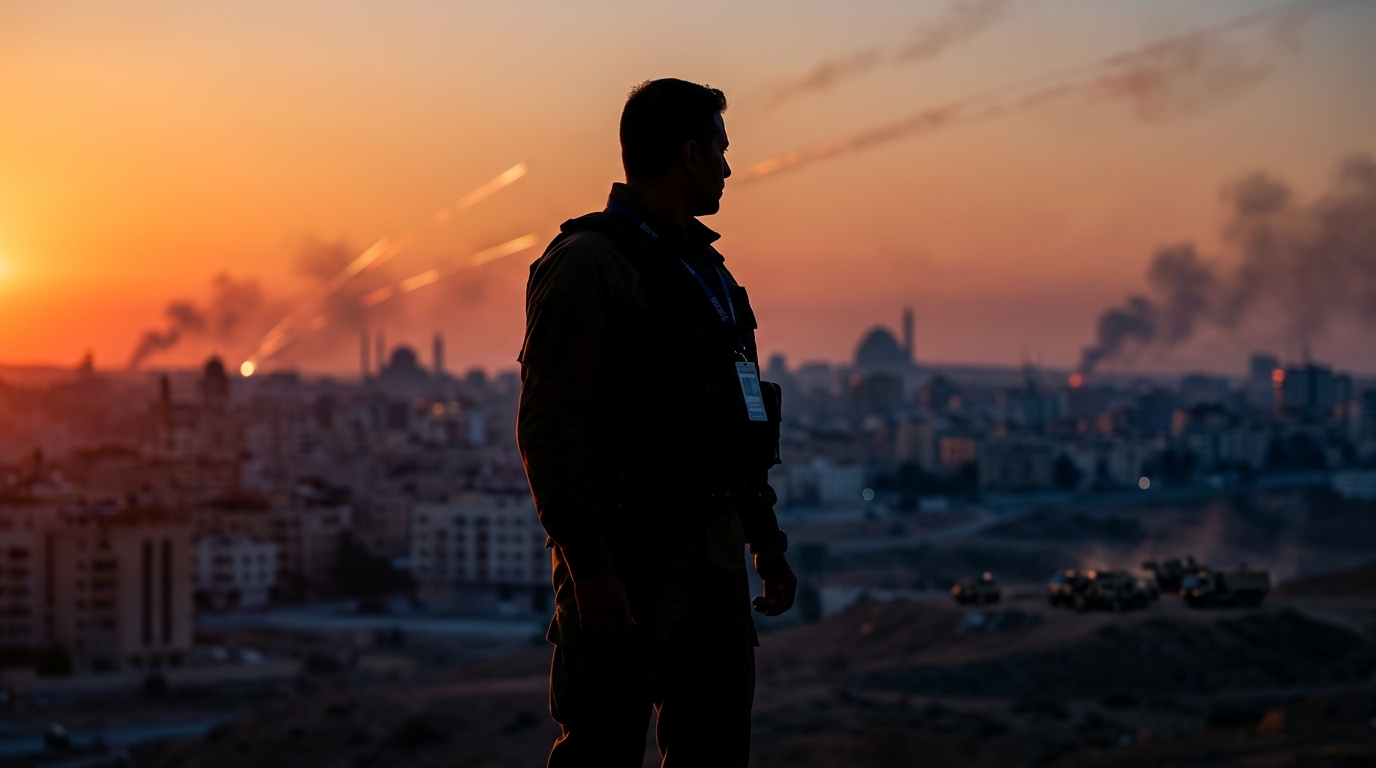
Situation Overview On 5 March 2026 , the conflict in West Asia entered its sixth day with fresh missile launches by Iran targeting Israeli and U.S. installations. Israel responded with interceptions and retaliatory strikes against the Iranian‑backed Hezbollah in Lebanon, causing civilian casualties. Key Developments (5 Mar 2026) Iran launched multiple missiles at Israeli and U.S. bases; Israel reported successful interceptions. Israeli airstrikes hit Hezbollah positions in Lebanon, killing at least eleven people. Iranian and Israeli ambassadors exchanged sharp accusations in South Korea , with Iran demanding a halt to what it called illegal aggression. Saudi Defence Ministry destroyed an unmanned aerial vehicle in al‑Jawf province, near the Jordanian border. Israeli drone strikes in northern and southern Lebanon resulted in civilian deaths, raising humanitarian concerns. Iran’s leadership is in the process of selecting a new Supreme Leader , a development that could affect the trajectory of the conflict. Important Facts Missile launches and interceptions occurred within hours of each other, indicating heightened readiness on both sides. Casualties in Lebanon since the renewed hostilities total over 70 killed and 430 wounded , including seven children . Oil prices resumed an upward trend on 5 March 2026 , reflecting market sensitivity to the conflict. Iranian ambassador Saeed Koozechi warned that U.S. ground deployment could result in “many coffins” returning to the United States. Israeli ambassador Raphael Harpaz framed the joint operations as aimed at destroying Iran’s ballistic missile sites and nuclear development facilities. UPSC Relevance The episode illustrates several core GS2 themes: the dynamics of asymmetric warfare , the role of proxy groups like Hezbollah , and the impact of regional conflicts on global energy markets. It also underscores the importance of diplomatic channels, as seen in the Seoul‑based ambassadorial exchanges, and the internal political calculus of Iran’s succession, which could reshape its foreign policy posture. Way Forward Monitor diplomatic initiatives by the United Nations and major powers to de‑escalate hostilities. Assess the potential shift in Iran’s strategic direction after the appointment of a new Supreme Leader . Track oil market responses, as price volatility can affect India’s balance of payments and energy security (GS3: Economy). Evaluate humanitarian implications for civilian populations in Lebanon and the Gaza‑adjacent areas, linking to GS4: Ethics and human security.
  1. Home
  2. Prepare
  3. Current Affairs
  4. Iran-Israel Missile Exchanges and Regional Escalation – Implications for UPSC GS2
Must Review
Login to bookmark articles
Login to mark articles as complete

Overview

Iran-Israel missile exchange threatens regional stability, impacting India’s energy security

Key Facts

  1. 5 March 2026: Iran launched multiple missiles at Israeli and U.S. bases in West Asia.
  2. Israel intercepted the missiles and struck Hezbollah positions in Lebanon, killing at least 11.
  3. Casualties in Lebanon since the renewed hostilities exceed 70 dead and 430 injured, including 7 children.
  4. Oil prices rose on 5 March 2026 as markets reacted to the escalation.
  5. Iranian and Israeli ambassadors exchanged sharp accusations in Seoul, South Korea.
  6. Iran is in the process of selecting a new Supreme Leader, a factor that may reshape its foreign policy.

Background & Context

The episode exemplifies asymmetric warfare and proxy dynamics in West Asia, where Iran backs Hezbollah while Israel counters with precision strikes. Such volatility directly influences global oil markets, thereby affecting India's balance of payments and energy security, core concerns of GS2 and GS3.

UPSC Syllabus Connections

Essay•International Relations and GeopoliticsGS2•Effect of policies of developed and developing countries on IndiaEssay•Economy, Development and InequalityEssay•Youth, Health and WelfareGS1•Effects of Globalization on Indian Society

Mains Answer Angle

In GS2, candidates can analyse the geopolitical ramifications of the Iran‑Israel missile exchange on India's foreign policy and energy security, linking regional instability to domestic economic imperatives.

Full Article

Read Original on hindu

Analysis

Practice Questions

Prelims
Medium
Prelims MCQ

International Relations – Regional Conflict Dynamics

2 marks
6 keywords
GS2
Easy
Mains Short Answer

International Relations – Energy Security

5 marks
5 keywords
GS2
Hard
Mains Essay

International Relations – Proxy Warfare and Strategic Implications

25 marks
6 keywords
Related:Daily•Weekly

Loading related articles...

Loading related articles...

Tip: Click articles above to read more from the same date, or use the back button to see all articles.

Explore:Current Affairs·Editorial Analysis·Govt Schemes·Study Materials·Previous Year Questions·UPSC GPT