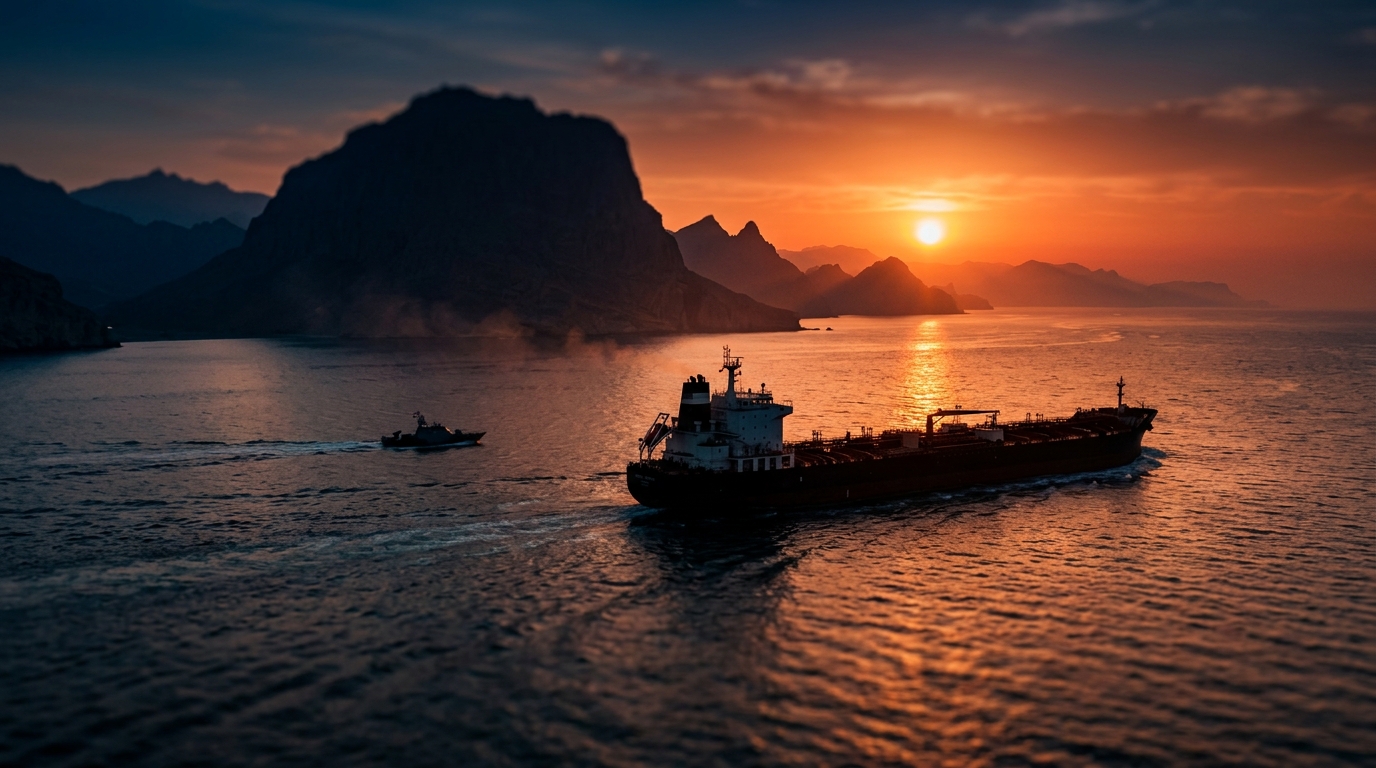
Iran Keeps Oil Flowing Through Strait of Hormuz Amid War – Implications for Global Energy Security — UPSC Current Affairs | March 18, 2026
Iran Keeps Oil Flowing Through Strait of Hormuz Amid War – Implications for Global Energy Security
Since the Iran‑Israel war began, about 90 vessels—including oil tankers—have crossed the <span class="key-term" data-definition="Strait of Hormuz — A narrow maritime chokepoint between Oman and Iran through which about 20% of the world’s oil passes (GS3: Economy)">Strait of Hormuz</span>, allowing Iran to export over 16 million barrels of oil despite a partial blockade. The selective openings, driven by diplomatic talks and data‑driven monitoring, underscore the nexus of geopolitics, sanctions, and global energy security, a key theme for UPSC aspirants.
The ongoing Strait of Hormuz has not been completely shut despite the Iran‑Israel war . Around 90 vessels, including several oil tankers , have transited the waterway since the conflict began, many under “dark” flags to evade sanctions . The movement reflects a selective rather than total blockade, with significant ramifications for oil markets and India‑Pakistan diplomatic calculations. Key Developments ~90 ships crossed the strait from 1‑15 March, down from 100‑135 daily pre‑war, but still enough to move millions of barrels of oil. Data from Lloyd's List Intelligence show that >20% of the vessels were Iran‑affiliated; others were linked to China, Greece, India and Pakistan. India‑flagged LPG carriers Shivalik and Nanda Devi and Pakistan‑flagged tanker Karachi successfully transited after diplomatic talks with Tehran. China emerged as the largest buyer of Iranian crude, exploiting its relatively better ties with Tehran. US President Donald Trump urged allies to deploy warships and reopen the strait to curb oil price spikes above $100 per barrel. Important Facts Despite the blockade, Iran exported over 16 million barrels of oil in March, according to the trade‑analytics platform Kpler . The firm’s analyst Ana Subasic described this as “continued resilience” in Iranian export volumes. The war has seen about 20 vessels attacked in the vicinity, yet a “safe corridor” appears to exist for selected ships, possibly facilitated by diplomatic interventions. UPSC Relevance Understanding the dynamics of the Strait of Hormuz is vital for GS‑III (International Relations, Energy Security) and GS‑II (Foreign Policy). The episode illustrates how geopolitical conflicts translate into economic sanctions, maritime security challenges, and price volatility in global oil markets. It also highlights the role of data‑analytics firms like Lloyd's List Intelligence and Kpler in informing policy decisions. Way Forward India, Pakistan and Iraq are likely to continue diplomatic engagement with Tehran to secure limited oil passages, while the United States may balance pressure on Iran with the need to stabilise global oil prices. Monitoring of “dark” transits and enforcement of sanctions will remain crucial. Aspirants should track how selective closures affect energy security, trade balances, and the broader strategic calculus in the Middle East.
Must Review
Login to bookmark articles
Login to mark articles as complete
Overview
Strategic oil flows through Hormuz keep global energy markets volatile amid Iran‑Israel war
Key Facts
90 vessels crossed the Strait of Hormuz from 1‑15 March 2024, down from 100‑135 daily before the war.
More than 20% of the transiting ships were Iran‑affiliated; the rest were linked to China, Greece, India and Pakistan.
Iran exported over 16 million barrels of crude in March 2024 despite sanctions, according to Kpler analytics.
India‑flagged LPG carriers Shivalik and Nanda Devi and Pakistan‑flagged tanker Karachi were allowed passage after diplomatic talks with Tehran.
China became the largest buyer of Iranian crude in 2024, exploiting its relatively better ties with Tehran.
US officials urged allied navies to deploy warships and keep the strait open to curb oil prices above $100 per barrel.
Around 20 vessels were attacked near the strait, yet a limited ‘safe corridor’ persisted for selected ships.
Background & Context
The Strait of Hormuz, through which roughly 20% of global oil passes, is a classic maritime chokepoint linking geopolitics with energy security. The Iran‑Israel war has triggered selective blockades, sanctions evasion via dark‑flagged tankers, and price volatility, making it a focal point for GS‑II (Foreign Policy) and GS‑III (Energy Security) analysis.
UPSC Syllabus Connections
GS2•Effect of policies of developed and developing countries on IndiaPrelims_CSAT•Data InterpretationGS2•India and its neighborhood relationsPrelims_GS•Social and Economic Geography of IndiaPrelims_GS•International Current Affairs
Mains Answer Angle
GS‑II: Discuss the implications of the Hormuz disruptions on India’s energy security and foreign‑policy calculus. GS‑III: Evaluate how sanctions‑evasion tactics affect global oil markets and propose policy responses.