Loading page, please wait…
HomeCurrent AffairsEditorialsGovt SchemesLearning ResourcesUPSC SyllabusPricingAboutBest UPSC AIUPSC AI ToolAI for UPSCUPSC ChatGPT

© 2026 Vaidra. All rights reserved.

PrivacyTerms
Vaidra Logo
Vaidra

Top 4 items + smart groups

UPSC GPT
New
Current Affairs
Daily Solutions
Daily Puzzle
Mains Evaluator

Version 2.0.0 • Built with ❤️ for UPSC aspirants

Iran’s Nuclear Chief Stresses Uranium Enrichment as Pre‑condition for US Ceasefire Talks — UPSC Current Affairs | April 9, 2026
Iran’s Nuclear Chief Stresses Uranium Enrichment as Pre‑condition for US Ceasefire Talks
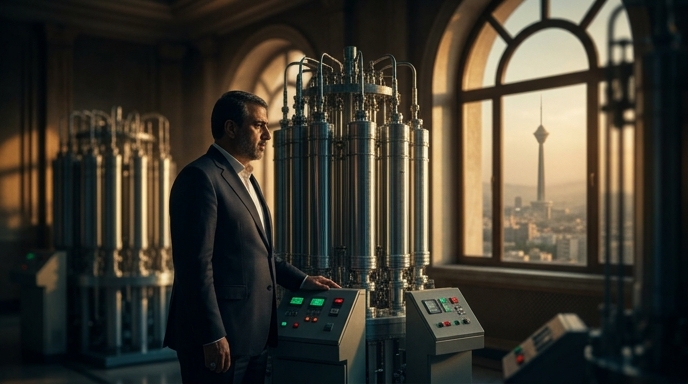
On April 9, 2026, Iran's nuclear chief Mohammad Eslami said that protecting Tehran's right to uranium enrichment is essential for any ceasefire talks with the United States. The statement, made during commemorations for the late Supreme Leader, underscores the centrality of nuclear sovereignty in Iran‑US diplomatic negotiations, a key topic for UPSC security and international relations.
Overview On April 9, 2026 , Mohammad Eslami told journalists that safeguarding Tehran's right to uranium enrichment is "necessary" for any ceasefire talks with the United States . The remarks were made during commemorations for the late Supreme Leader Ayatollah Ali Khamenei and were reported by the Associated Press. Key Developments Iran reiterates that the right to enrich uranium cannot be separated from any future diplomatic settlement. The statement comes amid stalled negotiations on a broader nuclear agreement between Tehran and Washington. Iranian officials emphasize that enrichment is a sovereign right under the Non‑Proliferation Treaty (NPT) safeguards. Important Facts The Atomic Energy Organisation of Iran (AEOI) oversees the country's nuclear facilities, including the Natanz and Fordow enrichment plants. Iran currently enriches uranium up to 60% purity, a level that shortens the time needed to produce weapons‑grade material. The United States, together with European partners, has repeatedly called for Iran to limit enrichment to 3.67% for civilian use. UPSC Relevance Understanding Iran's nuclear stance is vital for GS2 (International Relations) and GS3 (Security & Strategic Affairs). The issue illustrates: How sovereign rights intersect with international non‑proliferation regimes. The role of strategic communication by senior officials in shaping diplomatic negotiations. The impact of regional power dynamics on global security architecture. For GS1 (History), candidates should note the evolution of Iran’s nuclear programme since the 1970s and its linkage to the 1979 Revolution and subsequent foreign policy shifts. Way Forward Analysts suggest that any durable agreement will need to address: Verification mechanisms under the International Atomic Energy Agency (IAEA) to assure compliance. Economic incentives or sanctions relief that balance Iran’s development goals with non‑proliferation commitments. Regional security guarantees that allay concerns of neighboring states, especially Israel and Saudi Arabia. For UPSC aspirants, tracking future statements from the AEOI and the US State Department will be essential to gauge the trajectory of Indo‑Pacific and Middle‑East security calculations.
  1. Home
  2. Prepare
  3. Current Affairs
  4. Iran’s Nuclear Chief Stresses Uranium Enrichment as Pre‑condition for US Ceasefire Talks
Must Review
Login to bookmark articles
Login to mark articles as complete

Overview

gs.gs285% UPSC Relevance

Iran ties sovereign uranium enrichment right to any US cease‑fire talks, shaping global non‑proliferation

Key Facts

  1. 9 April 2026: Mohammad Eslami, head of Iran's Atomic Energy Organisation (AEOI), said enrichment is a pre‑condition for US cease‑fire talks.
  2. Iran currently enriches uranium up to 60% U‑235 purity at Natanz and Fordow facilities.
  3. The United States and European partners demand enrichment be limited to 3.67% for civilian purposes.
  4. Iran invokes its sovereign right under the Non‑Proliferation Treaty (NPT) safeguards to enrich uranium.
  5. Negotiations on a broader nuclear agreement between Tehran and Washington remain stalled.
  6. AEOI oversees Iran's nuclear research, development, and enrichment plants, including Natanz and Fordow.
  7. Regional security concerns involve Israel and Saudi Arabia; IAEA verification is essential for any deal.

Background & Context

The issue sits at the intersection of GS2 (International Relations) and GS3 (Security & Strategic Affairs), highlighting how a state's claim of sovereign rights over nuclear technology clashes with global non‑proliferation norms. Uranium enrichment, a chemistry‑physics process, underscores the scientific dimension of diplomatic negotiations and the role of verification mechanisms like the IAEA.

UPSC Syllabus Connections

Prelims_GS•Physics and Chemistry in Everyday Life

Mains Answer Angle

In a GS2/GS3 answer, candidates can discuss the tension between Iran's asserted sovereign right to enrich uranium and the international non‑proliferation regime, evaluating its impact on US‑Iran cease‑fire negotiations and regional security.

Full Article

<h3>Overview</h3> <p>On <strong>April 9, 2026</strong>, <span class="key-term" data-definition="Mohammad Eslami — head of Iran's Atomic Energy Organisation, key figure in nuclear policy (GS2: Polity)">Mohammad Eslami</span> told journalists that safeguarding Tehran's right to <span class="key-term" data-definition="Uranium enrichment — process of increasing the proportion of U‑235 isotope to make nuclear fuel or weapons; central to nuclear non‑proliferation debates (GS3: Economy/International Relations)">uranium enrichment</span> is "necessary" for any <span class="key-term" data-definition="Ceasefire talks — diplomatic negotiations aimed at halting hostilities, often linked to broader security and nuclear agreements (GS2: Polity)">ceasefire talks</span> with the <span class="key-term" data-definition="United States — global superpower whose foreign policy on Iran's nuclear program influences regional security and non‑proliferation (GS2: Polity)">United States</span>. The remarks were made during commemorations for the late <span class="key-term" data-definition="Supreme Leader — highest authority in Iran's political system, whose directives shape national policy (GS2: Polity)">Supreme Leader Ayatollah Ali Khamenei</span> and were reported by the Associated Press.</p> <h3>Key Developments</h3> <ul> <li>Iran reiterates that the right to enrich uranium cannot be separated from any future diplomatic settlement.</li> <li>The statement comes amid stalled negotiations on a broader nuclear agreement between Tehran and Washington.</li> <li>Iranian officials emphasize that enrichment is a sovereign right under the Non‑Proliferation Treaty (NPT) safeguards.</li> </ul> <h3>Important Facts</h3> <p>The <span class="key-term" data-definition="Atomic Energy Organisation of Iran — Iran's state body responsible for nuclear research and development, overseeing uranium enrichment and nuclear power (GS2: Polity)">Atomic Energy Organisation of Iran</span> (AEOI) oversees the country's nuclear facilities, including the Natanz and Fordow enrichment plants. Iran currently enriches uranium up to 60% purity, a level that shortens the time needed to produce weapons‑grade material. The United States, together with European partners, has repeatedly called for Iran to limit enrichment to 3.67% for civilian use.</p> <h3>UPSC Relevance</h3> <p>Understanding Iran's nuclear stance is vital for GS2 (International Relations) and GS3 (Security & Strategic Affairs). The issue illustrates:</p> <ul> <li>How sovereign rights intersect with international non‑proliferation regimes.</li> <li>The role of strategic communication by senior officials in shaping diplomatic negotiations.</li> <li>The impact of regional power dynamics on global security architecture.</li> </ul> <p>For GS1 (History), candidates should note the evolution of Iran’s nuclear programme since the 1970s and its linkage to the 1979 Revolution and subsequent foreign policy shifts.</p> <h3>Way Forward</h3> <p>Analysts suggest that any durable agreement will need to address:</p> <ul> <li>Verification mechanisms under the International Atomic Energy Agency (IAEA) to assure compliance.</li> <li>Economic incentives or sanctions relief that balance Iran’s development goals with non‑proliferation commitments.</li> <li>Regional security guarantees that allay concerns of neighboring states, especially Israel and Saudi Arabia.</li> </ul> <p>For UPSC aspirants, tracking future statements from the AEOI and the US State Department will be essential to gauge the trajectory of Indo‑Pacific and Middle‑East security calculations.</p>
Read Original on hindu

Analysis

Practice Questions

GS2
Easy
Prelims MCQ

Uranium enrichment levels

1 marks
4 keywords
GS2
Medium
Mains Short Answer

Sovereign rights vs. non‑proliferation regime

10 marks
5 keywords
GS3
Hard
Mains Essay

Nuclear diplomacy and regional security

25 marks
8 keywords
Related:Daily•Weekly

Loading related articles...

Loading related articles...

Tip: Click articles above to read more from the same date, or use the back button to see all articles.

Explore:Current Affairs·Editorial Analysis·Govt Schemes·Study Materials·Previous Year Questions·UPSC GPT