Loading page, please wait…
HomeCurrent AffairsEditorialsGovt SchemesLearning ResourcesUPSC SyllabusPricingAboutBest UPSC AIUPSC AI ToolAI for UPSCUPSC ChatGPT

© 2026 Vaidra. All rights reserved.

PrivacyTerms
Vaidra Logo
Vaidra

Top 4 items + smart groups

UPSC GPT
New
Current Affairs
Daily Solutions
Daily Puzzle
Mains Evaluator

Version 2.0.0 • Built with ❤️ for UPSC aspirants

Israel and US Airstrikes on Tehran Kill 25+; Iran Launches Missile Retaliation – Strategic Implications — UPSC Current Affairs | April 6, 2026
Israel and US Airstrikes on Tehran Kill 25+; Iran Launches Missile Retaliation – Strategic Implications
On 6 April 2026, Israel and the United States carried out airstrikes on Tehran, killing over 25 people and damaging Sharif University of Technology and a gas site. Iran retaliated with missile fire toward Israel and Gulf states as the US‑set deadline to reopen the Strait of Hormuz approached, underscoring heightened geopolitical tension in the region.
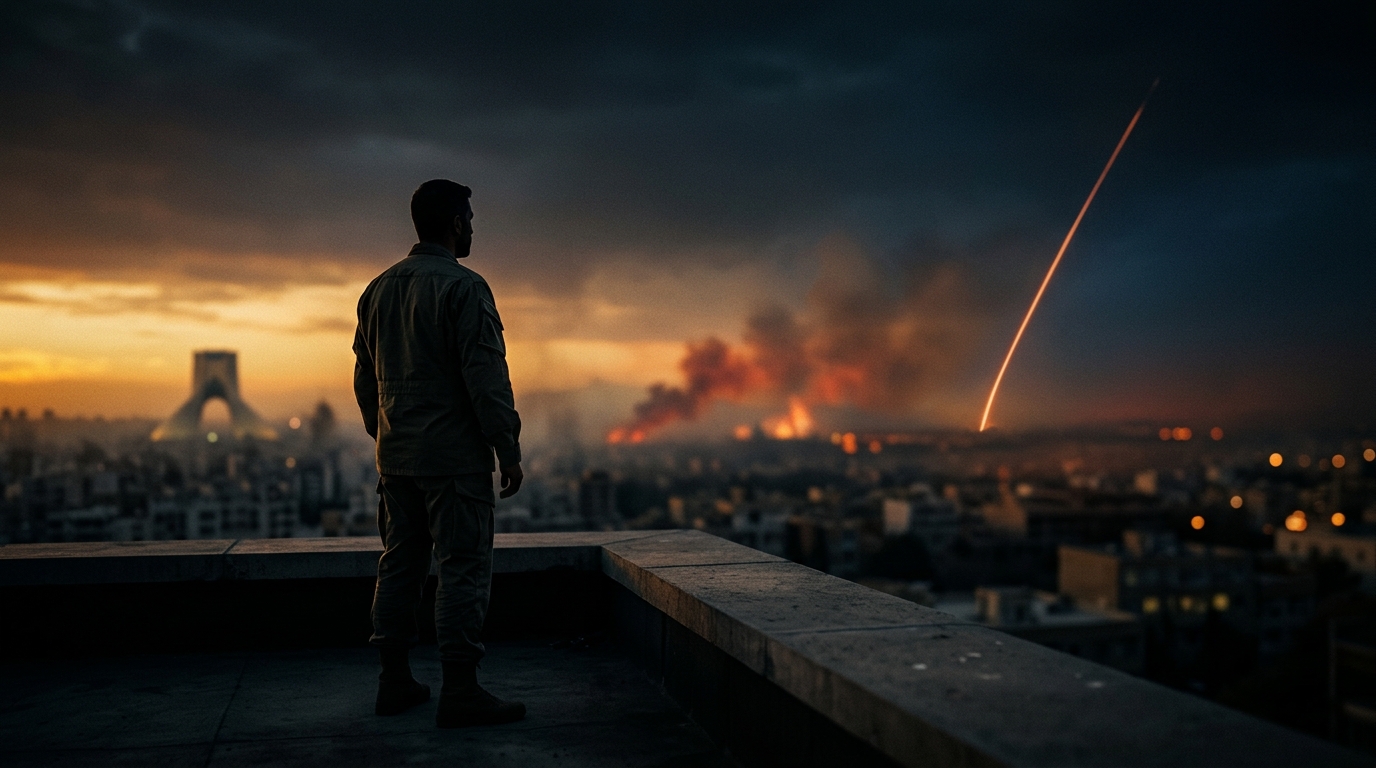
Overview On Monday, 6 April 2026 , a coordinated air campaign by IDF and the United States struck multiple targets in Tehran . The raids killed more than 25 people, damaged a natural‑gas distribution site and the grounds of Sharif University of Technology , and prompted Iran to fire missiles at Israel and Gulf Arab states. Key Developments (Bullet Points) Airstrikes by IDF and the United States on Tehran resulted in 25+ fatalities and extensive infrastructure damage. Explosions and low‑flying jets were reported throughout the night; thick black smoke rose near Azadi Square . The strike hit the campus of Sharif University of Technology and an adjacent natural‑gas distribution site. Iran’s state‑run IRAN daily reported a separate airstrike in the holy city of Qom , killing at least five civilians. In retaliation, Iran launched missile fire toward Israel and Gulf Arab neighbours as the Strait of Hormuz deadline set by President Donald Trump loomed. Important Facts The university has been repeatedly sanctioned by multiple countries for its role in Iran’s ballistic missile programme, which is overseen by the Revolutionary Guard . With schools shifted to online learning due to the war, the campus was largely empty at the time of the strike. Iran has not released comprehensive casualty or material loss figures. UPSC Relevance Geopolitics & Security (GS2) : The incident illustrates the volatile Iran‑Israel‑US nexus, the role of proxy warfare, and the strategic importance of the Persian Gulf. Energy Security (GS3) : Threats to the Strait of Hormuz can affect global oil markets, a recurring UPSC topic. International Law & Sanctions (GS1/GS2) : Repeated sanctions on institutions like Sharif University highlight the legal and diplomatic dimensions of non‑proliferation. Way Forward Analysts suggest diplomatic channels must be re‑engaged to prevent escalation, especially concerning the Strait of Hormuz . India, as a major oil importer, should monitor the situation closely, diversify energy sources, and prepare contingency plans for maritime security. For UPSC aspirants, tracking the evolving narrative will aid in answering questions on South‑West Asian security dynamics, energy geopolitics, and the impact of sanctions on state‑linked institutions.
  1. Home
  2. Prepare
  3. Current Affairs
  4. Israel and US Airstrikes on Tehran Kill 25+; Iran Launches Missile Retaliation – Strategic Implications
Login to bookmark articles
Login to mark articles as complete

Overview

gs.gs276% UPSC Relevance

US‑Israel airstrikes on Tehran raise flashpoint over Strait of Hormuz, threatening India’s energy security

Key Facts

  1. 6 April 2026: Coordinated airstrikes by the Israeli Defence Forces (IDF) and the United States hit multiple targets in Tehran.
  2. Casualties exceed 25 deaths; infrastructure damage includes a natural‑gas distribution site and Sharif University of Technology.
  3. A separate airstrike in the holy city of Qom killed at least five civilians, as reported by Iran’s IRAN daily.
  4. Iran retaliated by launching ballistic missiles toward Israel and Gulf Arab states, warning of threats to the Strait of Hormuz.
  5. Sharif University of Technology is under international sanctions for its involvement in Iran’s ballistic missile programme overseen by the IRGC.
  6. Disruption of oil transit through the Strait of Hormuz could spike global oil prices and affect India’s oil imports.
  7. Iran has not released comprehensive casualty or material loss figures for the attacks.

Background & Context

The incident underscores the volatile Iran‑Israel‑US nexus, a core theme in GS2 (Geopolitics & Security). It also highlights the strategic importance of the Strait of Hormuz for global energy security, linking to GS3 (Economy) and the broader discourse on non‑proliferation and sanctions as tools of foreign policy.

Mains Answer Angle

GS2 – Analyse the strategic implications of the 2026 US‑Israel airstrikes and Iran’s missile retaliation on regional security dynamics and India’s energy security, focusing on the Strait of Hormuz.

Full Article

<h2>Overview</h2> <p>On <strong>Monday, 6 April 2026</strong>, a coordinated air campaign by <span class="key-term" data-definition="Israel Defense Forces — the military forces of Israel, comprising ground, air and naval units; central to GS2: Polity and GS3: Security">IDF</span> and the <span class="key-term" data-definition="United States — a global superpower whose foreign policy actions influence international security and economics (GS2: Polity)">United States</span> struck multiple targets in <span class="key-term" data-definition="Tehran — capital city of the Islamic Republic of Iran; political and strategic hub (GS2: Polity)">Tehran</span>. The raids killed more than 25 people, damaged a natural‑gas distribution site and the grounds of <span class="key-term" data-definition="Sharif University of Technology — a premier Iranian university known for engineering and its links to the country's missile programme (GS3: Science & Technology)">Sharif University of Technology</span>, and prompted Iran to fire missiles at Israel and Gulf Arab states.</p> <h3>Key Developments (Bullet Points)</h3> <ul> <li>Airstrikes by <span class="key-term" data-definition="IDF — Israel's armed forces (GS2: Polity)">IDF</span> and the United States on Tehran resulted in <strong>25+ fatalities</strong> and extensive infrastructure damage.</li> <li>Explosions and low‑flying jets were reported throughout the night; thick black smoke rose near <span class="key-term" data-definition="Azadi Square — a major public square in Tehran, often a focal point for protests and state events (GS2: Polity)">Azadi Square</span>.</li> <li>The strike hit the campus of <span class="key-term" data-definition="Sharif University of Technology — leading Iranian technical university linked to missile development (GS3: Science & Technology)">Sharif University of Technology</span> and an adjacent natural‑gas distribution site.</li> <li>Iran’s state‑run <span class="key-term" data-definition="IRAN daily — official newspaper of the Islamic Republic of Iran (GS2: Polity)">IRAN daily</span> reported a separate airstrike in the holy city of <span class="key-term" data-definition="Qom — a Shiite religious centre south of Tehran, housing major seminaries (GS2: Polity)">Qom</span>, killing at least five civilians.</li> <li>In retaliation, Iran launched missile fire toward Israel and Gulf Arab neighbours as the <span class="key-term" data-definition="Strait of Hormuz — narrow waterway linking the Persian Gulf with the Gulf of Oman; vital for global oil transit (GS3: Economy)">Strait of Hormuz</span> deadline set by <span class="key-term" data-definition="Donald Trump — former US President; his administration’s policies continue to shape US‑Iran dynamics (GS2: Polity)">President Donald Trump</span> loomed.</li> </ul> <h3>Important Facts</h3> <p>The university has been repeatedly sanctioned by multiple countries for its role in Iran’s ballistic missile programme, which is overseen by the <span class="key-term" data-definition="Revolutionary Guard (IRGC) — Iran’s elite paramilitary force controlling key defence and economic assets; central to GS2: Polity and GS3: Security)">Revolutionary Guard</span>. With schools shifted to online learning due to the war, the campus was largely empty at the time of the strike. Iran has not released comprehensive casualty or material loss figures.</p> <h3>UPSC Relevance</h3> <ul> <li><strong>Geopolitics & Security (GS2)</strong>: The incident illustrates the volatile Iran‑Israel‑US nexus, the role of proxy warfare, and the strategic importance of the Persian Gulf.</li> <li><strong>Energy Security (GS3)</strong>: Threats to the <span class="key-term" data-definition="Strait of Hormuz — crucial maritime chokepoint for oil shipments; any disruption impacts global oil prices (GS3: Economy)">Strait of Hormuz</span> can affect global oil markets, a recurring UPSC topic.</li> <li><strong>International Law & Sanctions (GS1/GS2)</strong>: Repeated sanctions on institutions like <span class="key-term" data-definition="Sharif University of Technology — targeted for missile‑related research, reflecting the use of economic tools in foreign policy (GS2: Polity)">Sharif University</span> highlight the legal and diplomatic dimensions of non‑proliferation.</li> </ul> <h3>Way Forward</h3> <p>Analysts suggest diplomatic channels must be re‑engaged to prevent escalation, especially concerning the <span class="key-term" data-definition="Strait of Hormuz — potential flashpoint for naval confrontations; maintaining its openness is vital for energy security (GS3: Economy)">Strait of Hormuz</span>. India, as a major oil importer, should monitor the situation closely, diversify energy sources, and prepare contingency plans for maritime security. For UPSC aspirants, tracking the evolving narrative will aid in answering questions on South‑West Asian security dynamics, energy geopolitics, and the impact of sanctions on state‑linked institutions.</p>
Read Original on hindu

Analysis

Practice Questions

GS2
Easy
Prelims MCQ

Geopolitics & Security – Iran‑Israel‑US conflict

1 marks
5 keywords
GS2
Medium
Mains Short Answer

International sanctions & non‑proliferation

5 marks
5 keywords
GS2
Hard
Mains Essay

Energy security, maritime chokepoints, regional geopolitics

20 marks
6 keywords
Related:Daily•Weekly

Loading related articles...

Loading related articles...

Tip: Click articles above to read more from the same date, or use the back button to see all articles.

Explore:Current Affairs·Editorial Analysis·Govt Schemes·Study Materials·Previous Year Questions·UPSC GPT