Loading page, please wait…
HomeCurrent AffairsEditorialsGovt SchemesLearning ResourcesUPSC SyllabusPricingAboutBest UPSC AIUPSC AI ToolAI for UPSCUPSC ChatGPT

© 2026 Vaidra. All rights reserved.

PrivacyTerms
Vaidra Logo
Vaidra

Top 4 items + smart groups

UPSC GPT
New
Current Affairs
Daily Solutions
Daily Puzzle
Mains Evaluator

Version 2.0.0 • Built with ❤️ for UPSC aspirants

Houthi Rebels Launch Ballistic Missile at Israel, Prompting Pakistan‑Mediated Talks on Red Sea Shipping Disruption — UPSC Current Affairs | March 29, 2026
Houthi Rebels Launch Ballistic Missile at Israel, Prompting Pakistan‑Mediated Talks on Red Sea Shipping Disruption
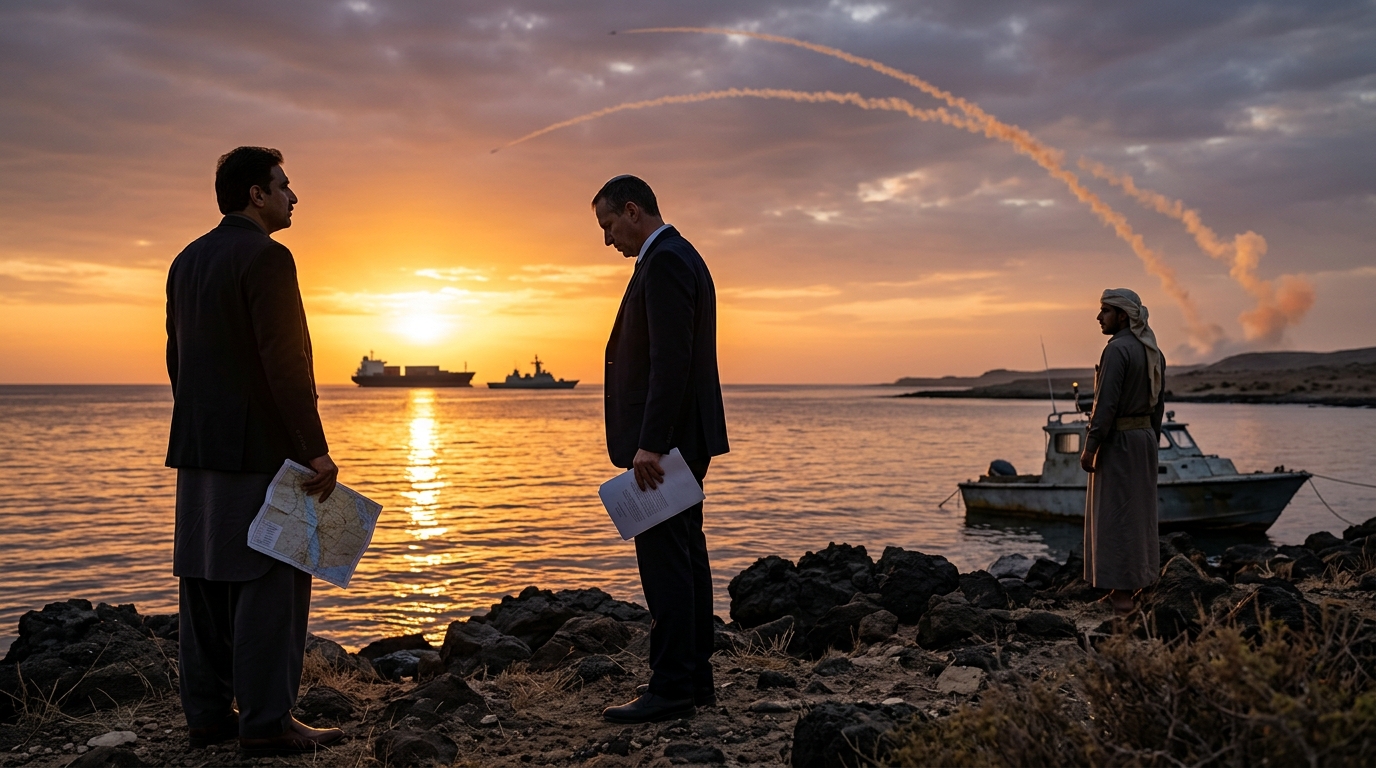
On 28 March 2026, Yemen’s Iran‑backed Houthi rebels fired a ballistic missile at Israel, widening the West Asia war and threatening Red Sea and Hormuz shipping. Pakistan is set to host Saudi, Turkish and Egyptian foreign ministers to mediate, while Iran and Germany signal a possible US‑Iran dialogue, underscoring the geopolitical and economic stakes for UPSC aspirants.
Overview On 28 March 2026 , the Houthi rebels fired a ballistic missile toward Israel . This marks the group’s direct entry into the ongoing West Asia war, raising concerns over the safety of maritime routes in the Red Sea and the already strained Strait of Hormuz . Key Developments The missile launch is the first overt military action by the Houthi movement against Israel since the conflict escalated in early 2026. Iran’s backing of the Houthis intensifies Tehran’s indirect confrontation with Israel and the United States. Pakistan will host foreign ministers of Saudi Arabia , Turkey and Egypt on Monday, 31 March 2026 to discuss the crisis. Iran’s President Masoud Pezeshkian thanked Islamabad for its mediation, while German Foreign Minister Johann Wadephul signalled an imminent US‑Iran dialogue in Pakistan. Important Facts The missile launch coincides with the second month of the broader West Asia conflict, which has already caused global economic ripples. Shipping through the Red Sea and the Gulf of Oman faces heightened risk of disruption, potentially affecting oil prices and trade flows. Pakistan’s role as a neutral facilitator reflects its long‑standing practice of hosting back‑channel talks between adversarial states. UPSC Relevance Understanding this development is crucial for multiple GS papers: GS‑2 (Polity & International Relations) : The proxy dynamics involving Iran, the Houthis, and Israel illustrate the use of non‑state actors in regional power contests. GS‑3 (Economy & Trade) : Potential disruptions to Red Sea shipping and the Strait of Hormuz can impact global oil prices, balance of payments, and energy security. GS‑4 (Ethics & Integrity) : The diplomatic mediation by Pakistan raises questions about the ethics of neutral facilitation and the responsibilities of smaller states in conflict resolution. Way Forward Monitor the outcome of the Pakistan‑hosted talks; a successful dialogue could de‑escalate maritime tensions. Track any further missile launches or naval incidents that may trigger insurance premium hikes and rerouting of vessels. Assess the impact on global oil markets and incorporate scenario‑based analysis into economic forecasting for India’s energy imports.
  1. Home
  2. Prepare
  3. Current Affairs
  4. Houthi Rebels Launch Ballistic Missile at Israel, Prompting Pakistan‑Mediated Talks on Red Sea Shipping Disruption
Must Review
Login to bookmark articles
Login to mark articles as complete

Overview

Houthi missile launch on Israel heightens Red Sea risks, prompting Pakistan‑led diplomatic talks

Key Facts

  1. 28 March 2026: Yemen’s Iran‑backed Houthi rebels fired a ballistic missile toward Israel – first direct strike on Israel.
  2. The launch coincided with the second month of the West Asia war, raising fears of wider regional escalation.
  3. Pakistan will host foreign ministers of Saudi Arabia, Turkey and Egypt on 31 March 2026 to discuss Red Sea and Gulf of Oman shipping disruptions.
  4. Iranian President Masoud Pezeshkian thanked Islamabad for mediation; German FM Johann Wadephul signalled an imminent US‑Iran dialogue in Pakistan.
  5. Disruption to Red Sea and Strait of Hormuz shipping could spike global oil prices and affect India’s energy import bill.
  6. The incident underscores Iran’s proxy strategy using the Houthis to pressure Israel and the United States.

Background & Context

The missile launch reflects Iran’s use of non‑state proxies to project power in the Israel‑U.S. rivalry, while the Red Sea and Strait of Hormuz remain critical chokepoints for global oil trade. Their vulnerability links geopolitics with economic security, a core theme of GS‑2 and GS‑3.

UPSC Syllabus Connections

Essay•International Relations and Geopolitics

Mains Answer Angle

GS‑2: Analyse how proxy warfare by Iran‑backed groups reshapes Middle‑East security architecture. GS‑3: Evaluate the economic implications of maritime chokepoint disruptions on India’s balance of payments and energy security.

Full Article

Read Original on hindu

Analysis

Practice Questions

GS2
Easy
Prelims MCQ

Proxy warfare and non‑state actors

1 marks
5 keywords
GS3
Medium
Mains Short Answer

Energy security and trade

5 marks
5 keywords
GS2
Hard
Mains Essay

Diplomacy and conflict resolution

20 marks
7 keywords
Related:Daily•Weekly

Loading related articles...

Loading related articles...

Tip: Click articles above to read more from the same date, or use the back button to see all articles.

Explore:Current Affairs·Editorial Analysis·Govt Schemes·Study Materials·Previous Year Questions·UPSC GPT