Loading page, please wait…
HomeCurrent AffairsEditorialsGovt SchemesLearning ResourcesUPSC SyllabusPricingAboutBest UPSC AIUPSC AI ToolAI for UPSCUPSC ChatGPT

© 2026 Vaidra. All rights reserved.

PrivacyTerms
Vaidra Logo
Vaidra

Top 4 items + smart groups

UPSC GPT
New
Current Affairs
Daily Solutions
Daily Puzzle
Mains Evaluator

Version 2.0.0 • Built with ❤️ for UPSC aspirants

Justice B.R. Gavai Calls for Substantive Equality in Sustainable Development – Highlights Structural Discrimination and Governance Reforms | GS2 UPSC Current Affairs April 2026
Justice B.R. Gavai Calls for Substantive Equality in Sustainable Development – Highlights Structural Discrimination and Governance Reforms
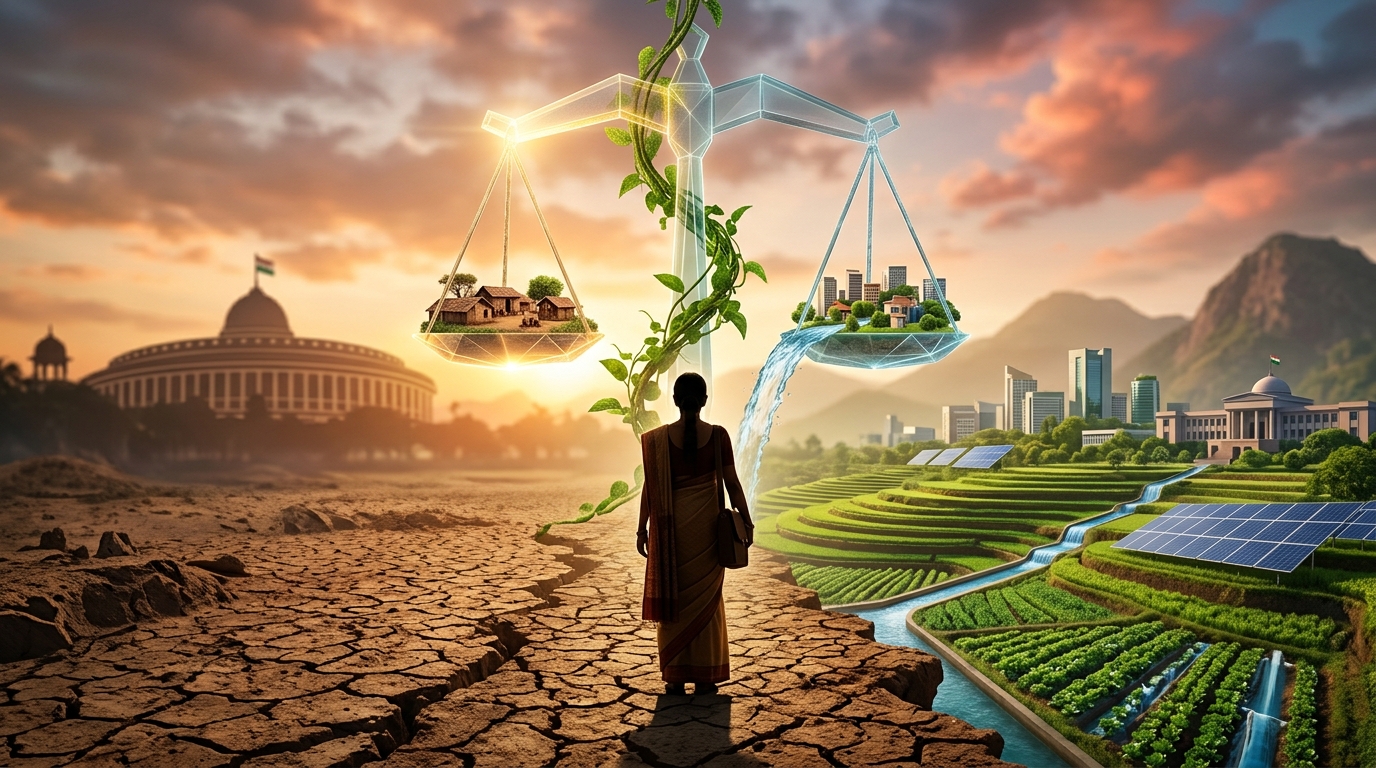
Former Chief Justice B.R. Gavai, speaking at NALSAR's Dr. Ambedkar Memorial Lecture, linked constitutional <span class="key-term" data-definition="Substantive Equality – the principle that equality must address unequal starting points and provide affirmative measures, a core concept in Indian constitutional law (GS2: Polity)">Substantive Equality</span> with sustainable development, warning that structural discrimination and climate change disproportionately burden marginalized groups. He called for differentiated policies, inclusive governance, and institutional reforms to ensure development does not deepen existing hierarchies.
Overview Former Chief Justice of India Justice B.R. Gavai delivered the inaugural Dr. Ambedkar Memorial Lecture at NALSAR University of Law , Hyderabad. His address, titled “Sustainable Development &amp; Substantive Equality: A Constitutional Dialogue”, linked the constitutional mandate of equality with the agenda of sustainable development. Key Developments Justice Gavai stressed that the Constitution envisions Substantive Equality , not merely formal parity. He highlighted Structural Discrimination in education, health, employment and disaster relief, citing women sugar‑cane workers in Maharashtra and tribal communities facing drought. The former Chief Justice warned that climate‑induced shocks affect marginalized labourers disproportionately, illustrating the unequal impact of Climate Change . He critiqued the “one‑size‑fits‑all” policy model and the neglect of workers’ housing in Gated Housing ecosystems. Justice Gavai urged universities to become “laboratories of constitutional governance” by providing basic amenities and health insurance to outsourced staff. Important Facts Reports from Maharashtra reveal young women undergoing hysterectomies to avoid work‑related penalties. Tribal women face compounded vulnerability during water scarcity – limited nutrition, poor health access and heavy manual labour. Urban workers (construction, sanitation, domestic) often commute long distances and live in informal settlements lacking basic services. Universities currently allow students and faculty to use air‑conditioned hostels while daily‑wage staff lack shaded rest areas. UPSC Relevance The lecture underscores several GS‑paper intersections: the constitutional doctrine of equality (GS2), sustainable development goals and environmental justice (GS3), and the role of institutions in delivering inclusive governance (GS4). Understanding Sustainable Development through a lens of Substantive Equality equips aspirants to answer questions on policy design, climate justice and social welfare. Way Forward Adopt differentiated policy frameworks that identify the most affected groups and allocate targeted resources. Integrate health‑insurance pools and basic amenities for contractual workers in all public institutions, especially universities. Embed climate‑risk assessments in development projects to prevent disproportionate burdens on marginalized communities. Re‑think urban planning to include affordable housing for essential workers within gated complexes. Promote legal reforms that recognize and remediate structural discrimination, aligning with the constitutional vision of equality.
  1. Home
  2. Prepare
  3. Current Affairs
  4. Justice B.R. Gavai Calls for Substantive Equality in Sustainable Development – Highlights Structural Discrimination and Governance Reforms
Must Review
Login to bookmark articles
Login to mark articles as complete

Overview

gs.gs282% UPSC Relevance

Justice Gavai links Substantive Equality to Sustainable Development, urging inclusive policy reforms.

Key Facts

  1. Justice B.R. Gavai delivered the inaugural Dr. Ambedkar Memorial Lecture at NALSAR University of Law, Hyderabad, in 2026.
  2. He stressed that the Constitution (Article 14) mandates Substantive Equality – affirmative measures to offset unequal starting points – rather than mere Formal Equality.
  3. The lecture highlighted Structural Discrimination in education, health, employment and disaster relief, citing women sugar‑cane workers in Maharashtra and tribal communities facing drought‑related hardships.
  4. Gavai warned that Climate Change‑induced shocks (e.g., floods, droughts) disproportionately affect marginalised labourers, underscoring environmental justice.
  5. He criticised the ‘one‑size‑fits‑all’ policy model and the absence of basic amenities (shade, health‑insurance) for outsourced staff in gated‑housing ecosystems and universities.
  6. Reports from Maharashtra reveal young women undergoing hysterectomies to evade work‑related penalties, exemplifying gendered structural violence.
  7. He urged differentiated policy frameworks, health‑insurance pools for contractual workers, climate‑risk assessments in development projects, and affordable housing for essential urban workers.

Background & Context

The lecture bridges constitutional law (GS‑2) with sustainable development and environmental justice (GS‑3) and underscores the need for inclusive governance reforms (GS‑4). It reflects Ambedkar’s vision of social justice, linking equality, climate resilience, and policy design.

UPSC Syllabus Connections

Essay•Society, Gender and Social JusticeEssay•Economy, Development and InequalityEssay•Environment and SustainabilityPrelims_GS•Sustainable Development and InclusionGS2•Government policies and interventions for developmentGS3•Environmental Impact AssessmentGS1•Poverty and Developmental IssuesEssay•Philosophy, Ethics and Human ValuesGS4•Lessons from lives and teachings of great leaders, reformers and administratorsGS4•Case Studies on ethical issues

Mains Answer Angle

In a Mains answer, candidates can discuss how Substantive Equality under Article 14 should guide Sustainable Development policies, citing examples from the lecture; likely GS‑2/GS‑3 question on "Equality and Climate Justice".

Full Article

<h2>Overview</h2> <p>Former Chief Justice of India <strong>Justice B.R. Gavai</strong> delivered the inaugural <span class="key-term" data-definition="Dr. Ambedkar Memorial Lecture – an annual lecture series on constitutional and social justice, instituted by NALSAR University of Law (GS2: Polity)">Dr. Ambedkar Memorial Lecture</span> at <span class="key-term" data-definition="NALSAR University of Law – a premier law university in Hyderabad, known for research on constitutional law and social inclusion (GS2: Polity)">NALSAR University of Law</span>, Hyderabad. His address, titled “Sustainable Development &amp; Substantive Equality: A Constitutional Dialogue”, linked the constitutional mandate of equality with the agenda of sustainable development.</p> <h3>Key Developments</h3> <ul> <li>Justice Gavai stressed that the Constitution envisions <span class="key-term" data-definition="Substantive Equality – the principle that equality must address unequal starting points and provide affirmative measures, a core concept in Indian constitutional law (GS2: Polity)">Substantive Equality</span>, not merely formal parity.</li> <li>He highlighted <span class="key-term" data-definition="Structural Discrimination – systemic disadvantages rooted in caste, class, gender or geography that persist across generations (GS2: Polity)">Structural Discrimination</span> in education, health, employment and disaster relief, citing women sugar‑cane workers in Maharashtra and tribal communities facing drought.</li> <li>The former Chief Justice warned that climate‑induced shocks affect marginalized labourers disproportionately, illustrating the unequal impact of <span class="key-term" data-definition="Climate Change – long‑term alteration of temperature and weather patterns, intensifying extreme events and affecting vulnerable populations (GS3: Environment)">Climate Change</span>.</li> <li>He critiqued the “one‑size‑fits‑all” policy model and the neglect of workers’ housing in <span class="key-term" data-definition="Gated Housing – residential complexes with restricted access, often built without provisions for the labour force that constructs and maintains them (GS2: Polity)">Gated Housing</span> ecosystems.</li> <li>Justice Gavai urged universities to become “laboratories of constitutional governance” by providing basic amenities and health insurance to outsourced staff.</li> </ul> <h3>Important Facts</h3> <ul> <li>Reports from Maharashtra reveal young women undergoing hysterectomies to avoid work‑related penalties.</li> <li>Tribal women face compounded vulnerability during water scarcity – limited nutrition, poor health access and heavy manual labour.</li> <li>Urban workers (construction, sanitation, domestic) often commute long distances and live in informal settlements lacking basic services.</li> <li>Universities currently allow students and faculty to use air‑conditioned hostels while daily‑wage staff lack shaded rest areas.</li> </ul> <h3>UPSC Relevance</h3> <p>The lecture underscores several GS‑paper intersections: the constitutional doctrine of equality (GS2), sustainable development goals and environmental justice (GS3), and the role of institutions in delivering inclusive governance (GS4). Understanding <span class="key-term" data-definition="Sustainable Development – development that meets present needs without compromising future generations, integrating economic growth, social inclusion and environmental protection (GS3: Environment)">Sustainable Development</span> through a lens of <span class="key-term" data-definition="Substantive Equality – the principle that equality must address unequal starting points and provide affirmative measures, a core concept in Indian constitutional law (GS2: Polity)">Substantive Equality</span> equips aspirants to answer questions on policy design, climate justice and social welfare.</p> <h3>Way Forward</h3> <ul> <li>Adopt differentiated policy frameworks that identify the most affected groups and allocate targeted resources.</li> <li>Integrate health‑insurance pools and basic amenities for contractual workers in all public institutions, especially universities.</li> <li>Embed climate‑risk assessments in development projects to prevent disproportionate burdens on marginalized communities.</li> <li>Re‑think urban planning to include affordable housing for essential workers within gated complexes.</li> <li>Promote legal reforms that recognize and remediate structural discrimination, aligning with the constitutional vision of equality.</li> </ul>
Read Original on livelaw

Analysis

Practice Questions

Prelims_GS
Easy
Prelims MCQ

Substantive vs Formal Equality

1 marks
3 keywords
GS2
Medium
Mains Short Answer

Structural inequality and constitutional duty

10 marks
5 keywords
GS2
Hard
Mains Essay

Substantive Equality, Sustainable Development, Climate Justice

250 marks
6 keywords
Related:Daily•Weekly

Loading related articles...

Loading related articles...

Tip: Click articles above to read more from the same date, or use the back button to see all articles.

Quick Reference

Key Insight

Justice Gavai links Substantive Equality to Sustainable Development, urging inclusive policy reforms.

Key Facts

  1. Justice B.R. Gavai delivered the inaugural Dr. Ambedkar Memorial Lecture at NALSAR University of Law, Hyderabad, in 2026.
  2. He stressed that the Constitution (Article 14) mandates Substantive Equality – affirmative measures to offset unequal starting points – rather than mere Formal Equality.
  3. The lecture highlighted Structural Discrimination in education, health, employment and disaster relief, citing women sugar‑cane workers in Maharashtra and tribal communities facing drought‑related hardships.
  4. Gavai warned that Climate Change‑induced shocks (e.g., floods, droughts) disproportionately affect marginalised labourers, underscoring environmental justice.
  5. He criticised the ‘one‑size‑fits‑all’ policy model and the absence of basic amenities (shade, health‑insurance) for outsourced staff in gated‑housing ecosystems and universities.
  6. Reports from Maharashtra reveal young women undergoing hysterectomies to evade work‑related penalties, exemplifying gendered structural violence.
  7. He urged differentiated policy frameworks, health‑insurance pools for contractual workers, climate‑risk assessments in development projects, and affordable housing for essential urban workers.

Background

The lecture bridges constitutional law (GS‑2) with sustainable development and environmental justice (GS‑3) and underscores the need for inclusive governance reforms (GS‑4). It reflects Ambedkar’s vision of social justice, linking equality, climate resilience, and policy design.

UPSC Syllabus

  • Essay — Society, Gender and Social Justice
  • Essay — Economy, Development and Inequality
  • Essay — Environment and Sustainability
  • Prelims_GS — Sustainable Development and Inclusion
  • GS2 — Government policies and interventions for development
  • GS3 — Environmental Impact Assessment
  • GS1 — Poverty and Developmental Issues
  • Essay — Philosophy, Ethics and Human Values
Explore:Current Affairs·Editorial Analysis·Govt Schemes·Study Materials·Previous Year Questions·UPSC GPT
  • GS4 — Lessons from lives and teachings of great leaders, reformers and administrators
  • GS4 — Case Studies on ethical issues
  • Mains Angle

    In a Mains answer, candidates can discuss how Substantive Equality under Article 14 should guide Sustainable Development policies, citing examples from the lecture; likely GS‑2/GS‑3 question on "Equality and Climate Justice".