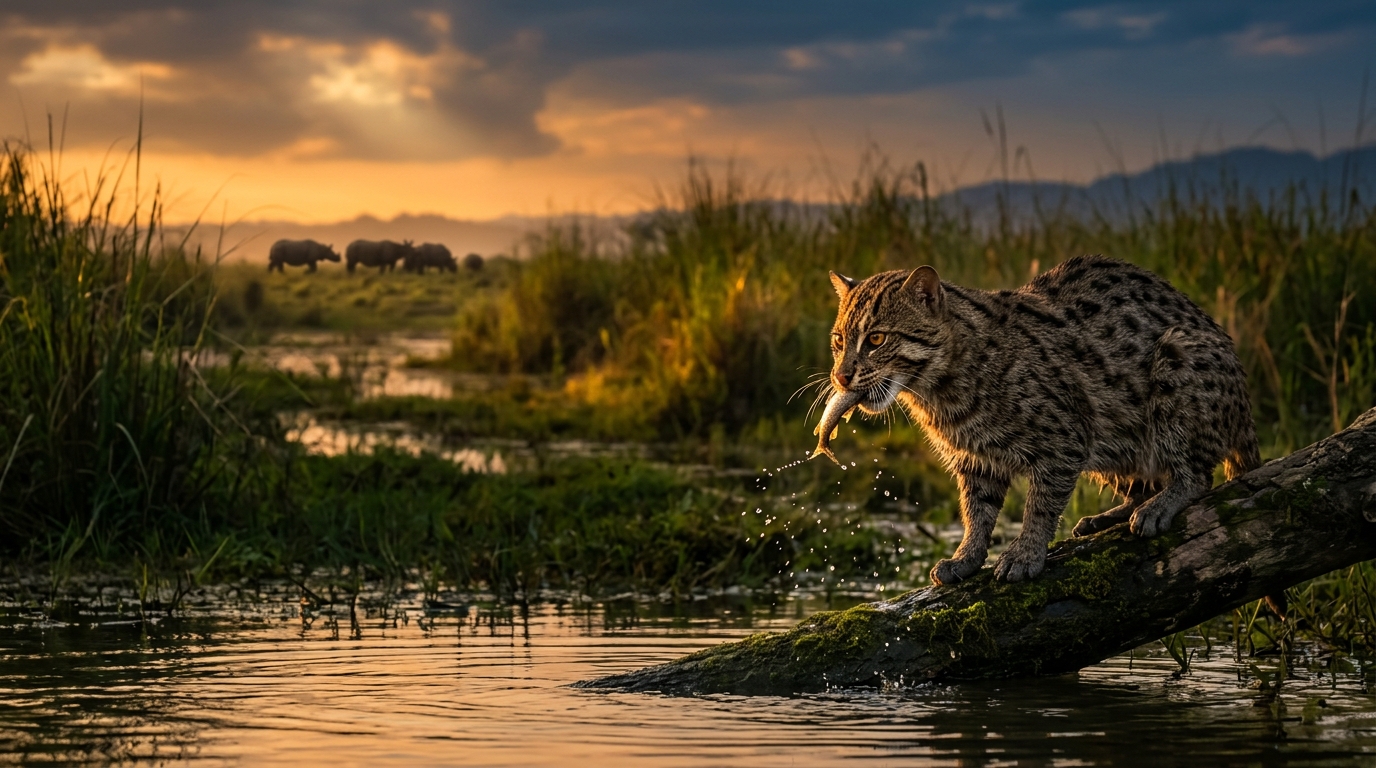
Key Findings on the Fishing Cat in Kaziranga
The inaugural scientific assessment of the Fishing cat confirms that Kaziranga National Park hosts the largest known population of this species in the Terai floodplain. The study, released on 22 February (Fishing Cat Day), used existing camera traps set for tiger surveys, revealing at least 57 unique individuals across 450 sq km.
Key Developments
- First systematic count of Schedule I fishing cats in Kaziranga.
- Population estimate may be conservative because the camera‑trap grid was designed for tigers, not felids.
- Assam’s Environment, Forest and Climate Change Minister Chandra Mohan Patowary highlighted the cat’s cultural significance (known as “Meseka”).
- Director of Kaziranga Tiger Reserve Sonali Ghosh termed the park a “vital ark” for the species in the Brahmaputra floodplains.
Important Facts
The assessment places Kaziranga ahead of other Indian wetlands:
- Kaziranga: 57+ individuals (Terai floodplain).
- Kishanpur Wildlife Sanctuary & Dudhwa National Park (U.P.): 35‑51 cats.
- Pilibhit Tiger Reserve (Uttarakhand): 14‑17 cats.
- Katerniaghat Wildlife Sanctuary (U.P.): 12‑14 cats.
- Valmiki Tiger Reserve (Bihar): 6‑7 cats.
- Estuarine strongholds: Sunderban Tiger Reserve (≈385 cats), Chilika Lagoon (≈341), Bhitarkanika (≈83‑115), Coringa (≈95‑100).
The species thrives in wet alluvial grasslands, shallow beels, wet meadows and woodland refugia. Threats include habitat loss, hunting, and river‑inevitable changes due to climate change.
Exam Relevance
Understanding the status of the fishing cat links directly to several UPSC syllabus points:
- Conservation status under the IUCN SSC and India’s Wildlife Protection Act.
- Wetland management and river‑basin ecology, crucial for questions on climate‑change impacts on biodiversity.
- Role of flagship species in community awareness and policy formulation (e.g., cultural symbolism of “Meseka”).
- Use of scientific tools like camera traps for wildlife monitoring, reflecting modern conservation methodologies.
Way Forward
To safeguard the fishing cat and associated wetland ecosystems, the following steps are recommended:
- Expand dedicated camera‑trap networks for felids to obtain more accurate population data.
- Strengthen enforcement of Schedule I provisions in floodplain regions.
- Integrate wetland conservation into broader river‑basin management plans, addressing climate‑induced hydrological changes.
- Promote community‑based monitoring, leveraging the cultural affinity for the “Meseka” to foster local stewardship.
- Facilitate inter‑state coordination among Assam, Uttar Pradesh, Bihar, West Bengal, Odisha and Andhra Pradesh for a unified wetland‑carnivore strategy.
These measures will not only protect the fishing cat but also enhance the resilience of India’s freshwater biodiversity, a recurring theme in UPSC examinations.