Loading page, please wait…
HomeCurrent AffairsEditorialsGovt SchemesLearning ResourcesUPSC SyllabusPricingAboutBest UPSC AIUPSC AI ToolAI for UPSCUPSC ChatGPT

© 2026 Vaidra. All rights reserved.

PrivacyTerms
Vaidra Logo
Vaidra

Top 4 items + smart groups

UPSC GPT
New
Current Affairs
Daily Solutions
Daily Puzzle
Mains Evaluator

Version 2.0.0 • Built with ❤️ for UPSC aspirants

Lok Sabha Expansion Bill Fails: Delimitation Bill Withdrawn After 131st Amendment Misses Two-Thirds Majority | GS2 UPSC Current Affairs April 2026
Lok Sabha Expansion Bill Fails: Delimitation Bill Withdrawn After 131st Amendment Misses Two-Thirds Majority
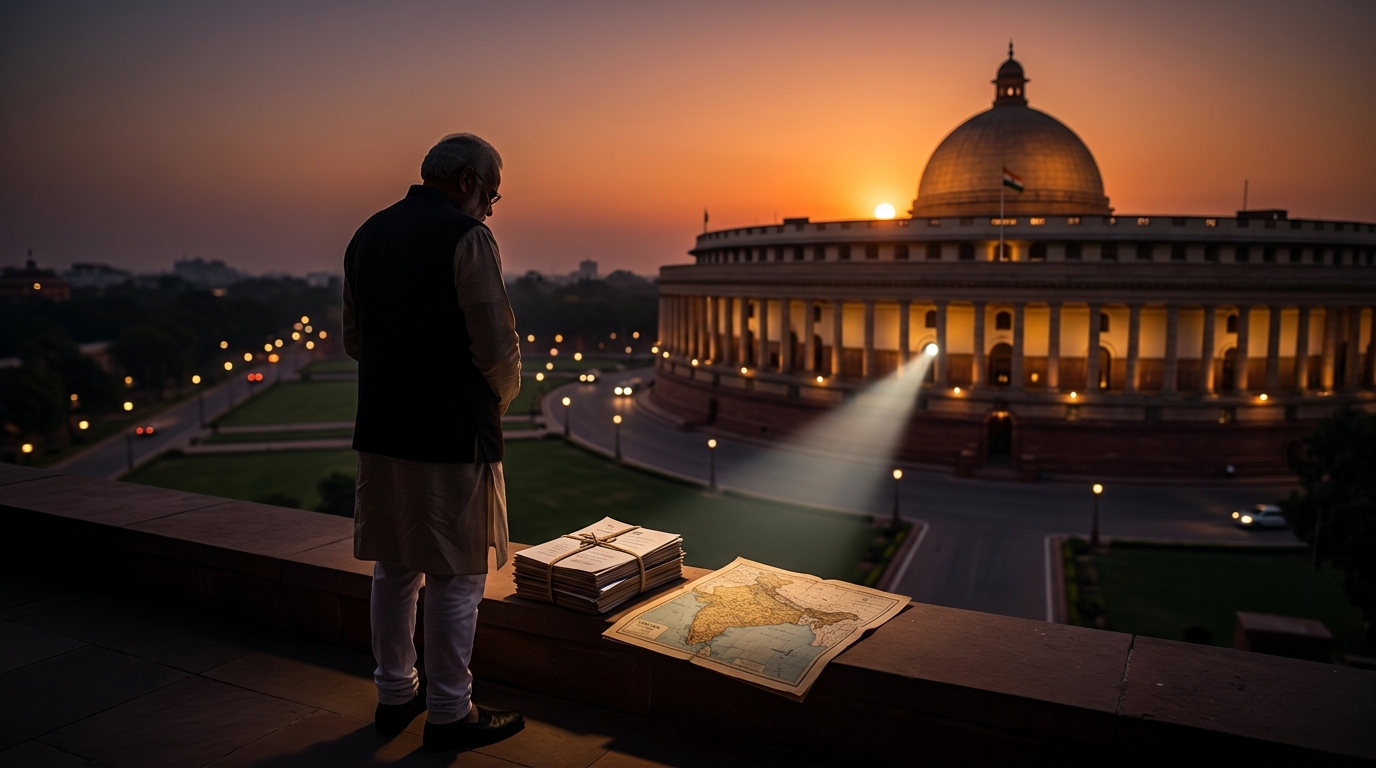
On 16 April 2026, the Indian government introduced three bills—including a Constitution amendment to raise Lok Sabha seats from 543 to 850—but the amendment failed to secure the required two‑thirds majority, leading to the withdrawal of all three bills. The episode revives the delimitation debate, highlighting procedural hurdles and the political complexities of expanding parliamentary representation, a key topic for UPSC Polity.
Overview On 16 April 2026 , the Union Government moved three bills in the Lok Sabha : the Constitution (131st Amendment) Bill , the Delimitation Bill , and the Union Territories Laws (Amendment) Bill . The amendment sought to expand the size of the Lok Sabha to 850 seats and empower a new delimitation exercise using the 2011 population census . The amendment failed to secure the required two‑thirds majority , prompting the government to withdraw the other two bills as well. Key Developments The 131st Amendment Bill did not achieve the constitutional two‑thirds majority and was defeated. Following the defeat, the government withdrew the Delimitation Bill and the Union Territories Laws (Amendment) Bill . The proposal would have raised the number of Lok Sabha seats by 307 , a 56% increase, altering the balance of representation among states. Delimitation based on the 2011 Census would have re‑drawn constituency boundaries after a gap of nearly three decades, affecting electoral politics. Important Facts Current Lok Sabha strength: 543 elected members. Proposed strength: 850 members. Delimitation has not been undertaken since the 2001 Census; the 2011 data remains unused for parliamentary re‑allocation. Constitutional amendment requires a two‑thirds majority in both Houses of Parliament. UPSC Relevance The episode touches upon several core areas of the UPSC syllabus: Parliamentary Structure and Functioning (GS2) : Understanding the composition, powers, and amendment procedures of the Constitution. Electoral Reforms (GS2) : The role of delimitation in maintaining the principle of ‘one person, one vote’. Federalism and State Representation (GS2) : How changes in Lok Sabha size affect the balance of power among states and Union Territories. Constitutional Law (GS2) : The procedural requirement of a two‑thirds majority and the political dynamics of achieving it. Way Forward Given the political sensitivity, the government may consider alternative routes: Building a broader consensus across parties to secure the required majority for any future amendment. Exploring a phased increase in seats rather than a single large jump, to mitigate opposition. Initiating a comprehensive review of the delimitation mechanism, possibly linking it to the upcoming 2026 Census. Engaging civil society and experts to assess the impact of a larger Lok Sabha on legislative efficiency and representation. Until a consensus is reached, the status quo of 543 seats and the existing delimitation framework will remain in force.
  1. Home
  2. Prepare
  3. Current Affairs
  4. Lok Sabha Expansion Bill Fails: Delimitation Bill Withdrawn After 131st Amendment Misses Two-Thirds Majority
Must Review
Login to bookmark articles
Login to mark articles as complete

Overview

gs.gs285% UPSC Relevance

Lok Sabha expansion bill fails, halting fresh delimitation and highlighting constitutional amendment hurdles.

Key Facts

  1. On 16 April 2026, the Lok Sabha considered three bills: Constitution (131st Amendment) Bill, Delimitation Bill, and Union Territories Laws (Amendment) Bill.
  2. The 131st Amendment sought to raise Lok Sabha seats from 543 to 850, an addition of 307 seats (≈56% increase).
  3. The amendment required a two‑thirds majority in both Houses but failed to secure it, leading to withdrawal of the other two bills.
  4. The Delimitation Bill aimed to redraw parliamentary constituencies using the 2011 Census, the first such exercise since the 2001 Census.
  5. Constitutional amendments under Article 368 demand a two‑thirds majority of members present and voting in each House of Parliament.

Background & Context

The proposal touches core UPSC themes: constitutional amendment procedures (Art. 368), the principle of equitable representation through delimitation, and the federal balance of power among states. It also reflects the political dynamics of achieving consensus for large‑scale electoral reforms.

UPSC Syllabus Connections

Prelims_GS•Constitution and Political SystemPrelims_GS•National Current AffairsGS1•Population and Associated IssuesGS2•Historical underpinnings, evolution, features, amendments, significant provisions and basic structureGS2•Functions and responsibilities of Union and States

Mains Answer Angle

GS 2 – Polity: Discuss the implications of expanding the Lok Sabha and undertaking fresh delimitation on federal representation and legislative efficiency.

Full Article

<h3>Overview</h3> <p>On <strong>16 April 2026</strong>, the Union Government moved three bills in the <span class="key-term" data-definition="Lok Sabha — Lower house of India’s Parliament, currently comprising 543 elected members (GS2: Polity)">Lok Sabha</span>: the <span class="key-term" data-definition="Constitution (131st Amendment) Bill — Proposed amendment to increase Lok Sabha seats from 543 to 850 (GS2: Polity)">Constitution (131st Amendment) Bill</span>, the <span class="key-term" data-definition="Delimitation Bill — Legislation to initiate a fresh delimitation of parliamentary constituencies based on the 2011 Census (GS2: Polity)">Delimitation Bill</span>, and the <span class="key-term" data-definition="Union Territories Laws (Amendment) Bill — Bill to amend laws applicable to Union Territories (GS2: Polity)">Union Territories Laws (Amendment) Bill</span>. The amendment sought to expand the size of the Lok Sabha to <strong>850 seats</strong> and empower a new delimitation exercise using the <span class="key-term" data-definition="2011 population census — The most recent decennial census whose data is currently used for constituency re‑allocation (GS3: Economy)">2011 population census</span>. The amendment failed to secure the required <span class="key-term" data-definition="Two‑thirds majority — Constitutional requirement that a bill amending the Constitution must be passed by at least two‑thirds of members present and voting in each House (GS2: Polity)">two‑thirds majority</span>, prompting the government to withdraw the other two bills as well.</p> <h3>Key Developments</h3> <ul> <li>The <span class="key-term" data-definition="Constitution (131st Amendment) Bill — Proposed amendment to increase Lok Sabha seats from 543 to 850 (GS2: Polity)">131st Amendment Bill</span> did not achieve the constitutional <span class="key-term" data-definition="Two‑thirds majority — Constitutional requirement that a bill amending the Constitution must be passed by at least two‑thirds of members present and voting in each House (GS2: Polity)">two‑thirds majority</span> and was defeated.</li> <li>Following the defeat, the government withdrew the <span class="key-term" data-definition="Delimitation Bill — Legislation to initiate a fresh delimitation of parliamentary constituencies based on the 2011 Census (GS2: Polity)">Delimitation Bill</span> and the <span class="key-term" data-definition="Union Territories Laws (Amendment) Bill — Bill to amend laws applicable to Union Territories (GS2: Polity)">Union Territories Laws (Amendment) Bill</span>.</li> <li>The proposal would have raised the number of Lok Sabha seats by <strong>307</strong>, a 56% increase, altering the balance of representation among states.</li> <li>Delimitation based on the 2011 Census would have re‑drawn constituency boundaries after a gap of nearly three decades, affecting electoral politics.</li> </ul> <h3>Important Facts</h3> <ul> <li>Current Lok Sabha strength: <strong>543</strong> elected members.</li> <li>Proposed strength: <strong>850</strong> members.</li> <li>Delimitation has not been undertaken since the 2001 Census; the 2011 data remains unused for parliamentary re‑allocation.</li> <li>Constitutional amendment requires a <span class="key-term" data-definition="Two‑thirds majority — Constitutional requirement that a bill amending the Constitution must be passed by at least two‑thirds of members present and voting in each House (GS2: Polity)">two‑thirds majority</span> in both Houses of Parliament.</li> </ul> <h3>UPSC Relevance</h3> <p>The episode touches upon several core areas of the UPSC syllabus:</p> <ul> <li><strong>Parliamentary Structure and Functioning (GS2)</strong>: Understanding the composition, powers, and amendment procedures of the Constitution.</li> <li><strong>Electoral Reforms (GS2)</strong>: The role of <span class="key-term" data-definition="Delimitation — Process of redrawing the boundaries of electoral constituencies based on population data to ensure equal representation (GS2: Polity)">delimitation</span> in maintaining the principle of ‘one person, one vote’.</li> <li><strong>Federalism and State Representation (GS2)</strong>: How changes in Lok Sabha size affect the balance of power among states and Union Territories.</li> <li><strong>Constitutional Law (GS2)</strong>: The procedural requirement of a <span class="key-term" data-definition="Two‑thirds majority — Constitutional requirement that a bill amending the Constitution must be passed by at least two‑thirds of members present and voting in each House (GS2: Polity)">two‑thirds majority</span> and the political dynamics of achieving it.</li> </ul> <h3>Way Forward</h3> <p>Given the political sensitivity, the government may consider alternative routes:</p> <ul> <li>Building a broader consensus across parties to secure the required majority for any future amendment.</li> <li>Exploring a phased increase in seats rather than a single large jump, to mitigate opposition.</li> <li>Initiating a comprehensive review of the <span class="key-term" data-definition="Delimitation — Process of redrawing the boundaries of electoral constituencies based on population data to ensure equal representation (GS2: Polity)">delimitation</span> mechanism, possibly linking it to the upcoming 2026 Census.</li> <li>Engaging civil society and experts to assess the impact of a larger Lok Sabha on legislative efficiency and representation.</li> </ul> <p>Until a consensus is reached, the status quo of 543 seats and the existing delimitation framework will remain in force.</p>
Read Original on hindu

Analysis

Practice Questions

Prelims
Easy
Prelims MCQ

Constitutional Amendment Procedure

1 marks
3 keywords
GS2
Medium
Mains Short Answer

Constitutional Amendment – Political Dynamics

10 marks
4 keywords
GS2
Hard
Mains Essay

Delimitation, Federal Balance, Electoral Reforms

25 marks
6 keywords
Related:Daily•Weekly

Loading related articles...

Loading related articles...

Tip: Click articles above to read more from the same date, or use the back button to see all articles.

Quick Reference

Key Insight

Lok Sabha expansion bill fails, halting fresh delimitation and highlighting constitutional amendment hurdles.

Key Facts

  1. On 16 April 2026, the Lok Sabha considered three bills: Constitution (131st Amendment) Bill, Delimitation Bill, and Union Territories Laws (Amendment) Bill.
  2. The 131st Amendment sought to raise Lok Sabha seats from 543 to 850, an addition of 307 seats (≈56% increase).
  3. The amendment required a two‑thirds majority in both Houses but failed to secure it, leading to withdrawal of the other two bills.
  4. The Delimitation Bill aimed to redraw parliamentary constituencies using the 2011 Census, the first such exercise since the 2001 Census.
  5. Constitutional amendments under Article 368 demand a two‑thirds majority of members present and voting in each House of Parliament.

Background

The proposal touches core UPSC themes: constitutional amendment procedures (Art. 368), the principle of equitable representation through delimitation, and the federal balance of power among states. It also reflects the political dynamics of achieving consensus for large‑scale electoral reforms.

UPSC Syllabus

  • Prelims_GS — Constitution and Political System
  • Prelims_GS — National Current Affairs
  • GS1 — Population and Associated Issues
  • GS2 — Historical underpinnings, evolution, features, amendments, significant provisions and basic structure
  • GS2 — Functions and responsibilities of Union and States

Mains Angle

GS 2 – Polity: Discuss the implications of expanding the Lok Sabha and undertaking fresh delimitation on federal representation and legislative efficiency.

Explore:Current Affairs·Editorial Analysis·Govt Schemes·Study Materials·Previous Year Questions·UPSC GPT