Overview
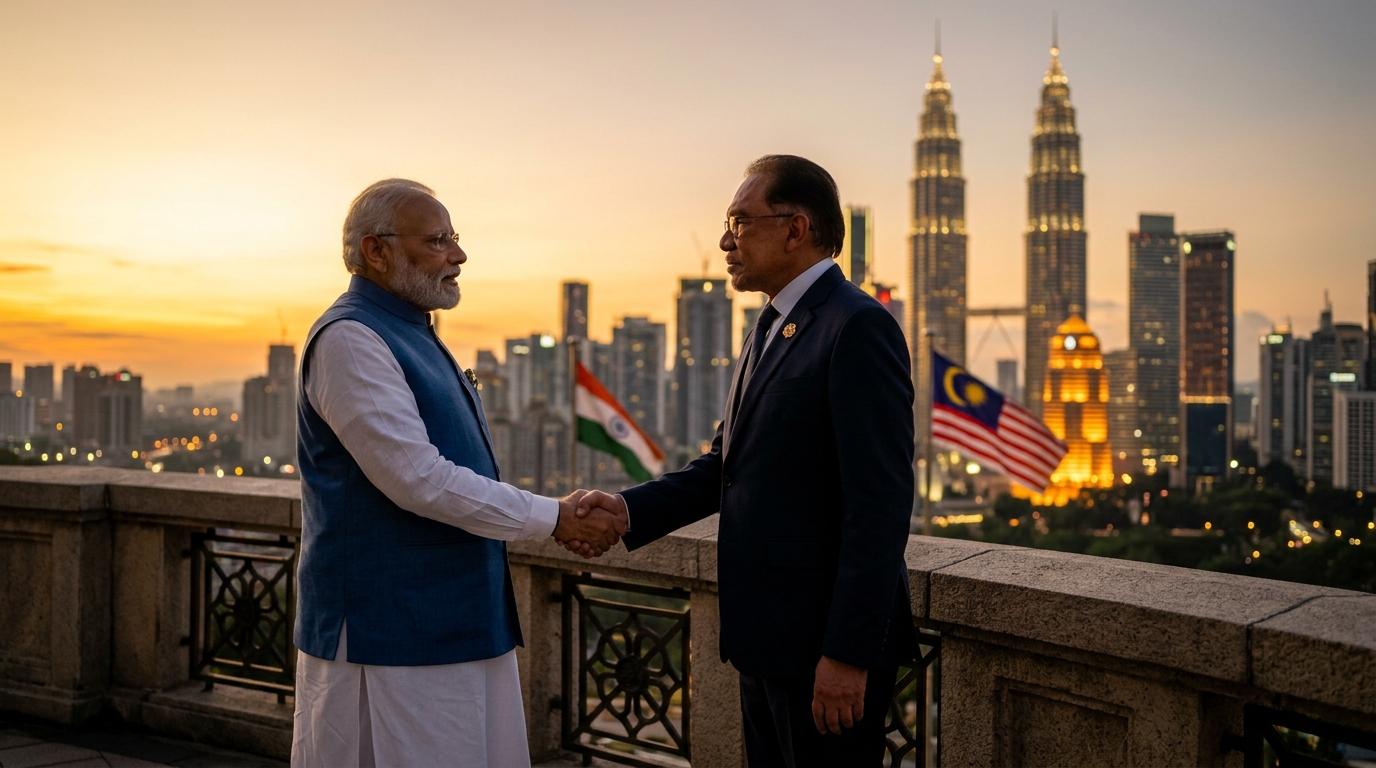
On 7 February 2026, Prime Minister Narendra Modi arrived in Kuala Lumpur for his first foreign trip of the year, underscoring India’s emerging role as a “trusted partner for growth”. The visit highlighted recent trade accords with the UK, UAE, Australia, New Zealand, Oman, EU and the United States, and emphasized the strategic value of the Indian diaspora in deepening India‑Malaysia ties.
Key Developments
- Development 1: Modi reiterated that “trust is India’s strongest currency”, citing the slew of bilateral trade agreements signed in the past year, which position India as a reliable growth partner for major economies.
- Development 2: The Prime Minister highlighted cultural and people‑to‑people links, announcing the establishment of a Thiruvalluvar Chair at the University of Malaya and a forthcoming Thiruvalluvar Centre to celebrate shared heritage.
- Development 3: A grand cultural showcase featuring over 800 performers set a new Malaysian Book of Records for the largest Indian dance performance, reinforcing soft‑power diplomacy.
Important Facts
- Fact 1: Malaysia hosts the second‑largest Indian‑origin community worldwide, with more than 1.5 million Indian visitors in 2025 and over 500 schools teaching Indian languages.
- Fact 2: The bilateral relationship is framed as “IMPACT – India‑Malaysia Partnership for Advancing Collective Transformation”, signalling a comprehensive agenda covering trade, culture, tourism and strategic cooperation.
Exam Relevance
This episode is pertinent to GS II (International Relations) – it illustrates India’s use of economic diplomacy, diaspora engagement, and cultural outreach to strengthen bilateral ties. It also touches upon GS III (Economic Development) through the discussion of trade agreements and the concept of “trust” as a diplomatic asset. Aspirants can link the visit to themes of “soft power”, “strategic partnerships”, and “regional connectivity” in both the prelims and mains. Potential question angles include: (i) evaluating the impact of trade agreements on India’s global standing, (ii) role of diaspora in foreign policy, and (iii) significance of cultural diplomacy in South‑East Asian relations.
Way Forward
Going forward, India is likely to deepen economic integration with Southeast Asia, leveraging the “trusted partner” narrative to attract investment and technology transfers. Strengthening institutional mechanisms such as the Thiruvalluvar Centre can institutionalise cultural exchange, while expanding tourism and people‑to‑people contact will consolidate soft‑power gains. Continuous monitoring of trade data and diaspora contributions will be essential for assessing the long‑term efficacy of this partnership.