Overview
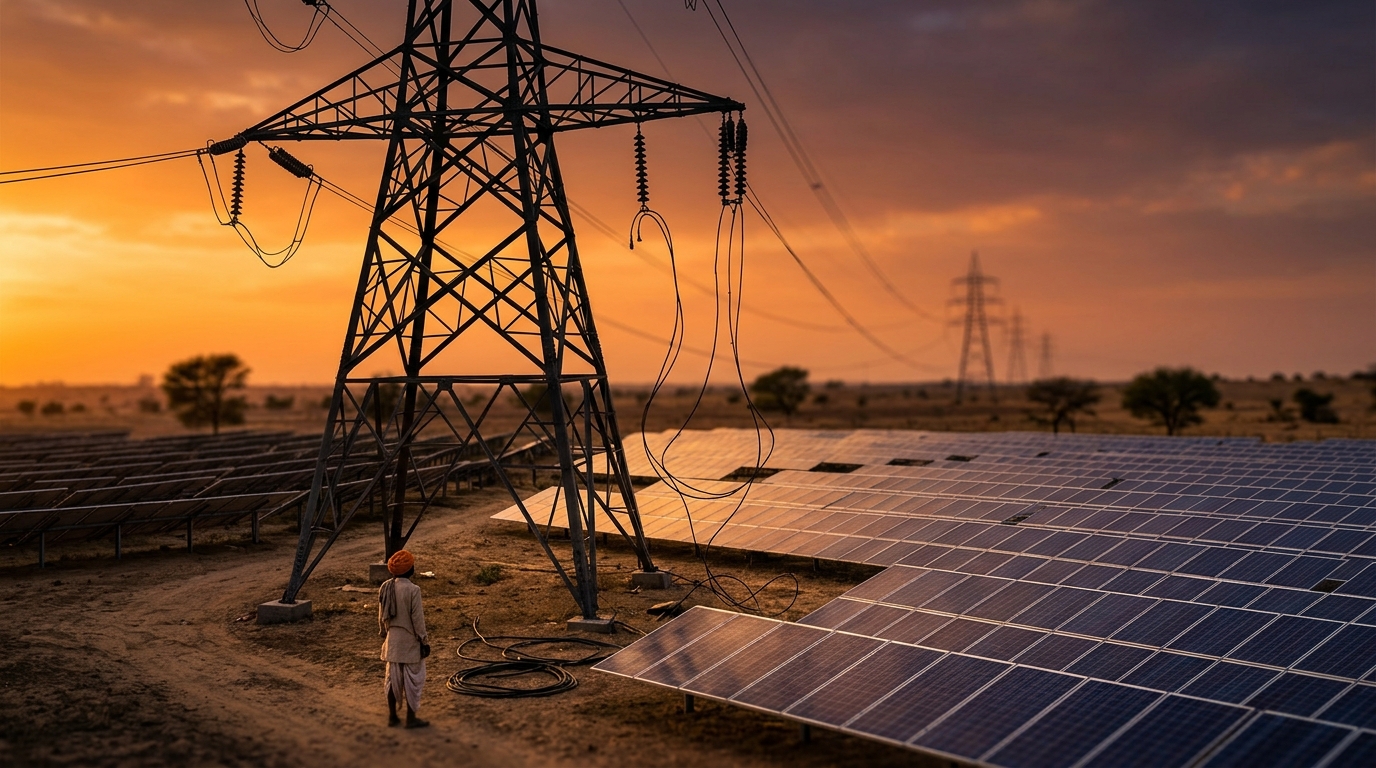
Nearly 4,300 MW of solar power capacity in Rajasthan is facing complete daytime curtailment due to inadequate transmission infrastructure. This situation puts projects worth approximately ₹20,000 crore at risk, according to industry sources. The issue highlights the critical need for synchronized development of renewable energy generation and transmission infrastructure.
Key Developments
Projects Affected
- A total of 26 solar projects, developed by companies including Adani, ReNew, Serentica, Juniper, Zelestra, ACME, and Amp Energy, are currently supplying power under the Temporary General Network Access (T-GNA) framework.
- These projects' associated transmission systems are yet to be commissioned, leading to curtailment.
Transmission Capacity Constraints
- According to data from the Northern Regional Load Despatch Centre (NRLDC), Rajasthan has around 23 GW of commissioned renewable energy capacity.
- However, transmission capacity stands at about 18.9 GW.
- The entire transmission capacity has been allocated to projects with long-term General Network Access (GNA), leaving over 4 GW of capacity operating under T-GNA without evacuation capability.
Impact of New Transmission Line
- Despite the commissioning of the 765 kV Khetri-Narela transmission line, only about 600 MW of additional transmission capacity became available.
- Simultaneously, over 4,300 MW was operationalized under long-term GNA, effectively exhausting surplus margins.
NRLDC Action
- In an email dated December 11, NRLDC withdrew the No Objection Certificates (NOC) for the 26 projects following the commissioning of the line and operationalization of long-term GNA.
Industry Concerns and Recommendations
Project Viability
Developers warned that prolonged curtailment could severely impact project viability and debt servicing. They flagged the issue as a growing systemic risk as generation capacity continues to outpace transmission additions in renewable-rich States such as Rajasthan.
Proposed Solutions
- Industry representatives have urged the government to consider short-term relief measures, including the implementation of a Special Protection Scheme (SPS) to improve evacuation under T-GNA.
- They also called for the dynamic reallocation of unused GNA margins to T-GNA projects during low utilization periods.
- The use of Dynamic Line Rating (DLR) to maximize real-time transmission capacity and prevent renewable assets from turning stranded was also suggested.
Industry Perspective
An industry official stated that most of the 4.3 GW capacity is well within its notified connectivity start date. However, due to delay in commissioning of their Associated Transmission System (ATS), they are forced to deliver power under T-GNA.
Government's Stance and Challenges
The government had earlier indicated that commissioning of the 765 kV Khetri-Narela transmission line would significantly reduce 55% peak hour curtailment faced by Renewable Energy (RE) generators operating under the T-GNA arrangement. However, the actual capacity addition has been much lower than anticipated.
Proposed Measures to Avoid Stranded Capacity
To avoid stranded capacity, the industry has proposed that a T-GNA-only approach can be adopted for all future RE capacity additions in Rajasthan until evacuation margins are demonstrably available.
Exam Relevance
This issue is relevant to GS3 (Infrastructure, Energy) and GS2 (Government Policies). It highlights the challenges in integrating renewable energy into the grid and the need for effective policy and infrastructure planning.
Key Takeaways
- The mismatch between renewable energy generation and transmission capacity is a significant challenge.
- Effective coordination between generation and transmission projects is crucial.
- Innovative solutions like DLR and SPS can improve grid utilization.
- Policy interventions are needed to ensure the viability of renewable energy projects.