Loading page, please wait…
HomeCurrent AffairsEditorialsGovt SchemesLearning ResourcesUPSC SyllabusPricingAboutBest UPSC AIUPSC AI ToolAI for UPSCUPSC ChatGPT

© 2026 Vaidra. All rights reserved.

PrivacyTerms
Vaidra Logo
Vaidra

Top 4 items + smart groups

UPSC GPT
New
Current Affairs
Daily Solutions
Daily Puzzle
Mains Evaluator

Version 2.0.0 • Built with ❤️ for UPSC aspirants

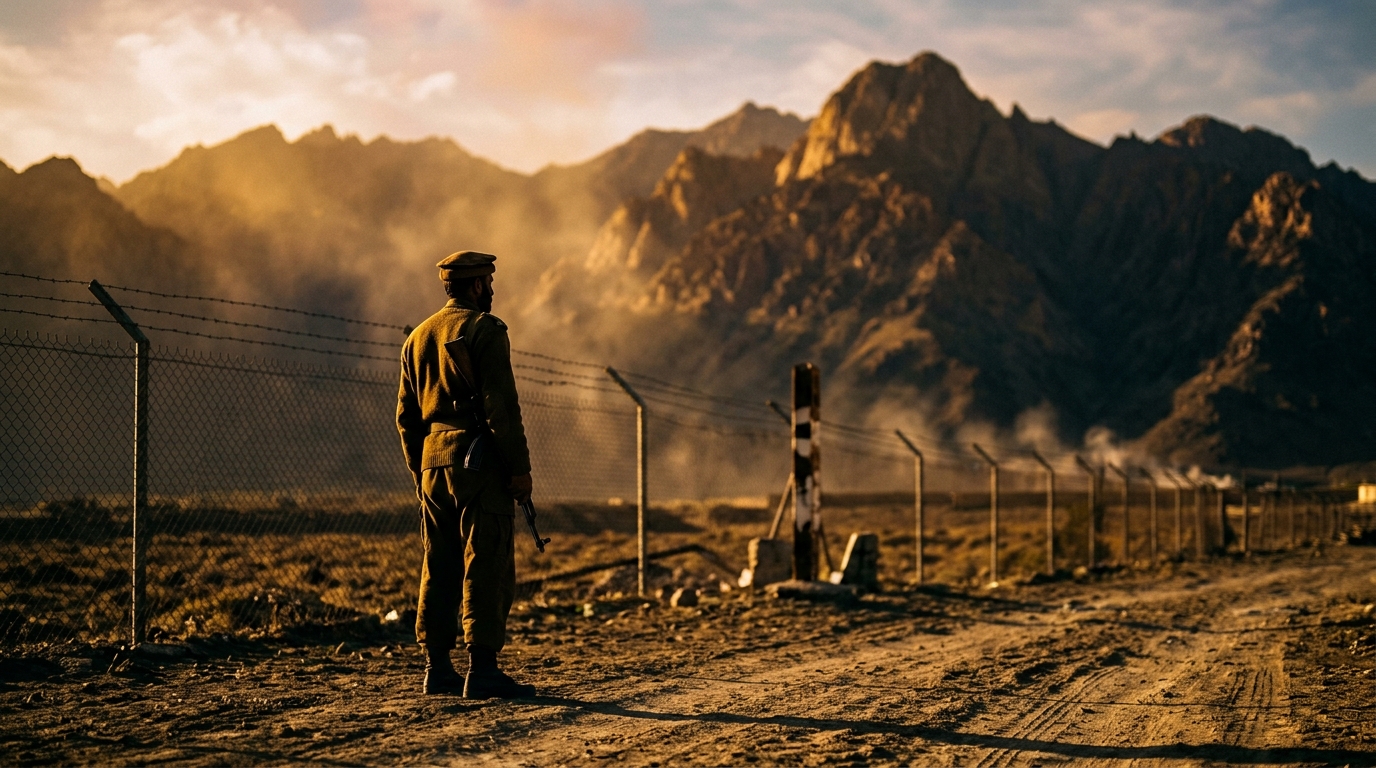
Pakistan wary of militant attacks after Afghanistan air strikes

Pakistan wary of militant attacks after Afghanistan air strikes
In March 2026, Pakistan accused Afghanistan of allowing militants to use Afghan territory as a safe haven after Afghan air strikes, while Kabul dismissed the claim. The dispute highlights gaps in the 2002 bilateral counter‑terrorism pact and raises concerns for regional security, a key focus for UPSC aspirants studying internal security and foreign relations.
Islamabad blames Kabul for allowing the fighters to use Afghanistan as a safe haven. Kabul denies the charges, saying the militancy is Pakistans internal problem
Loading article...

Quick Reference

Key Insight

Afghan‑Pakistani border clash over safe‑haven doctrine raises regional security alarms

Key Facts

  1. In March 2026, Pakistan alleged that Afghanistan’s air strikes targeted militant groups operating from Afghan soil, prompting Islamabad to warn of retaliatory attacks.
  2. Pakistan’s Ministry of Interior reported a 30% rise in cross‑border infiltration attempts along the Durand Line in Q1 2026.
  3. Afghanistan’s National Directorate of Security (NDS) denied involvement, stating militancy is a ‘Pakistan internal problem’.
  4. Both nations are signatories to the 2002 Afghanistan‑Pakistan Bilateral Counter‑Terrorism Agreement, obligating each to prevent use of its territory for hostile acts.
  5. UN Security Council Resolution 2250 (2015) on counter‑terrorism and the SAARC Regional Counter‑Terrorism Strategy (2020) emphasize cooperative action against cross‑border terrorism.
  6. India’s Ministry of External Affairs expressed concern, urging adherence to the ‘safe‑haven doctrine’ under the UN Charter.

Background

The Durand Line has long been a flash‑point for cross‑border militancy, with both Pakistan and Afghanistan accusing each other of providing safe‑havens. The recent air strikes and diplomatic spats test the 2002 bilateral counter‑terrorism pact and broader regional security frameworks like SAARC and UN resolutions, making the issue central to GS‑2 topics of internal security and India‑Pakistan‑Afghanistan relations.

Mains Angle

GS‑2: Discuss the challenges and prospects of Indo‑Pak‑Afghan security cooperation in curbing cross‑border terrorism, with reference to recent 2026 incidents and existing bilateral agreements.

Explore:Current Affairs·Editorial Analysis·Govt Schemes·Study Materials·Previous Year Questions·UPSC GPT
  1. Home
  2. Prepare
  3. Current Affairs
  4. Pakistan wary of militant attacks after Afghanistan air strikes
Login to bookmark articles
Login to mark articles as complete

Overview

gs.gs275% UPSC Relevance

Full Article

In March 2026, Pakistan accused Afghanistan of allowing militants to use Afghan territory as a safe haven after Afghan air strikes, while Kabul dismissed the claim. The dispute highlights gaps in the 2002 bilateral counter‑terrorism pact and raises concerns for regional security, a key focus for UPSC aspirants studying internal security and foreign relations.
Read Original on hindu

Afghan‑Pakistani border clash over safe‑haven doctrine raises regional security alarms

Key Facts

  1. In March 2026, Pakistan alleged that Afghanistan’s air strikes targeted militant groups operating from Afghan soil, prompting Islamabad to warn of retaliatory attacks.
  2. Pakistan’s Ministry of Interior reported a 30% rise in cross‑border infiltration attempts along the Durand Line in Q1 2026.
  3. Afghanistan’s National Directorate of Security (NDS) denied involvement, stating militancy is a ‘Pakistan internal problem’.
  4. Both nations are signatories to the 2002 Afghanistan‑Pakistan Bilateral Counter‑Terrorism Agreement, obligating each to prevent use of its territory for hostile acts.
  5. UN Security Council Resolution 2250 (2015) on counter‑terrorism and the SAARC Regional Counter‑Terrorism Strategy (2020) emphasize cooperative action against cross‑border terrorism.
  6. India’s Ministry of External Affairs expressed concern, urging adherence to the ‘safe‑haven doctrine’ under the UN Charter.

Background & Context

The Durand Line has long been a flash‑point for cross‑border militancy, with both Pakistan and Afghanistan accusing each other of providing safe‑havens. The recent air strikes and diplomatic spats test the 2002 bilateral counter‑terrorism pact and broader regional security frameworks like SAARC and UN resolutions, making the issue central to GS‑2 topics of internal security and India‑Pakistan‑Afghanistan relations.

Mains Answer Angle

GS‑2: Discuss the challenges and prospects of Indo‑Pak‑Afghan security cooperation in curbing cross‑border terrorism, with reference to recent 2026 incidents and existing bilateral agreements.

Analysis

Practice Questions

GS2
Easy
Prelims MCQ

International security frameworks

1 marks
4 keywords
GS2
Medium
Mains Short Answer

Bilateral security agreements

5 marks
4 keywords
GS2
Hard
Mains Essay

Counter‑terrorism cooperation

25 marks
5 keywords
Related:Daily•Weekly

Loading related articles...

Loading related articles...

Tip: Click articles above to read more from the same date, or use the back button to see all articles.

Pakistan wary of militant attacks after Af... | UPSC Current Affairs

Related Topics

  • 📰Current AffairsIndia Condemns Pakistan Airstrike on Kabul Rehab Centre Amid Pakistan‑Afghanistan Conflict and US‑Israel War
  • 📰Current AffairsIndia ने Pakistan Airstrike on Kabul Rehab Centre के खिलाफ निंदा की, Pakistan‑Afghanistan Conflict और US‑Israel War के बीच
  • 📚Subject TopicTurkmenistan-Afghanistan-Pakistan-India Pipeline
  • 📚Subject TopicConcerns Regarding Opium Stockpiles in Afghanistan
  • 📚Subject TopicRegional Dialogue of Secretaries of Security Councils on Afghanistan