Loading page, please wait…
HomeCurrent AffairsEditorialsGovt SchemesLearning ResourcesUPSC SyllabusPricingAboutBest UPSC AIUPSC AI ToolAI for UPSCUPSC ChatGPT

© 2026 Vaidra. All rights reserved.

PrivacyTerms
Vaidra Logo
Vaidra

Top 4 items + smart groups

UPSC GPT
New
Current Affairs
Daily Solutions
Daily Puzzle
Mains Evaluator

Version 2.0.0 • Built with ❤️ for UPSC aspirants

Parliament to Debate Constitution (131st Amendment) Bill & 2026 Delimitation Bill on Women’s 1/3 Reservation | GS2 UPSC Current Affairs April 2026
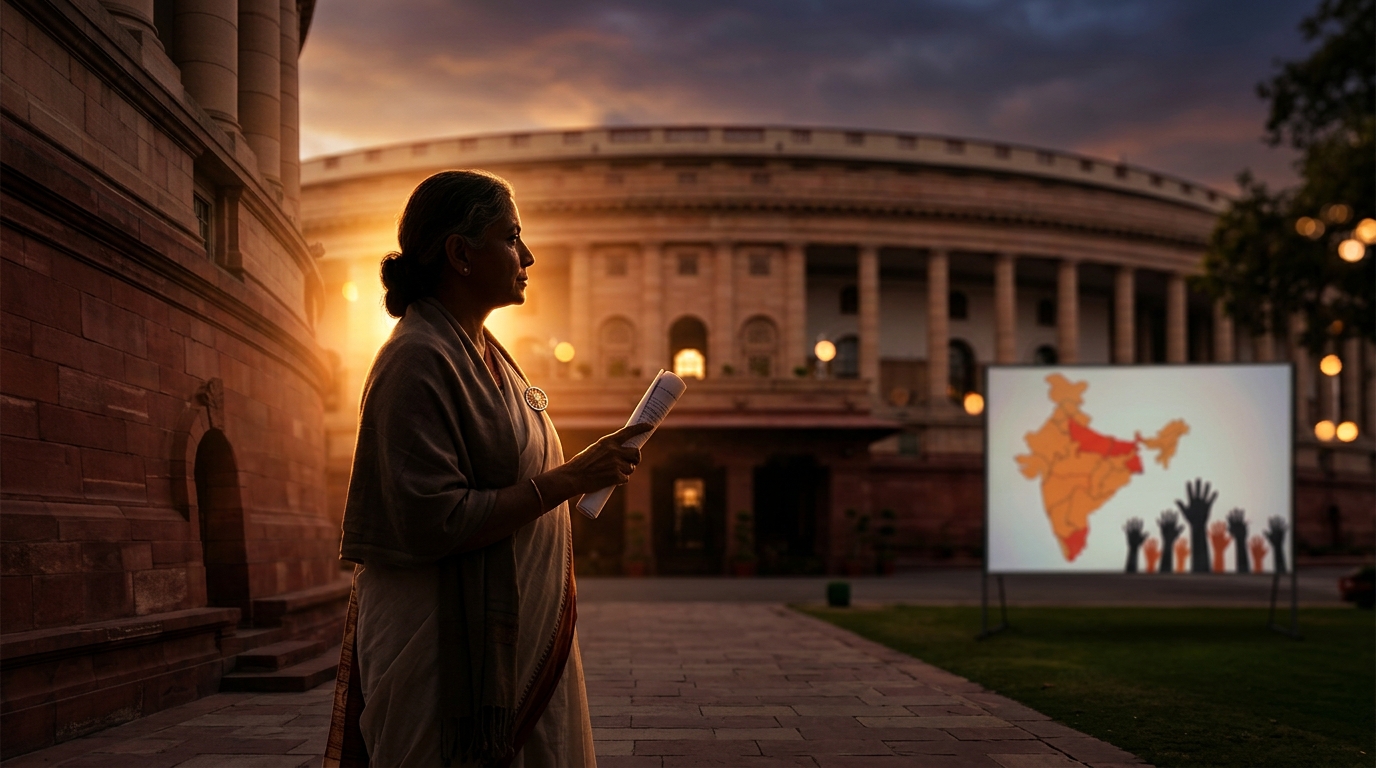
Parliament to Debate Constitution (131st Amendment) Bill & 2026 Delimitation Bill on Women’s 1/3 Reservation
The Lok Sabha and Rajya Sabha will debate the Constitution (131st Amendment) Bill and the 2026 Delimitation Bill, both aimed at operationalising the one‑third reservation for women. The proposals tie reservation to a delayed Census and delimitation, prompting opposition criticism and raising significant UPSC‑relevant questions on constitutional amendments, electoral reforms, and gender equity.
The Lok Sabha and Rajya Sabha will debate two landmark bills aimed at operationalising the constitutional mandate of reserving one‑third of seats for women in Parliament and State Assemblies. Key Developments The Constitution (131st Amendment) Bill seeks to raise the total seats in Parliament to 850 , with one‑third reserved for women , subject to a fresh delimitation. The Delimitation Bill, 2026 proposes a Delimitation Commission using the 2011 Census . Earlier, in September 2023 , the government passed the Nari Shakti Vandan Adhiniyam (NSVA) , instead of the original women’s reservation bill that had cleared the Rajya Sabha in 2010. The opposition warned that tying reservation to a delayed Census and delimitation would deny women the right to contest the 2024 Lok Sabha elections and subsequent Assembly polls. Important Facts Current Lok Sabha strength: 543 seats; the amendment proposes an increase to 850 . The Constitution already mandates a one‑third reservation for women, but implementation has been stalled since 2010. The last Census used for delimitation was conducted in 2011; a new Census has not been completed as of 2026. The government’s narrative frames opposition as “anti‑women”, while opposition parties label the proposals “flawed”. UPSC Relevance The issue touches upon GS2: Polity topics such as constitutional amendments, the functioning of the Lok Sabha , and the role of the Delimitation Commission . It also highlights gender‑equity policies, a recurring theme in GS4: Ethics . Understanding the political dynamics of coalition politics and opposition strategy is essential for answer writing. Way Forward Parliament must decide whether to decouple women’s reservation from the pending Census and allow immediate implementation for the 2024 elections. A timely completion of the Census and constitution of the Delimitation Commission are required to avoid further delays. Stakeholder consensus—government, opposition, and civil‑society groups—should be built to ensure the reservation policy is not perceived as a political bargaining chip.
  1. Home
  2. Prepare
  3. Current Affairs
  4. Parliament to Debate Constitution (131st Amendment) Bill & 2026 Delimitation Bill on Women’s 1/3 Reservation
Must Review
Login to bookmark articles
Login to mark articles as complete

Overview

gs.gs284% UPSC Relevance

Women’s 1/3 reservation hinges on a 850‑seat Lok Sabha and delayed delimitation—key UPSC polity issue.

Key Facts

  1. Constitution (131st Amendment) Bill proposes raising Lok Sabha seats from 543 to 850, with 1/3 (≈283) seats reserved for women.
  2. One‑third reservation for women in Parliament and State Assemblies is constitutionally mandated but has remained unimplemented since the 2010 Rajya Sabha approval.
  3. Delimitation Bill, 2026 seeks to constitute a Delimitation Commission to redraw constituencies using the 2011 Census data.
  4. Nari Shakti Vandan Adhiniyam (2023) linked women’s reservation to the pending Census and delimitation, effectively postponing its rollout.
  5. Opposition parties warn that tying reservation to a delayed Census will deny women representation in the 2024 Lok Sabha and upcoming Assembly elections.
  6. Current Lok Sabha strength stands at 543 members; the amendment would increase it to 850 members.
  7. As of 2026, a fresh Census after 2011 has not been conducted, stalling the delimitation process.

Background & Context

The proposal touches upon constitutional amendment procedures (Article 368), the functioning of Parliament, and the role of the Delimitation Commission in ensuring equitable representation—core topics of GS‑2 Polity. It also intersects with gender‑equity policies, a recurring theme in GS‑4 Ethics, making it a multidimensional issue for both prelims and mains.

UPSC Syllabus Connections

Prelims_GS•National Current AffairsPrelims_GS•Constitution and Political SystemGS2•Parliament and State Legislatures - structure, functioning, powers and privilegesGS2•Functions and responsibilities of Union and StatesGS2•Representation of People's Act

Mains Answer Angle

GS‑2: Discuss the challenges and implications of operationalising the constitutional mandate of 1/3 women’s reservation in Parliament and State Assemblies, especially when linked to delimitation and Census delays.

Full Article

<p>The Lok Sabha and <span class="key-term" data-definition="Rajya Sabha — Upper house of India’s Parliament, representing states; its members are elected by state legislatures (GS2: Polity)">Rajya Sabha</span> will debate two landmark bills aimed at operationalising the constitutional mandate of reserving one‑third of seats for women in Parliament and State Assemblies.</p> <h3>Key Developments</h3> <ul> <li>The <span class="key-term" data-definition="Constitution (131st Amendment) Bill — A proposed amendment to increase Lok Sabha seats to 850 and earmark one‑third for women, pending a delimitation exercise (GS2: Polity)">Constitution (131st Amendment) Bill</span> seeks to raise the total seats in Parliament to <strong>850</strong>, with <strong>one‑third reserved for women</strong>, subject to a fresh delimitation.</li> <li>The <span class="key-term" data-definition="Delimitation Bill, 2026 — Legislation to constitute a Delimitation Commission that will redraw constituency boundaries based on the latest Census figures (GS2: Polity)">Delimitation Bill, 2026</span> proposes a <span class="key-term" data-definition="Delimitation Commission — An independent body tasked with redrawing electoral constituencies after each Census to ensure equal representation (GS2: Polity)">Delimitation Commission</span> using the <span class="key-term" data-definition="Census — Decennial population count; the latest data referenced is the 2011 Census, which determines seat allocation and delimitation (GS3: Demography)">2011 Census</span>.</li> <li>Earlier, in <strong>September 2023</strong>, the government passed the <span class="key-term" data-definition="Nari Shakti Vandan Adhiniyam (NSVA) — A law enacted in 2023 that linked women’s reservation to the pending Census and delimitation, delaying its implementation (GS2: Polity)">Nari Shakti Vandan Adhiniyam (NSVA)</span>, instead of the original <span class="key-term" data-definition="Women’s reservation — Policy to reserve one‑third of seats for women in Parliament and State Assemblies, mandated by the Constitution (GS2: Polity)">women’s reservation</span> bill that had cleared the <span class="key-term" data-definition="Rajya Sabha — Upper house of India’s Parliament, representing states; its members are elected by state legislatures (GS2: Polity)">Rajya Sabha</span> in 2010.</li> <li>The opposition warned that tying reservation to a delayed Census and delimitation would deny women the right to contest the <strong>2024 Lok Sabha elections</strong> and subsequent Assembly polls.</li> </ul> <h3>Important Facts</h3> <ul> <li>Current Lok Sabha strength: <strong>543</strong> seats; the amendment proposes an increase to <strong>850</strong>.</li> <li>The Constitution already mandates a one‑third reservation for women, but implementation has been stalled since 2010.</li> <li>The last Census used for delimitation was conducted in 2011; a new Census has not been completed as of 2026.</li> <li>The government’s narrative frames opposition as “anti‑women”, while opposition parties label the proposals “flawed”.</li> </ul> <h3>UPSC Relevance</h3> <p>The issue touches upon <span class="key-term" data-definition="GS2: Polity — The study of constitutional provisions, parliamentary procedures, and electoral reforms (GS2)">GS2: Polity</span> topics such as constitutional amendments, the functioning of the <span class="key-term" data-definition="Lok Sabha — Lower house of Parliament, directly elected by the people (GS2: Polity)">Lok Sabha</span>, and the role of the <span class="key-term" data-definition="Delimitation Commission — Body that ensures equitable representation based on demographic data (GS3: Demography)">Delimitation Commission</span>. It also highlights gender‑equity policies, a recurring theme in <span class="key-term" data-definition="GS4: Ethics — Issues of social justice, empowerment, and inclusive development (GS4)">GS4: Ethics</span>. Understanding the political dynamics of coalition politics and opposition strategy is essential for answer writing.</p> <h3>Way Forward</h3> <ul> <li>Parliament must decide whether to decouple women’s reservation from the pending Census and allow immediate implementation for the 2024 elections.</li> <li>A timely completion of the Census and constitution of the Delimitation Commission are required to avoid further delays.</li> <li>Stakeholder consensus—government, opposition, and civil‑society groups—should be built to ensure the reservation policy is not perceived as a political bargaining chip.</li> </ul>
Read Original on hindu

Analysis

Practice Questions

GS2
Easy
Prelims MCQ

Constitutional Amendments – Article 368; Structure of Parliament

1 marks
4 keywords
GS2
Medium
Mains Short Answer

Electoral Reforms – Delimitation; Gender‑Equity Policies

10 marks
5 keywords
GS2
Hard
Mains Essay

Women’s Reservation – Constitutional Mandate; Electoral Reforms; Social Justice

250 marks
6 keywords
Related:Daily•Weekly

Loading related articles...

Loading related articles...

Tip: Click articles above to read more from the same date, or use the back button to see all articles.

Quick Reference

Key Insight

Women’s 1/3 reservation hinges on a 850‑seat Lok Sabha and delayed delimitation—key UPSC polity issue.

Key Facts

  1. Constitution (131st Amendment) Bill proposes raising Lok Sabha seats from 543 to 850, with 1/3 (≈283) seats reserved for women.
  2. One‑third reservation for women in Parliament and State Assemblies is constitutionally mandated but has remained unimplemented since the 2010 Rajya Sabha approval.
  3. Delimitation Bill, 2026 seeks to constitute a Delimitation Commission to redraw constituencies using the 2011 Census data.
  4. Nari Shakti Vandan Adhiniyam (2023) linked women’s reservation to the pending Census and delimitation, effectively postponing its rollout.
  5. Opposition parties warn that tying reservation to a delayed Census will deny women representation in the 2024 Lok Sabha and upcoming Assembly elections.
  6. Current Lok Sabha strength stands at 543 members; the amendment would increase it to 850 members.
  7. As of 2026, a fresh Census after 2011 has not been conducted, stalling the delimitation process.

Background

The proposal touches upon constitutional amendment procedures (Article 368), the functioning of Parliament, and the role of the Delimitation Commission in ensuring equitable representation—core topics of GS‑2 Polity. It also intersects with gender‑equity policies, a recurring theme in GS‑4 Ethics, making it a multidimensional issue for both prelims and mains.

UPSC Syllabus

  • Prelims_GS — National Current Affairs
  • Prelims_GS — Constitution and Political System
  • GS2 — Parliament and State Legislatures - structure, functioning, powers and privileges
  • GS2 — Functions and responsibilities of Union and States
  • GS2 — Representation of People's Act

Mains Angle

GS‑2: Discuss the challenges and implications of operationalising the constitutional mandate of 1/3 women’s reservation in Parliament and State Assemblies, especially when linked to delimitation and Census delays.

Explore:Current Affairs·Editorial Analysis·Govt Schemes·Study Materials·Previous Year Questions·UPSC GPT