Loading page, please wait…
HomeCurrent AffairsEditorialsGovt SchemesLearning ResourcesUPSC SyllabusPricingAboutBest UPSC AIUPSC AI ToolAI for UPSCUPSC ChatGPT

© 2026 Vaidra. All rights reserved.

PrivacyTerms
Vaidra Logo
Vaidra

Top 4 items + smart groups

UPSC GPT
New
Current Affairs
Daily Solutions
Daily Puzzle
Mains Evaluator

Version 2.0.0 • Built with ❤️ for UPSC aspirants

Russia ने यूक्रेनी पोर्ट इन्फ्रास्ट्रक्चर पर 324 ड्रोन और 3 बैलिस्टिक मिसाइलें तैनात की – सात घायल | GS2 UPSC Current Affairs April 2026
Russia ने यूक्रेनी पोर्ट इन्फ्रास्ट्रक्चर पर 324 ड्रोन और 3 बैलिस्टिक मिसाइलें तैनात की – सात घायल
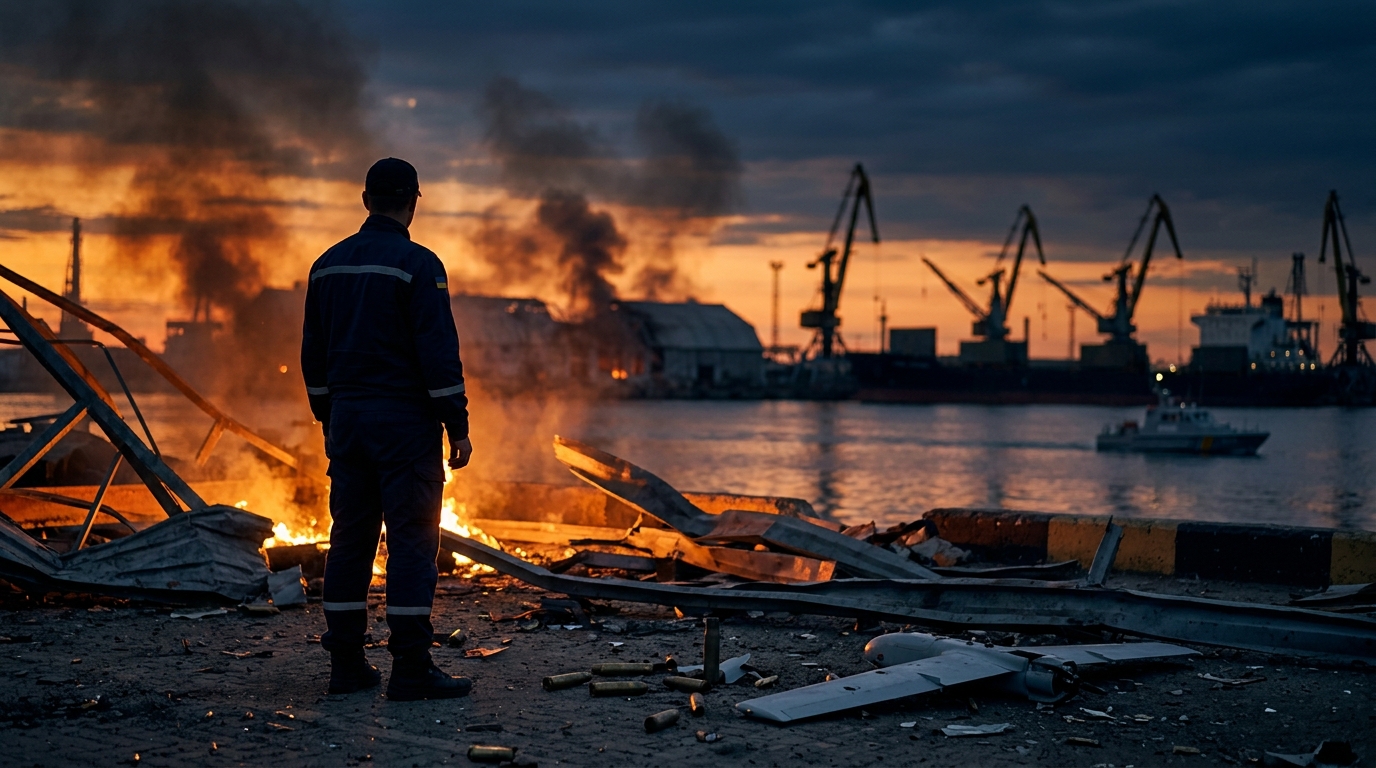
14 अप्रैल 2026 को, Russia ने यूक्रेन के दक्षिणी पोर्ट इन्फ्रास्ट्रक्चर के खिलाफ 324 ड्रोन और तीन बैलिस्टिक मिसाइलें लॉन्च की, जिससे सात लोगों को चोटें आईं। जबकि यूक्रेनी एयर‑डिफेंस ने अधिकांश ड्रोन को गिरा दिया, इस हमले ने काउंटर‑UAS क्षमताओं में चुनौतियों और समुद्री संपत्तियों की सुरक्षा के रणनीतिक महत्व को उजागर किया, जो रक्षा, अंतर्राष्ट्रीय संबंध और आर्थिक सुरक्षा पर UPSC अध्ययन के लिए प्रासंगिक विषय हैं।
In the early hours of 14 April 2026 , a large‑scale aerial assault was launched against Ukraine by Russia . The operation involved 324 drones and three ballistic missiles , targeting critical port infrastructure in the southern region of Ukraine, resulting in at least seven civilian injuries. Key Developments Launch of 324 drones and 3 ballistic missiles after 18:00 hrs (1500 GMT) on 14 April 2026. Ukrainian air defence units intercepted or neutralised 309 drones . Despite interceptions, 13 drones and the three missiles struck nine locations across the targeted area. Casualties include seven people wounded , with no immediate reports of fatalities. Important Facts The Ukrainian Air Force confirmed the scale of the attack, noting that the majority of the unmanned aerial vehicles were neutralised. However, the remaining drones and missiles managed to breach defensive perimeters, underscoring the challenges of counter‑UAS (Unmanned Aerial Systems) operations. The missiles used were identified as ballistic missiles , indicating a strategic intent to inflict material damage on maritime assets. UPSC Relevance 1. Ukraine ’s resilience highlights the importance of air‑defence modernization, a recurring theme in GS2 and GS3. 2. The extensive use of drones reflects evolving combat tactics, relevant for questions on technology in defence. 3. Damage to <span class="key-term" data-definition="Port infrastructure – Critical no
  1. Home
  2. Prepare
  3. Current Affairs
  4. Russia ने यूक्रेनी पोर्ट इन्फ्रास्ट्रक्चर पर 324 ड्रोन और 3 बैलिस्टिक मिसाइलें तैनात की – सात घायल
Login to bookmark articles
Login to mark articles as complete

Overview

gs.gs278% UPSC Relevance

Russia’s massive drone‑missile strike on Ukrainian ports spotlights air‑defence gaps and infrastructure vulnerability.

Key Facts

  1. On 14 April 2026, Russia launched 324 drones and 3 ballistic missiles against Ukrainian port infrastructure.
  2. Ukrainian air‑defence intercepted 309 drones; 13 drones and all three missiles hit nine locations.
  3. The attack caused injuries to seven civilians; no immediate fatalities were reported.
  4. The missiles were identified as ballistic, indicating a strategic intent to damage maritime assets.
  5. The incident highlights challenges in counter‑UAS operations and the need for advanced air‑defence systems.

Background & Context

The strike is part of Russia's intensified hybrid warfare in the Ukraine conflict, underscoring the strategic targeting of economic nodes like ports and the evolving role of drones and ballistic missiles in modern combat, a key focus in GS‑2 (International Relations) and GS‑3 (Economy).

Mains Answer Angle

GS‑2: Discuss the implications of Russia's use of drone swarms and ballistic missiles on Ukraine's maritime infrastructure and regional security, and suggest policy measures for India to enhance its own air‑defence and maritime resilience.

Full Article

<p>In the early hours of <strong>14 April 2026</strong>, a large‑scale aerial assault was launched against Ukraine by <span class="key-term" data-definition="Russia – The Russian Federation, a major Eurasian power whose foreign policy and military actions are central to contemporary international relations (GS2: International Relations)">Russia</span>. The operation involved <strong>324 drones</strong> and <strong>three ballistic missiles</strong>, targeting critical <span class="key-term" data-definition="Port infrastructure – Facilities such as docks, warehouses and logistics hubs that facilitate maritime trade; vital for a nation's economic security and supply chains (GS3: Economy)">port infrastructure</span> in the southern region of Ukraine, resulting in at least seven civilian injuries.</p> <h3>Key Developments</h3> <ul> <li>Launch of <strong>324 drones</strong> and <strong>3 ballistic missiles</strong> after <strong>18:00 hrs (1500 GMT)</strong> on 14 April 2026.</li> <li>Ukrainian <span class="key-term" data-definition="Air defence – Military systems and units tasked with detecting, tracking and neutralising hostile aerial threats, crucial for national security (GS2: Defence)">air defence</span> units intercepted or neutralised <strong>309 drones</strong>.</li> <li>Despite interceptions, <strong>13 drones</strong> and the three missiles struck <strong>nine locations</strong> across the targeted area.</li> <li>Casualties include <strong>seven people wounded</strong>, with no immediate reports of fatalities.</li> </ul> <h3>Important Facts</h3> <p>The Ukrainian Air Force confirmed the scale of the attack, noting that the majority of the unmanned aerial vehicles were neutralised. However, the remaining drones and missiles managed to breach defensive perimeters, underscoring the challenges of counter‑UAS (Unmanned Aerial Systems) operations. The missiles used were identified as <span class="key-term" data-definition="Ballistic missile – A projectile that follows a ballistic trajectory after propulsion, often capable of delivering high‑explosive warheads over long distances (GS2: Defence)">ballistic missiles</span>, indicating a strategic intent to inflict material damage on maritime assets.</p> <h3>UPSC Relevance</h3> <p>1. <span class="key-term" data-definition="Ukraine – A sovereign Eastern European state whose ongoing conflict with Russia is a focal point of contemporary geopolitics and security studies (GS2: International Relations)">Ukraine</span>’s resilience highlights the importance of air‑defence modernization, a recurring theme in GS2 and GS3. 2. The extensive use of <span class="key-term" data-definition="Drone – An unmanned aerial vehicle employed for surveillance or attack; increasingly pivotal in modern warfare and security doctrines (GS2: Defence)">drones</span> reflects evolving combat tactics, relevant for questions on technology in defence. 3. Damage to <span class="key-term" data-definition="Port infrastructure – Critical no
Read Original on hindu

Analysis

Practice Questions

GS2
Easy
Prelims MCQ

रूस‑यूक्रेन संघर्ष – ड्रोन और मिसाइल युद्ध

1 marks
4 keywords
GS2
Medium
Mains Short Answer

ड्रोन स्वॉर्म्स के प्रति एअर‑डिफेंस प्रतिक्रिया

10 marks
4 keywords
GS2
Hard
Mains Essay

इन्फ्रास्ट्रक्चर का रणनीतिक लक्ष्यीकरण और समुद्री सुरक्षा

250 marks
6 keywords
Related:Daily•Weekly

Loading related articles...

Loading related articles...

Tip: Click articles above to read more from the same date, or use the back button to see all articles.

Quick Reference

Key Insight

Russia’s massive drone‑missile strike on Ukrainian ports spotlights air‑defence gaps and infrastructure vulnerability.

Key Facts

  1. On 14 April 2026, Russia launched 324 drones and 3 ballistic missiles against Ukrainian port infrastructure.
  2. Ukrainian air‑defence intercepted 309 drones; 13 drones and all three missiles hit nine locations.
  3. The attack caused injuries to seven civilians; no immediate fatalities were reported.
  4. The missiles were identified as ballistic, indicating a strategic intent to damage maritime assets.
  5. The incident highlights challenges in counter‑UAS operations and the need for advanced air‑defence systems.

Background

The strike is part of Russia's intensified hybrid warfare in the Ukraine conflict, underscoring the strategic targeting of economic nodes like ports and the evolving role of drones and ballistic missiles in modern combat, a key focus in GS‑2 (International Relations) and GS‑3 (Economy).

Mains Angle

GS‑2: Discuss the implications of Russia's use of drone swarms and ballistic missiles on Ukraine's maritime infrastructure and regional security, and suggest policy measures for India to enhance its own air‑defence and maritime resilience.

Explore:Current Affairs·Editorial Analysis·Govt Schemes·Study Materials·Previous Year Questions·UPSC GPT