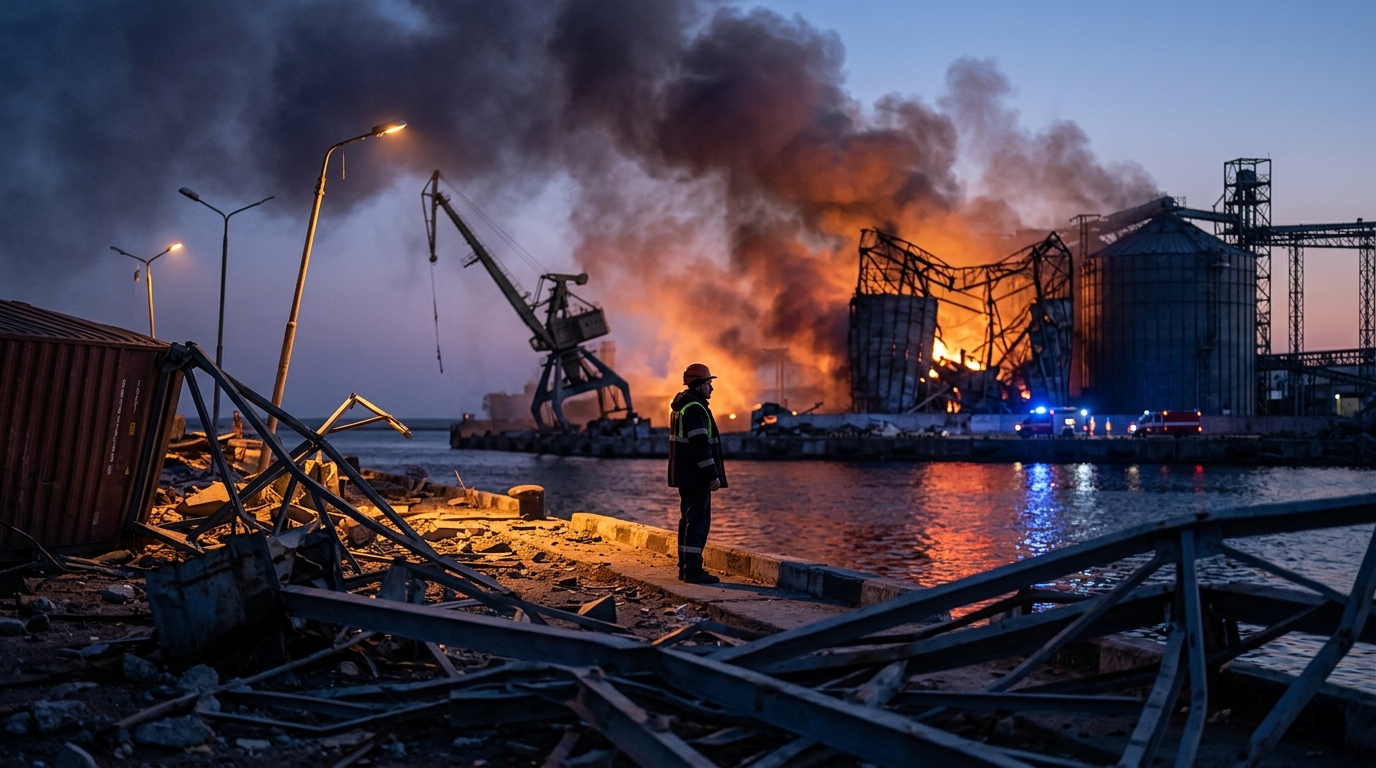
In the early hours of 14 April 2026, a large‑scale aerial assault was launched against Ukraine by Russia. The operation involved 324 drones and three ballistic missiles, targeting critical port infrastructure in the southern region of Ukraine, resulting in at least seven civilian injuries.
Key Developments
- Launch of 324 drones and 3 ballistic missiles after 18:00 hrs (1500 GMT) on 14 April 2026.
- Ukrainian air defence units intercepted or neutralised 309 drones.
- Despite interceptions, 13 drones and the three missiles struck nine locations across the targeted area.
- Casualties include seven people wounded, with no immediate reports of fatalities.
Important Facts
The Ukrainian Air Force confirmed the scale of the attack, noting that the majority of the unmanned aerial vehicles were neutralised. However, the remaining drones and missiles managed to breach defensive perimeters, underscoring the challenges of counter‑UAS (Unmanned Aerial Systems) operations. The missiles used were identified as ballistic missiles, indicating a strategic intent to inflict material damage on maritime assets.
Exam Relevance
1. Ukraine’s resilience highlights the importance of air‑defence modernization, a recurring theme in GS2 and GS3. 2. The extensive use of drones reflects evolving combat tactics, relevant for questions on technology in defence. 3. Damage to port infrastructure can have cascading economic impacts, linking to GS3 topics on trade, logistics and economic security. 4. The incident underscores the strategic calculus of Russia in employing hybrid warfare tactics, a subject of study in international security and diplomatic strategy.
Way Forward
For policymakers, the episode calls for:
- Accelerated procurement and integration of advanced air‑defence systems capable of countering swarms of drones.
- Strengthening regional security dialogues to deter further escalations and to coordinate a collective response.
- Investing in resilient port infrastructure to mitigate economic fallout from attacks on maritime assets.
- Enhancing cyber‑physical security measures, as modern missile and drone attacks often involve sophisticated command‑and‑control networks.
These steps align with India’s broader defence modernization and maritime security objectives, offering a comparative framework for UPSC aspirants studying contemporary conflict dynamics.