Overview
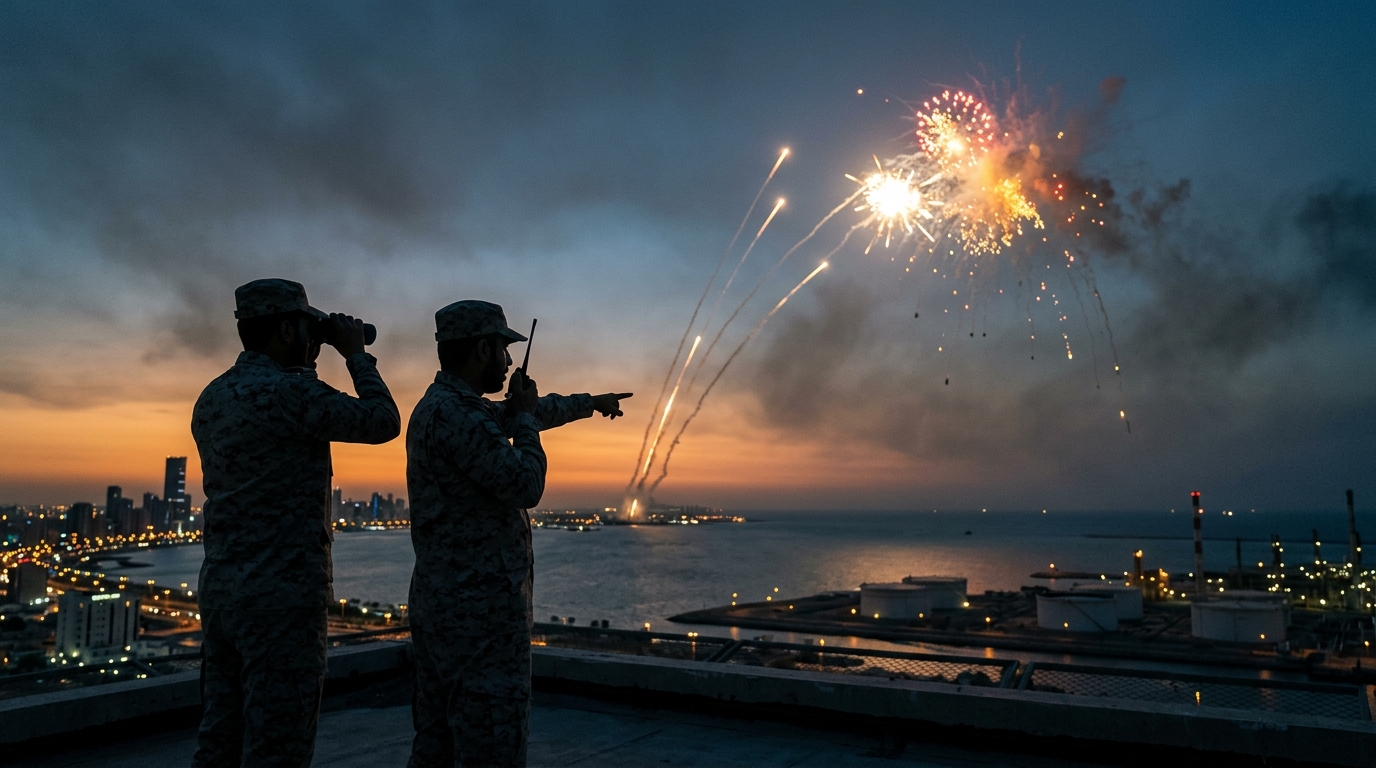
On 22 March 2026, the Ministry of Defence reported the detection of three ballistic missiles near Riyadh. One missile was shot down, while the remaining two landed in an uninhabited zone. Simultaneously, five hostile drones were intercepted after midnight.
Key Developments
- Three missiles detected; one intercepted, two fell in a deserted area.
- Five hostile drones neutralised since midnight.
- The Saudi Civil Defence issued a warning early on 22 March 2026 and cancelled it after seven minutes when the threat subsided.
- These incidents are part of a broader pattern of Iranian strikes in retaliation for recent U.S.-Israeli attacks.
- Energy facilities in the Gulf have been targeted, raising fears of a global energy supply shock.
Important Facts
The missile and drone barrage underscores the heightened tension between the Gulf Cooperation Council (GCC) states and Iran. Since the escalation of the regional war late last month, Iran has repeatedly launched retaliatory attacks on Saudi Arabia and neighboring oil‑rich nations. The swift interception by Saudi defence assets demonstrates improved air‑defence readiness, yet the repeated incursions highlight persistent vulnerabilities.
Exam Relevance
Understanding this episode is crucial for several UPSC topics:
- International Relations (GS2): Illustrates the strategic calculus of Iran’s asymmetric warfare and the role of external powers (U.S., Israel) in shaping Gulf security dynamics.
- Security Studies (GS2): Highlights the importance of air‑defence systems, civil‑defence coordination, and the challenges of protecting critical infrastructure.
- Energy Security (GS3): Shows how regional conflicts can trigger global energy market disruptions, affecting inflation and balance of payments.
- Geopolitics of the Middle East (GS1): Provides a contemporary case of sectarian and geopolitical rivalries influencing state behaviour.
Way Forward
Policy analysts suggest a multi‑pronged approach:
- Strengthening regional defence cooperation through the GCC and NATO partners to enhance early warning and interception capabilities.
- Diplomatic engagement with Tehran to establish de‑escalation mechanisms, possibly mediated by neutral powers.
- Diversifying energy import sources and building strategic petroleum reserves to mitigate the impact of potential supply shocks.
- Investing in civil‑defence infrastructure and public awareness to reduce civilian casualties in future incidents.
For UPSC aspirants, tracking such developments offers insight into the interplay of security, energy, and diplomacy in contemporary international affairs.