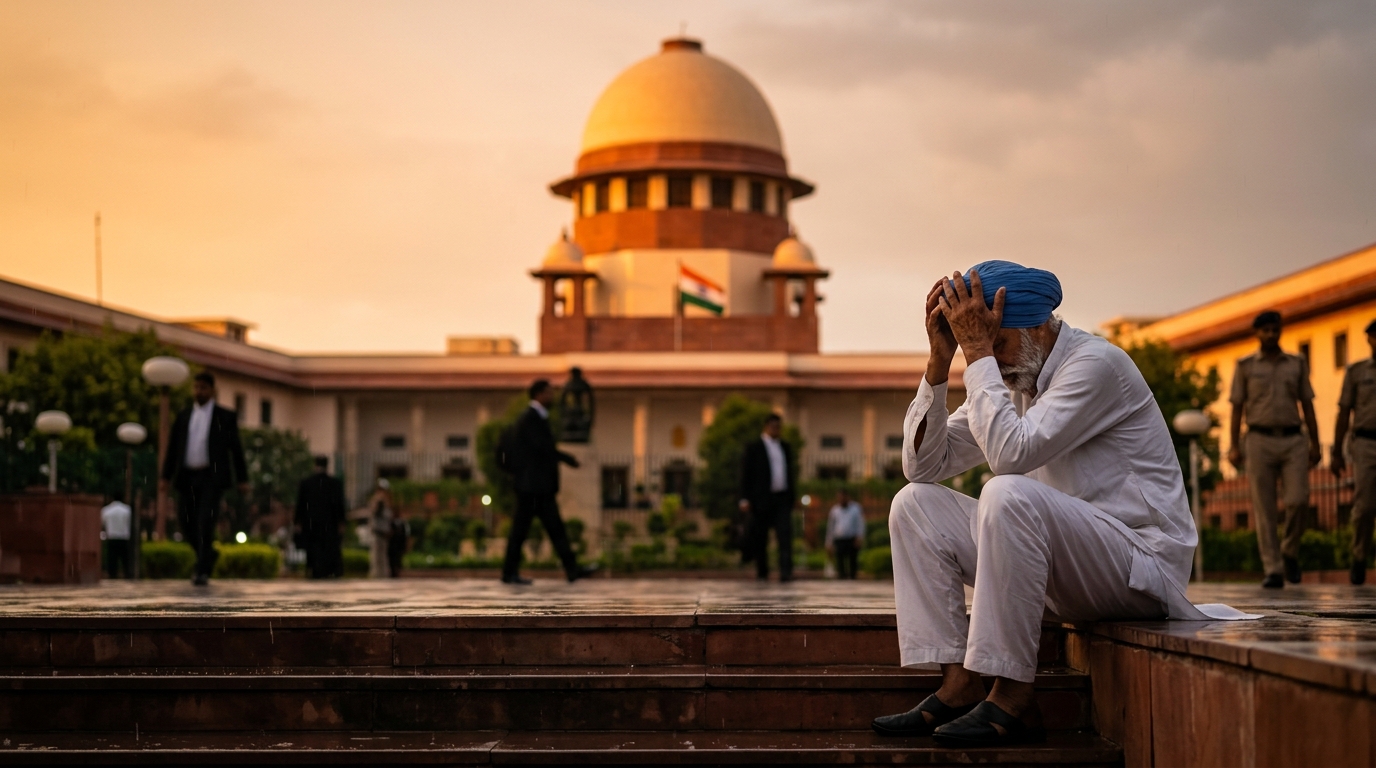
The Supreme Court on 24 March 2026 upheld a High Court ruling that a member of the Scheduled Caste who converts to Christianity or Islam ceases to be an SC. The judgment arose from a petition by a Christian pastor in Andhra Pradesh seeking protection under the SC/ST (Prevention of Atrocities) Act. The Court reiterated that constitutional safeguards apply only to those practising Hinduism, Sikhism or Buddhism.
Key Developments
- The Court affirmed that conversion out of the three religions specified in Article 341 removes a person from the SC list.
- Historical extensions: Sikhs were included in 1956, Buddhists in 1990, reflecting political accommodation of Dalit aspirations.
- Conversion to Christianity or Islam does not automatically grant SC status, though such individuals may avail benefits under the Article 15(4) clause for SEBCs.
- A commission headed by former Chief Justice K.G. Balakrishnan is examining the issue, but no legislative change has yet occurred.
Important Facts
- Original SC definition (Constitution, 1950) covered only Hindus.
- Sikh inclusion (1956) coincided with B.R. Ambedkar's own conversion to Buddhism.
- Buddhist inclusion (1990) expanded the protective umbrella further.
- The Court’s reasoning cites Article 25(2), noting that Christianity and Islam lack a theological basis for caste‑based discrimination.
Exam Relevance
Understanding this judgment is crucial for GS‑2 (Polity) and GS‑1 (History) papers. It illustrates:
- How constitutional provisions (Articles 341, 25(2), 15(4)) interact with affirmative‑action policies.
- The historical evolution of Dalit politics, from Nehru’s view of untouchability as a Hindu‑specific evil to Ambedkar’s mass conversion movement.
- The limits of judicial intervention in reservation matters, emphasizing the need for legislative action.
- The political sensitivity surrounding caste, religion, and reservation – a recurring theme in Indian polity.
Way Forward
While the Court’s decision aligns with the existing legal framework, any expansion of SC status to Christian or Muslim converts will require:
- Parliamentary amendment of the Scheduled Caste definition under Article 341.
- Broad political consensus, given opposition from many Dalit activists who fear dilution of reservation benefits.
- Continued monitoring by the Balakrishnan commission to assess ground‑level discrimination faced by converts.
Until such legislative reforms materialise, the status‑quo—SC protections limited to Hindu, Sikh and Buddhist adherents—remains the operative legal position.