<h3>Overview</h3>
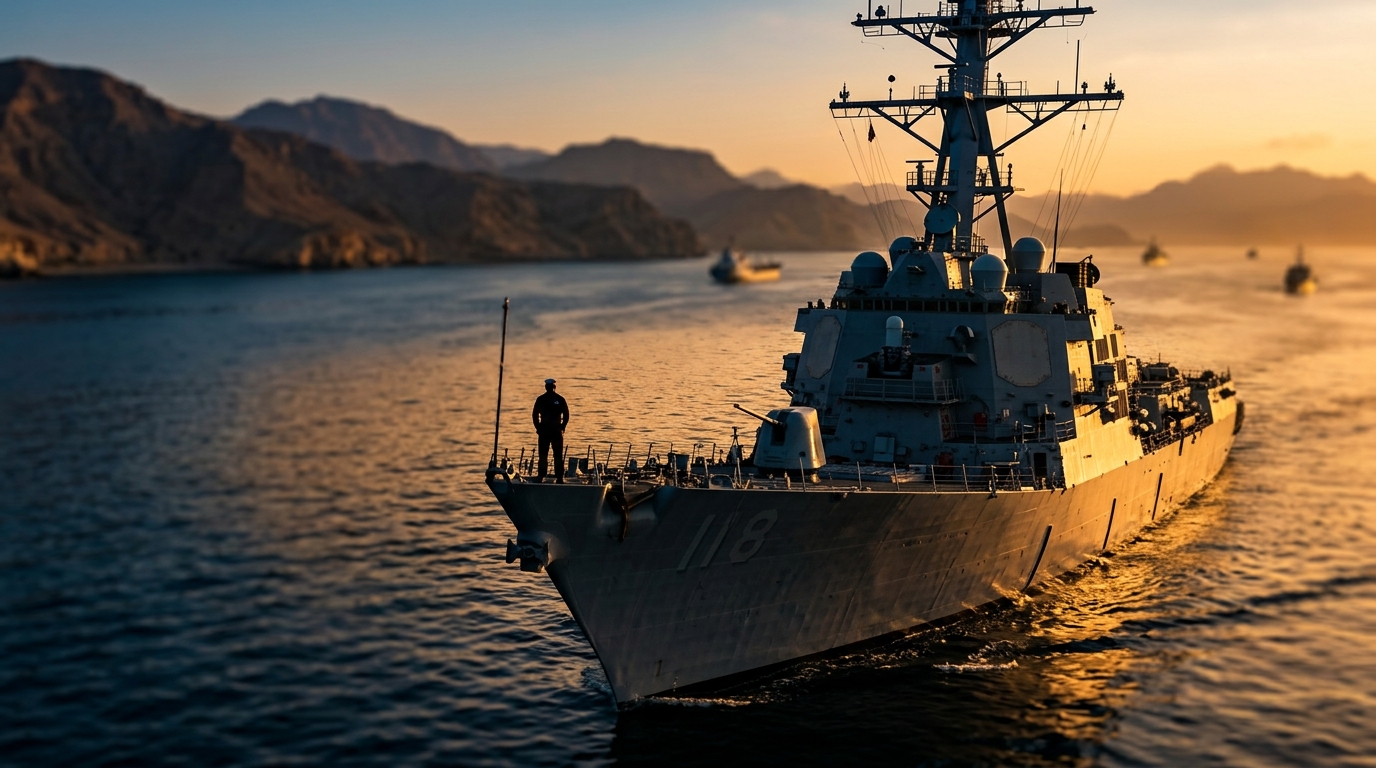
<p>On <strong>April 12, 2026</strong>, <strong>U.S. President Donald Trump</strong> used his platform <span class="key-term" data-definition="Truth Social – a social‑media platform owned by former President Donald Trump, often used to convey official statements and policy positions (GS2: Polity)">Truth Social</span> to declare that the <span class="key-term" data-definition="U.S. Navy – the maritime branch of the United States Armed Forces, responsible for power projection and safeguarding sea‑lines of communication (GS2: Polity)">U.S. Navy</span> would immediately commence a <span class="key-term" data-definition="Blockade – a naval operation that restricts the movement of vessels to and from a specific area, used as a tool of coercive diplomacy (GS2: Polity)">blockade</span> of the <span class="key-term" data-definition="Strait of Hormuz – a narrow waterway between Oman and Iran that carries about 20% of global oil trade, making it a strategic chokepoint (GS2: Polity)">Strait of Hormuz</span> and interdict any ship in <span class="key-term" data-definition="International waters – maritime zones beyond any nation’s territorial sea where vessels are subject only to the law of the sea (GS2: Polity)">international waters</span> that has paid a toll to Iran.</p>
<h3>Key Developments</h3>
<ul>
<li>Immediate naval <span class="key-term" data-definition="Blockade – a naval operation that restricts the movement of vessels to and from a specific area, used as a tool of coercive diplomacy (GS2: Polity)">blockade</span> of the <span class="key-term" data-definition="Strait of Hormuz – a narrow waterway between Oman and Iran that carries about 20% of global oil trade, making it a strategic chokepoint (GS2: Polity)">Strait of Hormuz</span> announced.</li>
<li>All vessels in <span class="key-term" data-definition="International waters – maritime zones beyond any nation’s territorial sea where vessels are subject only to the law of the sea (GS2: Polity)">international waters</span> that have paid a toll to Iran will be <span class="key-term" data-definition="Interdict – to stop, seize or inspect a vessel, often for enforcement of sanctions or security measures (GS2: Polity)">interdicted</span>.</li>
<li>The statement came hours after the <span class="key-term" data-definition="U.S.-Iran peace talks – diplomatic negotiations aimed at resolving nuclear and regional disputes between the United States and Iran (GS2: Polity)">U.S.-Iran peace talks</span> ended without a deal.</li>
<li>President Trump noted that “the meeting went well, most points were agreed,” but highlighted the failure to reach consensus on <span class="key-term" data-definition="Iran's nuclear program – Tehran’s pursuit of nuclear technology, viewed by many nations as a proliferation risk (GS2: Polity)">Iran's nuclear program</span>.</li>
</ul>
<h3>Important Facts</h3>
<p>The <span class="key-term" data-definition="Strait of Hormuz – a narrow waterway between Oman and Iran that carries about 20% of global oil trade, making it a strategic chokepoint (GS2: Polity)">Strait of Hormuz</span> is a vital conduit for crude oil from the Persian Gulf; any disruption can affect global energy prices. The U.S. Navy’s decision to impose a <span class="key-term" data-definition="Blockade – a naval operation that restricts the movement of vessels to and from a specific area, used as a tool of coercive diplomacy (GS2: Polity)">blockade</span> signals a shift from diplomatic engagement to direct maritime pressure. The reference to “toll” suggests that Iran may be collecting fees from vessels transiting the waterway, a practice that the United States views as financing Tehran’s strategic objectives.</p>
<h3>UPSC Relevance</h3>
<p>This development touches upon several UPSC syllabus areas: <strong>International Relations</strong> – the use of naval power to influence negotiations; <strong>Maritime Security</strong> – the legal framework governing blockades and interdictions under the United Nations Convention on the Law of the Sea (UNCLOS); <strong>Energy Security</strong> – the impact of chokepoint disruptions on oil markets; and <strong>Non‑proliferation</strong> – the persistent challenge of Iran’s nuclear ambitions. Aspirants should analyse how coercive maritime strategies complement diplomatic efforts and the potential ramifications for regional stability in the Middle East.</p>
<h3>Way Forward</h3>
<p>Analysts suggest that the U.S. may use the blockade as leverage to bring Iran back to the negotiating table, while also signaling to regional actors the seriousness of Washington’s red‑line on nuclear proliferation. India and other oil‑importing nations will need to monitor oil price volatility and consider alternative routing or strategic petroleum reserves. For policymakers, balancing the immediate security objective with long‑term diplomatic engagement will be crucial to avoid escalation into open conflict.</p>