Overview
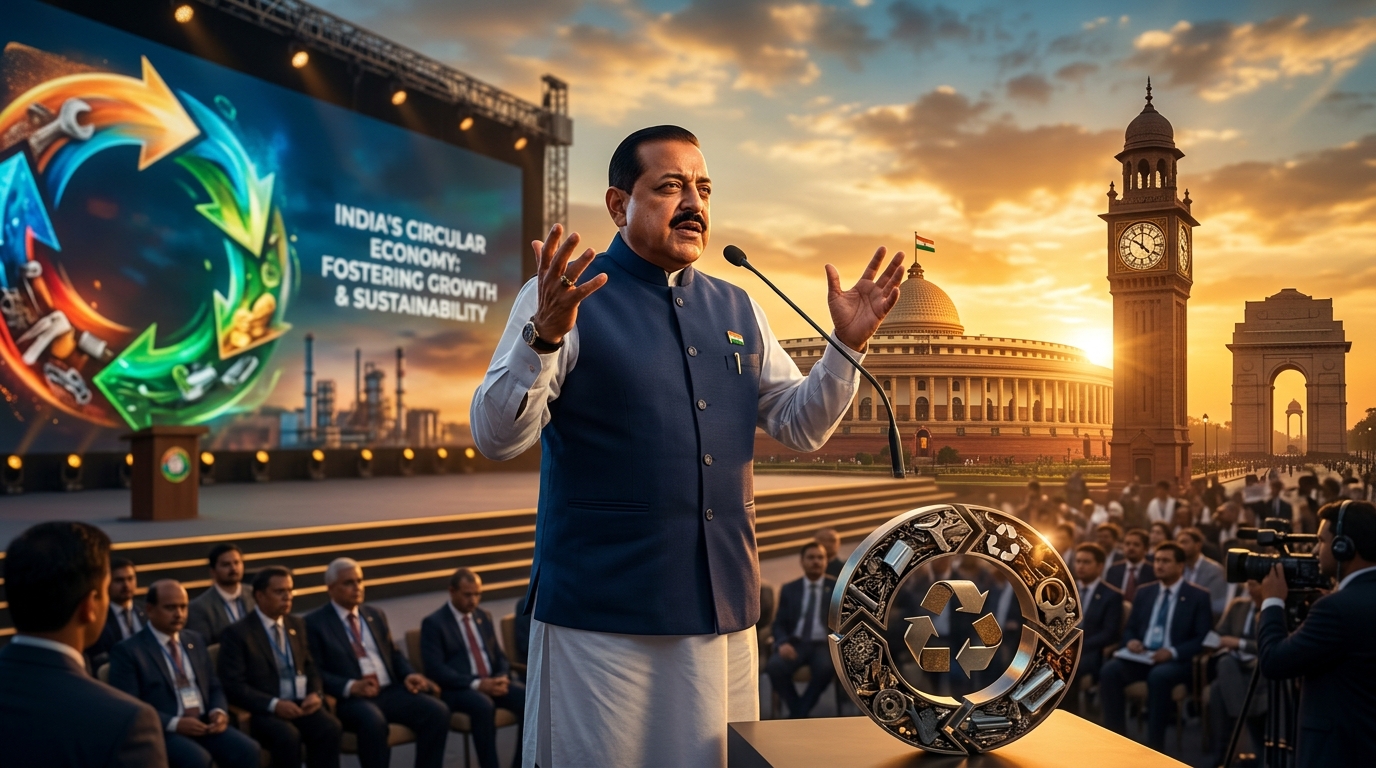
Dr. Jitendra Singh, Union Minister of State (Independent Charge) for Science & Technology, addressed the 2nd Global Symposium on Resource Efficiency and Circular Economy in New Delhi. He underscored a global shift toward Circular Economy, where waste is re‑imagined as a source of value.
Key Developments
- Government earned **₹4,000 crore** from scrap, including E‑Waste, during the Swachhata campaign.
- The emerging model is powered by biotechnology‑driven innovations and advanced recycling techniques.
- Materials once deemed waste—plastic, used cooking oil, steel slag—are now being converted into road‑construction inputs, bio‑fuels and commercial industrial materials.
- Start‑ups, MSMEs and informal sectors are increasingly participating, creating new livelihood opportunities.
- India’s transition aligns with its pledge to achieve net‑zero emissions by 2070.
Important Facts
The symposium brought together government officials, industry leaders, research institutions and delegations from European and German missions, as well as the Resource Efficiency and Circular Economy Industry Alliance. Dr. Jitendra Kumar, Managing Director of BIRAC, highlighted India’s cultural legacy of circular practices and the need to fuse it with modern science.
Exam Relevance
Understanding the shift to a circular economy is essential for GS3 (Economy) as it links environmental sustainability with revenue generation, industrial policy and employment creation. The data on revenue from waste recycling illustrates how policy initiatives translate into fiscal gains. The discussion also touches upon GS4 (Ethics) – the role of public participation and behavioural change in achieving sustainable development.
Way Forward
The Minister called for greater public participation, stronger industry‑startup collaboration, and policy frameworks that incentivise recycling and bio‑based production. Continued investment in research, capacity building for informal waste collectors, and integration of circular‑economy metrics into national planning are required to realise the economic and environmental benefits.