<h2>Overview</h2>
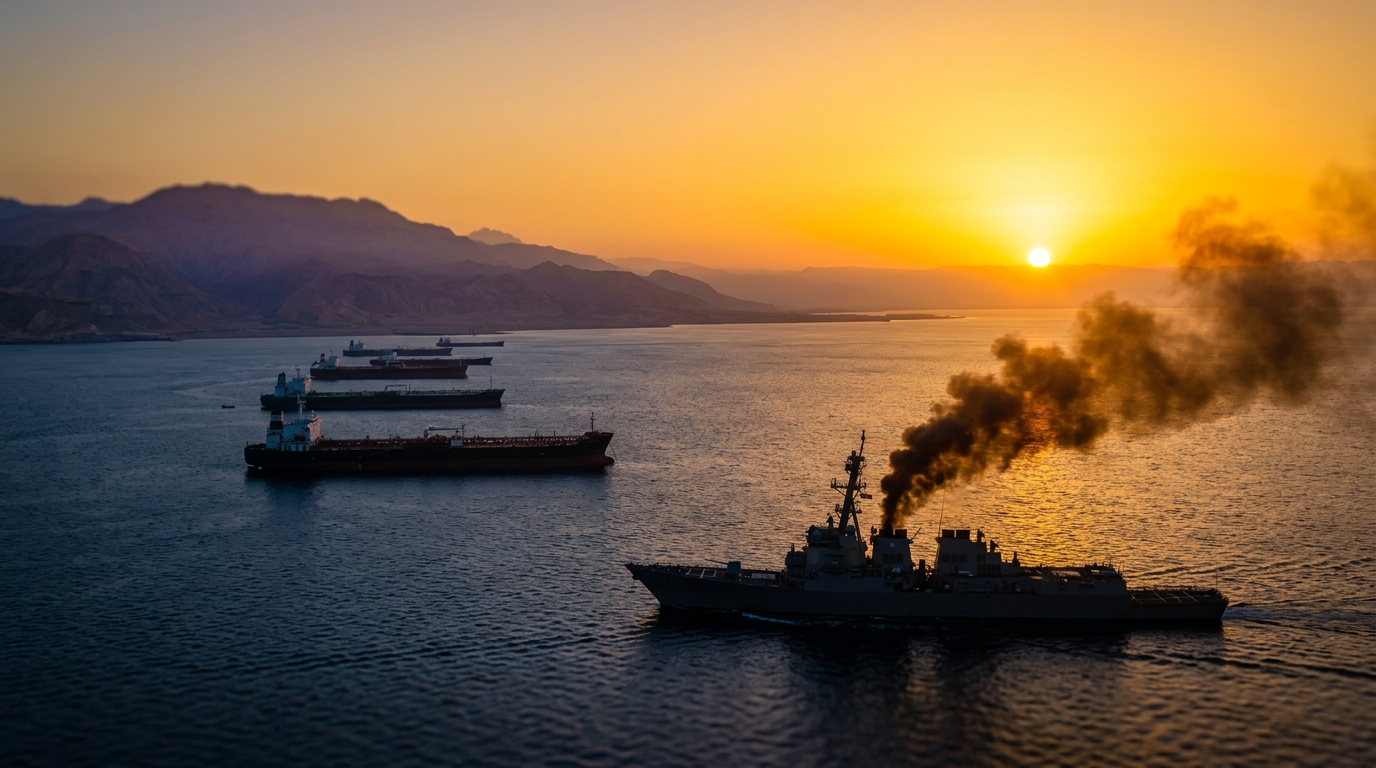
<p>On <strong>13 April 2026</strong>, global oil markets reacted sharply as the <span class="key-term" data-definition="United States naval warfare service, part of the Department of Defense, capable of projecting power globally; relevant to GS2: Polity (defence policy) and GS3: Economy (energy security)">U.S. Navy</span> announced a potential <span class="key-term" data-definition="Naval operation to prevent vessels from entering or leaving a maritime area; used as a tool of coercive diplomacy (GS2: Polity)">blockade</span> of the <span class="key-term" data-definition="Narrow waterway between Oman and Iran through which roughly 20% of world oil passes; strategic chokepoint for global energy supplies (GS3: Economy)">Strait of Hormuz</span>. The move follows the failure of the <span class="key-term" data-definition="Islamic Republic of Iran, a major OPEC member; its oil exports are crucial for global supply (GS3: Economy)">Iran</span> and the United States to negotiate an end to hostilities, raising concerns over the continuity of <span class="key-term" data-definition="Oil exported from Iran, a key OPEC producer; disruptions affect global supply and prices (GS3: Economy)">Iranian oil shipments</span>. Consequently, <span class="key-term" data-definition="Benchmark crude oil blend from the North Sea used to price global oil; movements reflect worldwide supply‑demand dynamics (GS3: Economy)">Brent crude</span> futures surged to <strong>$102.80 per barrel</strong>, a rise of <strong>7.98%</strong> from the previous close.</p>
<h3>Key Developments</h3>
<ul>
<li>U.S. Navy signals intent to enforce a maritime <span class="key-term" data-definition="Naval operation to prevent vessels from entering or leaving a maritime area; used as a tool of coercive diplomacy (GS2: Polity)">blockade</span> of the <span class="key-term" data-definition="Strategic chokepoint for global oil supplies (GS3: Economy)">Strait of Hormuz</span>.</li>
<li>Failure of diplomatic talks between the United States and Iran to end the ongoing war.</li>
<li><span class="key-term" data-definition="Benchmark crude oil blend (GS3: Economy)">Brent crude</span> futures jumped <strong>$7.60</strong> (7.98%) to <strong>$102.80</strong> per barrel by 2310 GMT.</li>
<li>Previous settlement on <strong>10 April 2026</strong> showed a modest 0.75% decline, highlighting the abrupt market shift.</li>
</ul>
<h3>Important Facts</h3>
<ul>
<li>The <span class="key-term" data-definition="Strategic maritime corridor through which ~20% of world oil passes (GS3: Economy)">Strait of Hormuz</span> handles roughly <strong>21 million barrels per day</strong> of crude and petroleum products.</li>
<li>Iran contributes about <strong>3‑4 million barrels per day</strong> to this flow; a blockade could cut global supply by 1‑2%.</li>
<li>Higher <span class="key-term" data-definition="Market price per barrel of crude oil; a key indicator of global economic health (GS3: Economy)">oil prices</span> tr