<h3>Overview</h3>
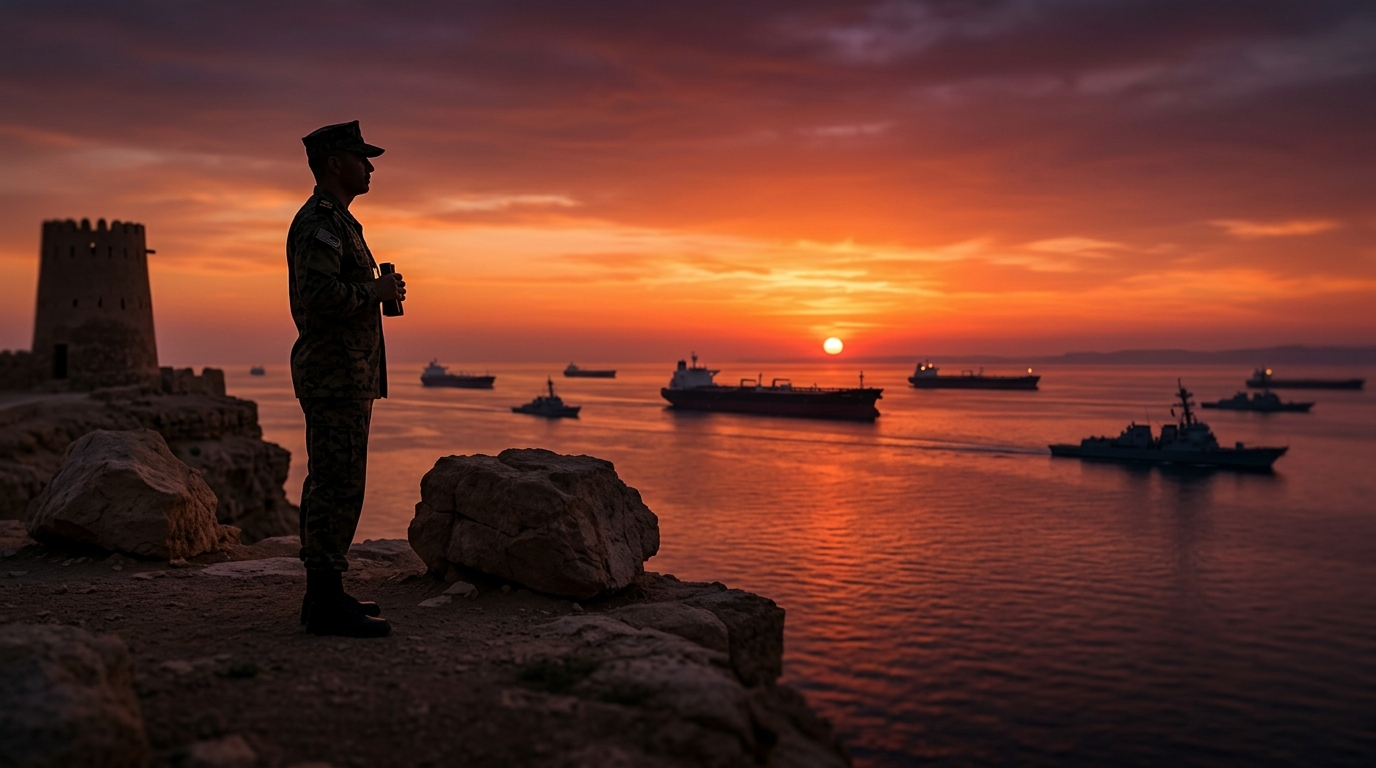
<p>On <strong>April 5, 2026</strong>, <span class="key-term" data-definition="Donald Trump — 45th President of the United States, whose executive decisions influence US foreign policy and international security (GS2: Polity)">Donald Trump</span> used his <span class="key-term" data-definition="Truth Social — a social media platform launched by former President Trump, used for direct communication bypassing traditional media (GS2: Polity, GS4: Ethics)">Truth Social</span> account to push the deadline for Iran to reopen the <span class="key-term" data-definition="Strait of Hormuz — a narrow waterway between Oman and Iran through which about 20% of global oil passes; strategic chokepoint in international trade (GS3: Economy, GS2: International Relations)">Strait of Hormuz</span> to 0000 GMT on <strong>Wednesday, April 6, 2026</strong>. Failure to comply, he warned, would trigger “devastating infrastructure attacks” on Iran’s power plants and bridges.</p>
<h3>Key Developments</h3>
<ul>
<li>Trump announced a <strong>24‑hour extension</strong> of the deadline, moving it to 0000 GMT on April 6.</li>
<li>He threatened to destroy Iran’s <em>power plants</em> and <em>bridges</em> if no deal was reached.</li>
<li>Iran has blocked the <span class="key-term" data-definition="Strait of Hormuz — a narrow waterway between Oman and Iran through which about 20% of global oil passes; strategic chokepoint in international trade (GS3: Economy, GS2: International Relations)">Strait of Hormuz</span> since the start of the <span class="key-term" data-definition="U.S.-Israeli bombing campaign — coordinated air strikes by the United States and Israel against Iranian targets, reflecting strategic partnership (GS2: International Relations)">U.S.-Israeli bombing campaign</span> on February 28.</li>
<li>In interviews with the <em>Wall Street Journal</em> and <em>Fox News</em>, Trump claimed negotiations were ongoing and expressed “good chance” of a deal on April 6.</li>
<li>He said Iranian negotiators were given “immunity from death” and that Tehran had already conceded it would not pursue <span class="key-term" data-definition="Nuclear weapons — weapons of mass destruction that release energy from nuclear reactions; central to non‑proliferation debates and security studies (GS1: History, GS2: International Relations)">nuclear weapons</span>.</li>
<li>Trump alleged the United States had sent arms to Iranian protesters via <span class="key-term" data-definition="Kurdish intermediaries — actors from the Kurdish region used to facilitate covert operations; illustrate the role of non‑state actors in regional geopolitics (GS2: Polity, GS4: Ethics)">Kurdish intermediaries</span>, a claim denied by Iraqi Kurdistan’s deputy prime minister Qubad Talabani.</li>
</ul>
<h3>Important Facts</h3>
<ul>
<li>Strategic importance: The <span class="key-term" data-definition="Strait of Hormuz — a narrow waterway between Oman and Iran through which about 20% of global oil passes; strategic chokepoint in international trade (GS3: Economy, GS2: International Relations)">Strait of Hormuz</span> handles a significant share of global oil and gas shipments, making its blockage a major economic and security concern.</li>
<li>US‑Iran tension: The ultimatum reflects heightened US pressure on Iran amid the broader <em>Iran‑Israel war</em> that began in late February 2026.</li>
<li>Sanctions backdrop: Domestic protests in Iran were sparked by soaring living costs, a direct outcome of international sanctions.</li>
<li>Regional dynamics: Kurdish territories in Iraq have historically been used as conduits for covert operations, underscoring the complexity of Middle‑East geopolitics.</li>
</ul>
<h3>UPSC Relevance</h3>
<p>• <strong>Geopolitics & International Relations (GS2)</strong>: Understanding the strategic value of the <span class="key-term" data-definition="Strait of Hormuz — a narrow waterway between Oman and Iran through which about 20% of global oil passes; strategic chokepoint in international trade (GS3: Economy, GS2: International Relations)">Strait of Hormuz</span> and the implications of its blockage for global energy security.</p>
<p>• <strong>Security & Non‑proliferation (GS1/GS2)</strong>: The claim that Iran has renounced <span class="key-term" data-definition="Nuclear weapons — weapons of mass destruction that release energy from nuclear reactions; central to non‑proliferation debates and security studies (GS1: History, GS2: International Relations)">nuclear weapons</span> development is crucial for assessing regional stability.</p>
<p>• <strong>Polity & Executive Power (GS2)</strong>: The use of personal social‑media platforms like <span class="key-term" data-definition="Truth Social — a social media platform launched by former President Trump, used for direct communication bypassing traditional media (GS2: Polity, GS4: Ethics)">Truth Social</span> to issue foreign‑policy ultimatums illustrates modern executive communication tactics.</p>
<p>• <strong>Regional Politics (GS2)</strong>: The alleged involvement of <span class="key-term" data-definition="Kurdish intermediaries — actors from the Kurdish region used to facilitate covert operations; illustrate the role of non‑state actors in regional geopolitics (GS2: Polity, GS4: Ethics)">Kurdish intermediaries</span> highlights the role of non‑state actors in South‑West Asian conflicts.</p>
<h3>Way Forward</h3>
<ul>
<li>Diplomatic engagement: Multilateral talks involving the United Nations and major oil‑importing nations to de‑escalate the standoff.</li>
<li>Confidence‑building measures: Verification mechanisms for Iran’s nuclear commitments, possibly under the IAEA framework.</li>
<li>Regional security architecture: Strengthening Gulf Cooperation Council (GCC) coordination to ensure free navigation of the <span class="key-term" data-definition="Strait of Hormuz — a narrow waterway between Oman and Iran through which about 20% of global oil passes; strategic chokepoint in international trade (GS3: Economy, GS2: International Relations)">Strait of Hormuz</span>.</li>
<li>Humanitarian considerations: Addressing the underlying economic grievances in Iran that fuel protests, through calibrated sanctions relief.</li>
</ul>