Overview
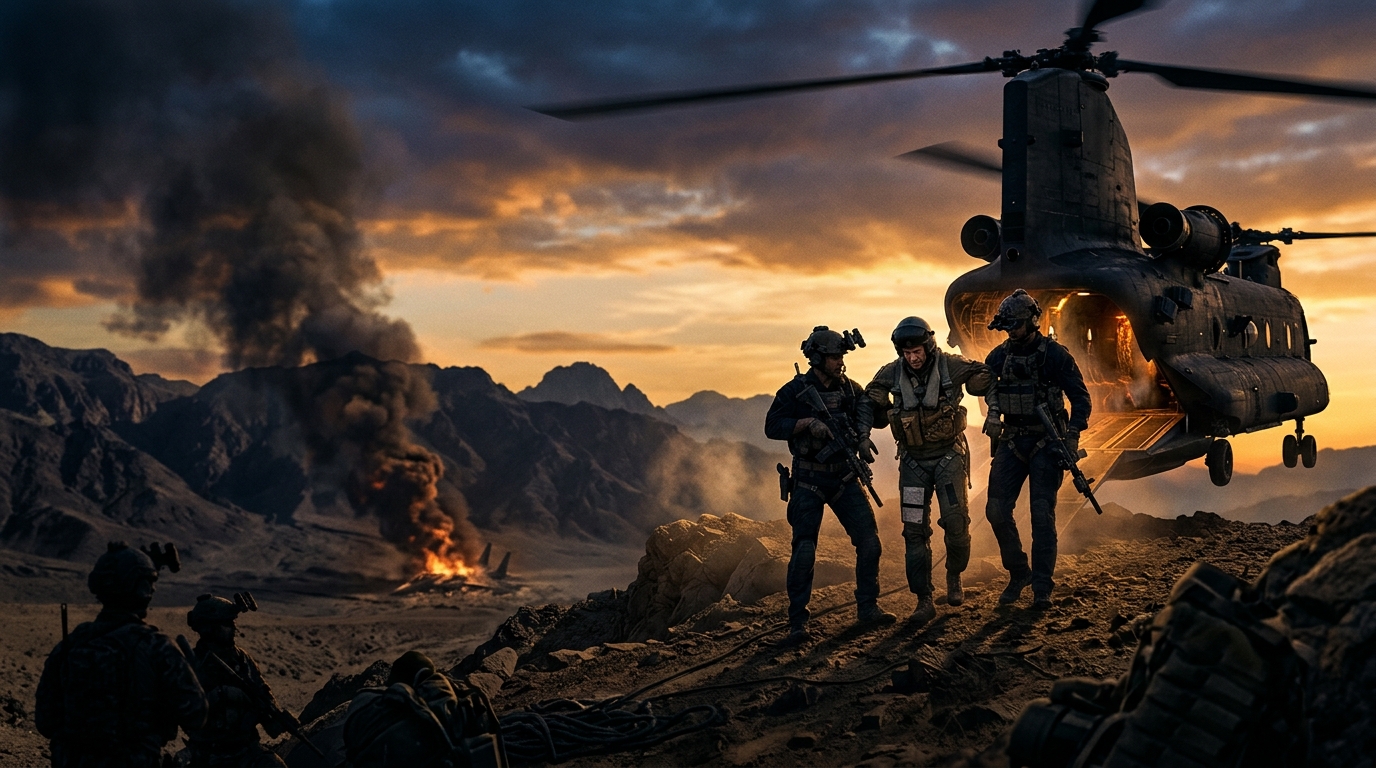
The United States successfully recovered an airman whose F-15 was shot down by Iran on 4 April 2026. The rescue, announced on 5 April 2026, came amid heightened hostilities, including Iranian missile and drone strikes on Israel and Kuwait, and a stern warning from President Donald J. Trump demanding a deal within 48 hours.
Key Developments
- US forces executed a high‑risk Search and Rescue mission in the mountainous region of Iran, retrieving the injured airman.
- The rescued airman was the second crew member of a two‑person team; the first member had been recovered the previous day.
- Iran launched missiles and drones at Israel and Kuwait on the same day, escalating the conflict.
- President Trump used Truth Social and White House channels to proclaim the rescue as “one of the most daring in US history.”
Important Facts
The incident marks the sixth week of the ongoing US‑Iran confrontation. The airman sustained injuries but is reported to be “just fine.” The White House Press Secretary, Karoline Leavitt, posted the President’s statement on X. The rescue follows an earlier, unconfirmed operation that retrieved the first pilot, underscoring a coordinated US effort to protect its personnel.
Exam Relevance
Understanding this episode helps aspirants analyse:
- US foreign‑policy tools (military rescue, diplomatic pressure) in high‑stakes regional conflicts.
- The strategic significance of air superiority and the role of advanced aircraft like the F‑15 in deterrence.
- Iran’s use of integrated air‑defence systems and its willingness to engage in proxy confrontations.
- The impact of political rhetoric on international negotiations, evident from the 48‑hour ultimatum.
Way Forward
While the immediate rescue de‑escalates a potential flashpoint, the broader US‑Iran standoff remains unresolved. Analysts should monitor:
- Diplomatic channels for a possible cease‑fire or negotiated settlement.
- Further US military deployments in the region, which could affect the balance of power.
- Iran’s retaliatory capabilities, especially its missile and drone programmes.
- Domestic political narratives in both countries that may shape future policy decisions.
For UPSC candidates, the episode illustrates the interplay of military strategy, diplomatic communication, and regional geopolitics—core themes in GS2 (Polity) and GS3 (Security & Defence).