Loading page, please wait…
HomeCurrent AffairsEditorialsGovt SchemesLearning ResourcesUPSC SyllabusPricingAboutBest UPSC AIUPSC AI ToolAI for UPSCUPSC ChatGPT

© 2026 Vaidra. All rights reserved.

PrivacyTerms
Vaidra Logo
Vaidra

Top 4 items + smart groups

UPSC GPT
New
Current Affairs
Daily Solutions
Daily Puzzle
Mains Evaluator

Version 2.0.0 • Built with ❤️ for UPSC aspirants

US‑Israel Strikes Trigger Dual Maritime Blockades, Threatening Global Subsea Cable Network and AI Infrastructure — UPSC Current Affairs | March 18, 2026
US‑Israel Strikes Trigger Dual Maritime Blockades, Threatening Global Subsea Cable Network and AI Infrastructure
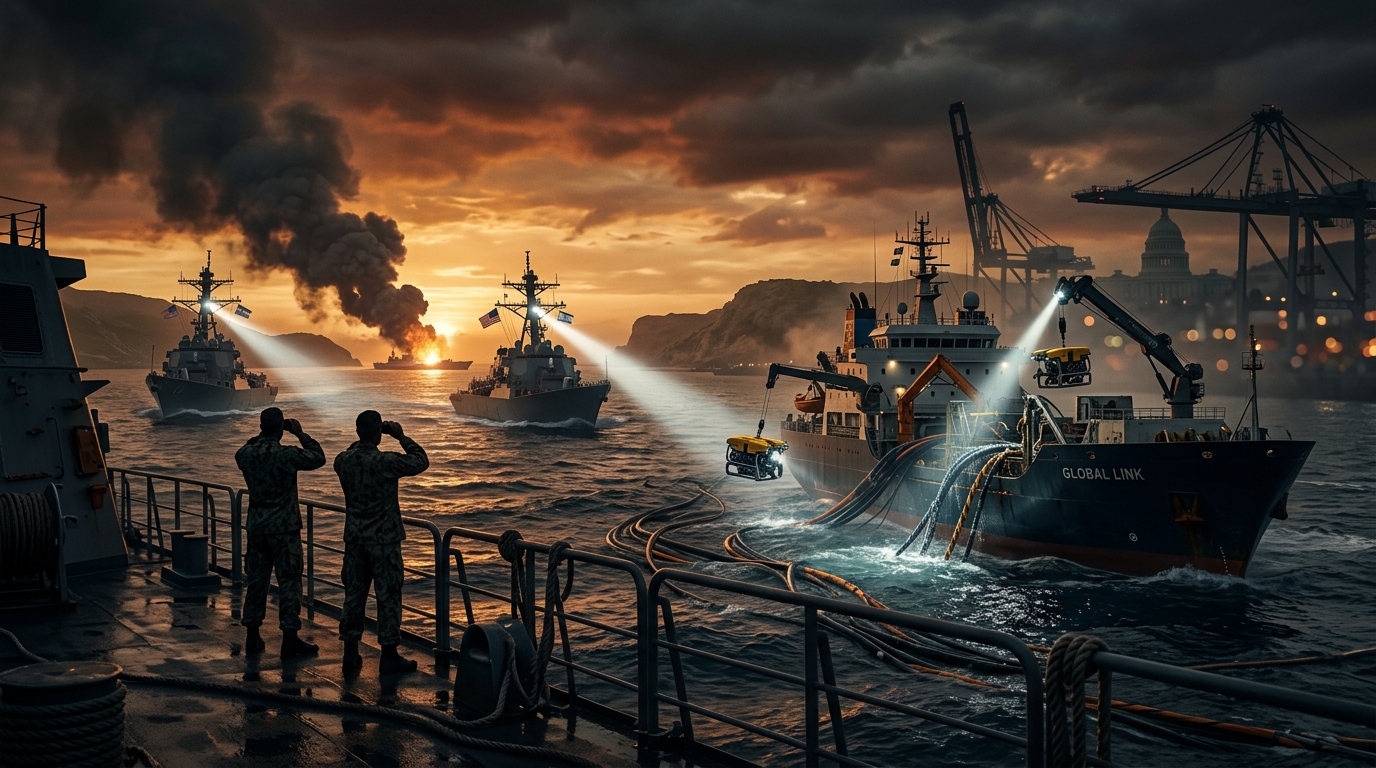
On 28 Feb 2026, the US‑Israel "Operation Epic Fury" killed Iran’s supreme leader, prompting Iran to block the <span class="key-term" data-definition="Strait of Hormuz — narrow waterway between Oman and Iran through which about 20% of global oil passes; its blockage impacts energy security and trade (GS3: Economy)">Strait of Hormuz</span> and threatening the <span class="key-term" data-definition="Red Sea — strategic maritime corridor linking the Suez Canal to the Indian Ocean; vital for shipping and undersea cable routes (GS3: Economy)">Red Sea</span>. This simultaneous closure endangers <span class="key-term" data-definition="Subsea fibre‑optic cables — underwater cables that carry the majority of international internet and telecommunications traffic; their disruption can cripple digital connectivity (GS3: Economy)">subsea fibre‑optic cables</span> that link data centres across the Gulf, risking prolonged internet blackouts and a setback to global AI and cloud services.
Situation Overview On 28 February 2026 , the United States and Israel launched a coordinated air campaign, dubbed Operation Epic Fury , that eliminated Iran’s supreme leader. Iran retaliated by effectively sealing the Strait of Hormuz . Simultaneously, the Red Sea faced renewed Houthi attacks in solidarity with Iran. While oil markets reacted sharply, a quieter yet potentially more disruptive crisis emerged: the jeopardy to the world’s subsea fibre‑optic cable network. Key Developments Iran’s naval actions halted commercial traffic through the Strait of Hormuz within days of the strike. Houthis threatened to resume missile and drone attacks on vessels in the Red Sea , further endangering the corridor. Brent crude surged from ~ $65 to over $100 per barrel , underscoring the energy shock. Thousands of kilometres of subsea fibre‑optic cables that traverse both chokepoints now face heightened risk of accidental severance. Repair vessels are barred from entering the conflict zone, turning short‑term outages into potential months‑long digital blackouts. Important Facts The global internet relies on an estimated 300,000 km of undersea cables, with the Gulf‑Red Sea corridor carrying a substantial share of data traffic between Asia, Africa, and Europe. During conflicts, the primary cause of cable damage is not deliberate bombing but the dragging of anchors from vessels evading missiles. Such incidents provide plausible deniability for state actors while inflicting severe service disruptions. Major cloud providers— Amazon Web Services, Microsoft Azure, and Google Cloud —have invested billions in data centres across the United Arab Emirates and Saudi Arabia, positioning the Gulf as a prospective AI hub . A cable outage would isolate these facilities, turning them into “digital islands” and stalling AI workloads, cloud services, and real‑time supply‑chain operations. UPSC Relevance Geopolitics & Security (GS2) : The blockade illustrates how maritime chokepoints intersect with cyber‑infrastructure, expanding the concept of strategic vulnerability beyond conventional energy routes. Economy & Technology (GS3) : Disruption of undersea cables can affect trade, digital services, and the burgeoning AI sector, highlighting the need for resilient digital infrastructure in economic planning. International Relations (GS1/GS2) : The call for an international coalition to secure the strait reflects diplomatic challenges in safeguarding global commons. Way Forward Policymakers must consider a multi‑pronged approach: Develop alternative routing for critical data traffic, including satellite‑based back‑haul and diversified cable paths. Establish rapid‑response repair units with diplomatic clearance to operate in conflict zones. Encourage regional cooperation for joint security patrols of maritime data corridors. Incorporate digital‑infrastructure resilience into national security strategies, aligning with the broader concept of “cyber‑physical” security. While energy security remains a headline issue, the emerging digital chokehold underscores that modern economies are equally dependent on the unseen fibre‑optic arteries beneath contested waters.
  1. Home
  2. Prepare
  3. Current Affairs
  4. US‑Israel Strikes Trigger Dual Maritime Blockades, Threatening Global Subsea Cable Network and AI Infrastructure
Login to bookmark articles
Login to mark articles as complete

Overview

Maritime blockades threaten undersea cables, jeopardising global AI and digital economy

Key Facts

  1. 28 Feb 2026: US‑Israel launched Operation Epic Fury, killing Iran’s supreme leader.
  2. Iran sealed the Strait of Hormuz, halting roughly 20% of global oil shipments.
  3. Houthi forces escalated missile and drone attacks in the Red Sea, endangering the Suez‑to‑Indian‑Ocean corridor.
  4. World’s undersea fibre‑optic network spans ~300,000 km; the Gulf‑Red Sea corridor carries about 30% of Asia‑Europe data traffic.
  5. Brent crude surged from ~US$65 to over US$100 per barrel within days of the strikes.
  6. AWS, Microsoft Azure and Google Cloud have major data‑centre clusters in the UAE and Saudi Arabia, positioning the Gulf as an emerging AI hub.
  7. Repair vessels are denied diplomatic clearance, turning short‑term cable cuts into potential months‑long digital blackouts.

Background & Context

The dual maritime blockades illustrate how traditional energy chokepoints now intersect with cyber‑physical infrastructure, expanding strategic vulnerability beyond oil to digital connectivity. In GS‑2 (Geopolitics & Security) and GS‑3 (Economy & Technology), the issue underscores the need for resilient undersea cable networks to safeguard trade, finance and the burgeoning AI ecosystem.

UPSC Syllabus Connections

Essay•International Relations and GeopoliticsEssay•Science, Technology and SocietyEssay•Economy, Development and InequalityPrelims_GS•International Current AffairsPrelims_CSAT•Interpersonal Skills and CommunicationPrelims_GS•Science and Technology ApplicationsGS1•World Wars and redrawal of national boundariesGS2•Government policies and interventions for development

Mains Answer Angle

GS‑2/GS‑3: Evaluate the implications of the Hormuz and Red Sea blockades on global digital infrastructure and AI development, and suggest policy measures to enhance cyber‑physical security.

Full Article

Read Original on hindu

Analysis

Practice Questions

GS2
Easy
Prelims MCQ

Geopolitics & Security

1 marks
3 keywords
GS3
Medium
Mains Short Answer

Economy & Technology

5 marks
4 keywords
GS2
Hard
Mains Essay

International Relations and Technology

250 marks
6 keywords
Related:Daily•Weekly

Loading related articles...

Loading related articles...

Tip: Click articles above to read more from the same date, or use the back button to see all articles.

Explore:Current Affairs·Editorial Analysis·Govt Schemes·Study Materials·Previous Year Questions·UPSC GPT