Loading page, please wait…
Thorium-based Nuclear Energy Production - UPSC Science And Technology
What is Thorium-based Nuclear Energy Production in UPSC Science And Technology?
Thorium-based Nuclear Energy Production is a key topic under Science And Technology for UPSC Civil Services Examination. Key points include: NTPC and CCTE are collaborating on ANEEL, a thorium-based fuel for India's PHWRs.. ANEEL is a blend of Thorium and HALEU, honoring Dr. Anil Kakodkar.. It offers significantly higher efficiency, reduced waste, and non-proliferation benefits.. Understanding this topic is essential for both UPSC Prelims and Mains preparation.
Why is Thorium-based Nuclear Energy Production important for UPSC exam?
Thorium-based Nuclear Energy Production is a Medium-level topic in UPSC Science And Technology. It is tested in both Prelims (factual MCQs) and Mains (analytical answer writing). Previous year UPSC questions have frequently covered aspects of Thorium-based Nuclear Energy Production, making it essential for comprehensive IAS preparation.
How to prepare Thorium-based Nuclear Energy Production for UPSC?
To prepare Thorium-based Nuclear Energy Production for UPSC: (1) Study the comprehensive notes covering all key concepts on Vaidra. (2) Practice previous year questions on this topic. (3) Connect it with current affairs using daily updates. (4) Revise using key takeaways and mind maps available for Science And Technology. (5) Write practice answers linking Thorium-based Nuclear Energy Production to related GS Paper topics.
Key takeaways of Thorium-based Nuclear Energy Production for UPSC
- NTPC and CCTE are collaborating on ANEEL, a thorium-based fuel for India's PHWRs.
- ANEEL is a blend of Thorium and HALEU, honoring Dr. Anil Kakodkar.
- It offers significantly higher efficiency, reduced waste, and non-proliferation benefits.
- ANEEL provides an easier and quicker way to deploy thorium, leveraging existing PHWRs.
- This aligns with India's three-stage nuclear program, clean energy goals, and COP28 commitments.
- Global interest in ANEEL is growing, as seen with Canadian Nuclear Laboratories' MoU.
Thorium-based Nuclear Energy Production
Medium⏱️ 7 min read
science and technology
📖 Introduction
Introduction to Thorium-based Nuclear Energy Production
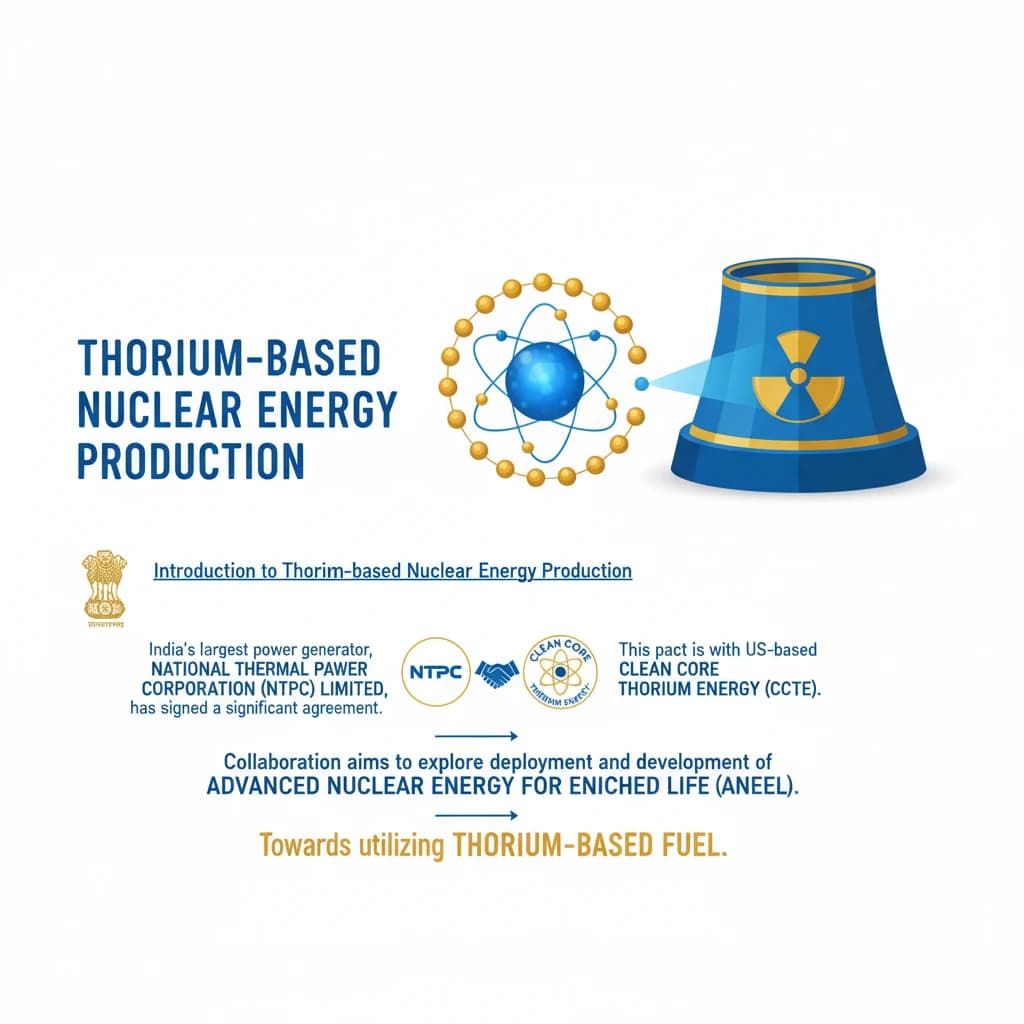
India's largest power generator, National Thermal Power Corporation (NTPC) Limited, has signed a significant agreement. This pact is with US-based Clean Core Thorium Energy (CCTE).
The collaboration aims to explore the deployment and development of Advanced Nuclear Energy for Enriched Life (ANEEL). This is a crucial step towards utilizing thorium-based fuel in India's energy sector.
UPSC Insight: This development highlights India's strategic focus on diversifying its energy mix and leveraging domestic resources. It is relevant for GS-III: Science and Technology and Energy Security.
What is Advanced Nuclear Energy for Enriched Life (ANEEL)?
ANEEL is a patented nuclear fuel developed by CCTE. It is designed specifically for use in Pressurized Heavy Water Reactors (PHWRs), which form the backbone of India's nuclear power fleet.
ANEEL Fuel Composition:
- A blend of Thorium and High Assay Low Enriched Uranium (HALEU).
- Named to honor Dr. Anil Kakodkar, a renowned Indian nuclear scientist.
HALEU is a critical component, being uranium enriched between 5% and 20%. It is essential for many advanced nuclear reactor designs globally.
Currently, HALEU is primarily produced at scale in Russia and China, with limited production in the US. This highlights a potential supply chain dependency.
India's Nuclear Power Fleet and Thorium Strategy
ANEEL fuel offers significant compatibility with India's existing nuclear infrastructure. It can be directly used in the PHWRs that constitute the majority of India's operational reactors.
India's Nuclear Fleet (Current):
- 22 operating reactors with an installed capacity of 6780 MWe.
- 18 reactors are PHWRs.
- 4 reactors are Light Water Reactors (LWRs).
India is also constructing 10 more PHWRs, each with a capacity of 700 MW.
The Department of Atomic Energy (DAE) has a long-term strategy to utilize India's vast thorium reserves. This is a core component of its ambitious three-stage nuclear power program.
Ease of Thorium Deployment with ANEEL
Traditionally, India's approach to thorium deployment involves creating thorium blankets around uranium or plutonium reactors. This process generates uranium-233, which is highly time-intensive.
ANEEL provides a quicker and easier alternative for deploying thorium. It leverages imported HALEU to facilitate this process, accelerating the integration of thorium into the energy grid.
Benefits of ANEEL Fuel
The adoption of ANEEL fuel brings several advantages, enhancing both the efficiency and safety of nuclear energy production.
- Efficiency: ANEEL fuel boasts a burn-up efficiency of 60,000 MW-days per tonne. This is a substantial improvement compared to 7,000 MW-days per tonne for conventional natural uranium.
- Waste Reduction: In a typical 220 MW PHWR, using ANEEL fuel reduces the lifetime bundle requirement from 1,75,000 to 22,000. This significantly cuts down waste volume and operational costs.
- Non-Proliferation: Both thorium and spent ANEEL fuel are considered non-weaponizable. This addresses proliferation concerns often raised by foreign uranium suppliers and reactor operators, fostering greater international trust.
- Economic Impact: Higher efficiency and longer-lasting fuel bundles lead to reduced operating costs for reactors. This contributes to the economic viability of nuclear power.
- Environmental Impact: ANEEL fuel aligns with India’s commitment to clean energy goals. It also supports the global commitment to tripling nuclear capacity, as emphasized during COP28 in Dubai, UAE.
Global Collaboration on ANEEL
The innovative HALEU-thorium blend used in ANEEL has garnered international attention. Canadian Nuclear Laboratories have signed a Memorandum of Understanding (MoU) with CCTE.
This collaboration aims to advance ANEEL fuel research and facilitate its licensing process, indicating global interest in this advanced nuclear technology.
💡 Key Takeaways
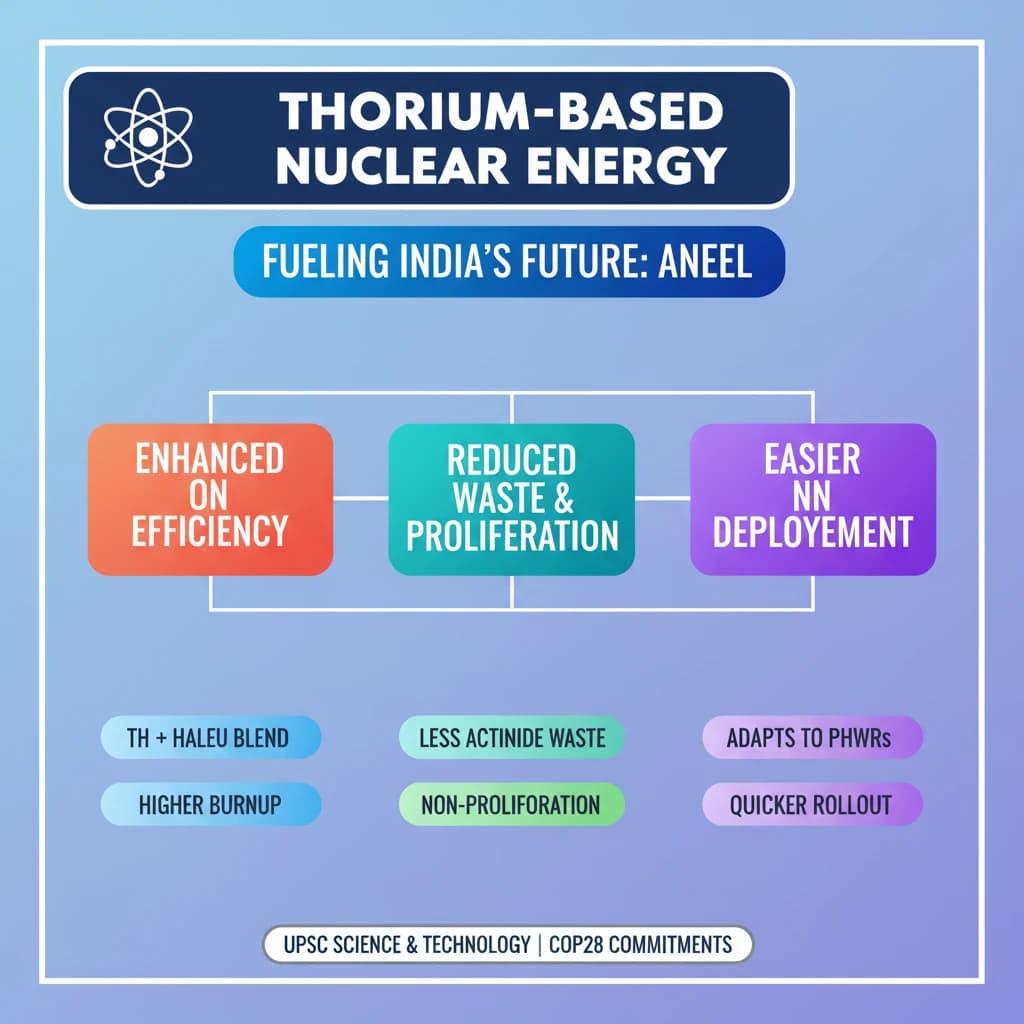
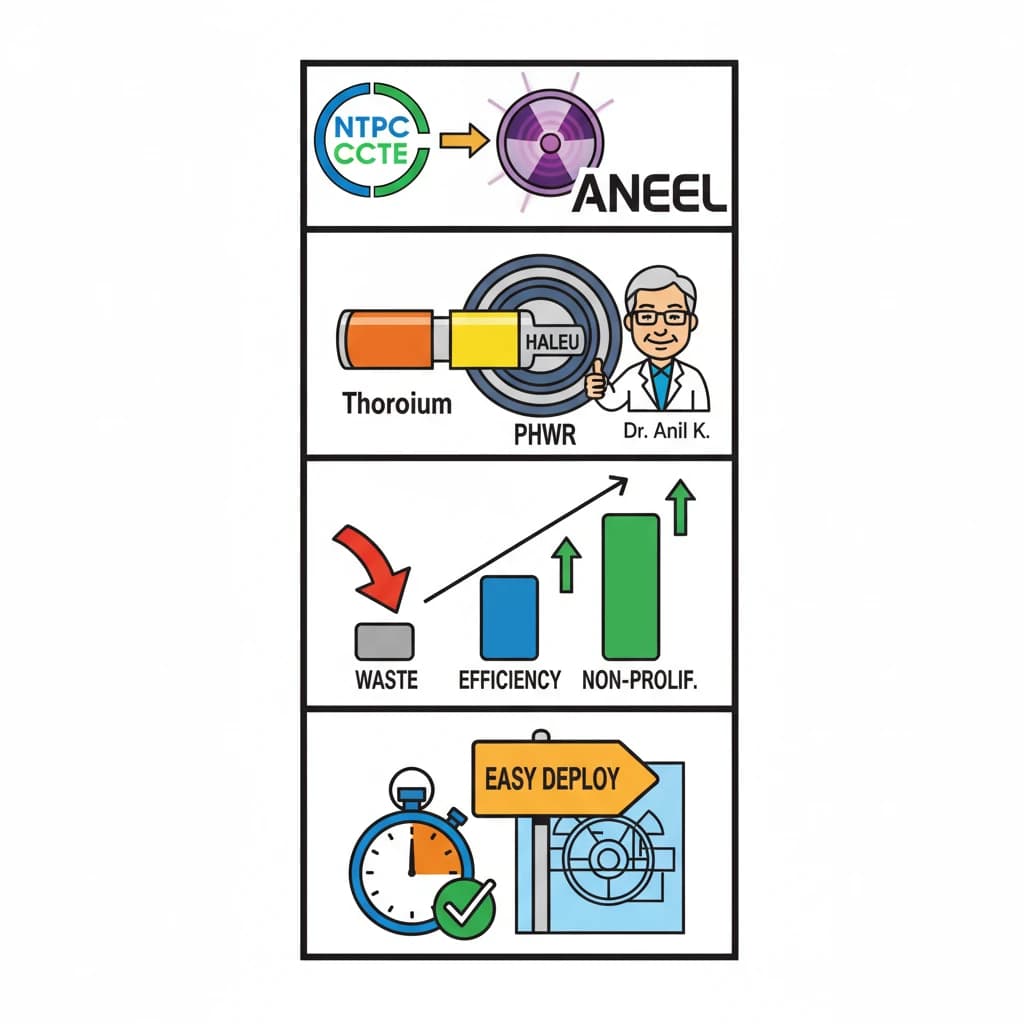
- •NTPC and CCTE are collaborating on ANEEL, a thorium-based fuel for India's PHWRs.
- •ANEEL is a blend of Thorium and HALEU, honoring Dr. Anil Kakodkar.
- •It offers significantly higher efficiency, reduced waste, and non-proliferation benefits.
- •ANEEL provides an easier and quicker way to deploy thorium, leveraging existing PHWRs.
- •This aligns with India's three-stage nuclear program, clean energy goals, and COP28 commitments.
- •Global interest in ANEEL is growing, as seen with Canadian Nuclear Laboratories' MoU.
🧠 Memory Techniques
95% Verified Content
📚 Reference Sources
•Department of Atomic Energy (DAE) official statements and reports (implied by content)
•NTPC Limited official announcements (implied by content)
•Clean Core Thorium Energy (CCTE) company information (implied by content)