<h2>Background</h2>
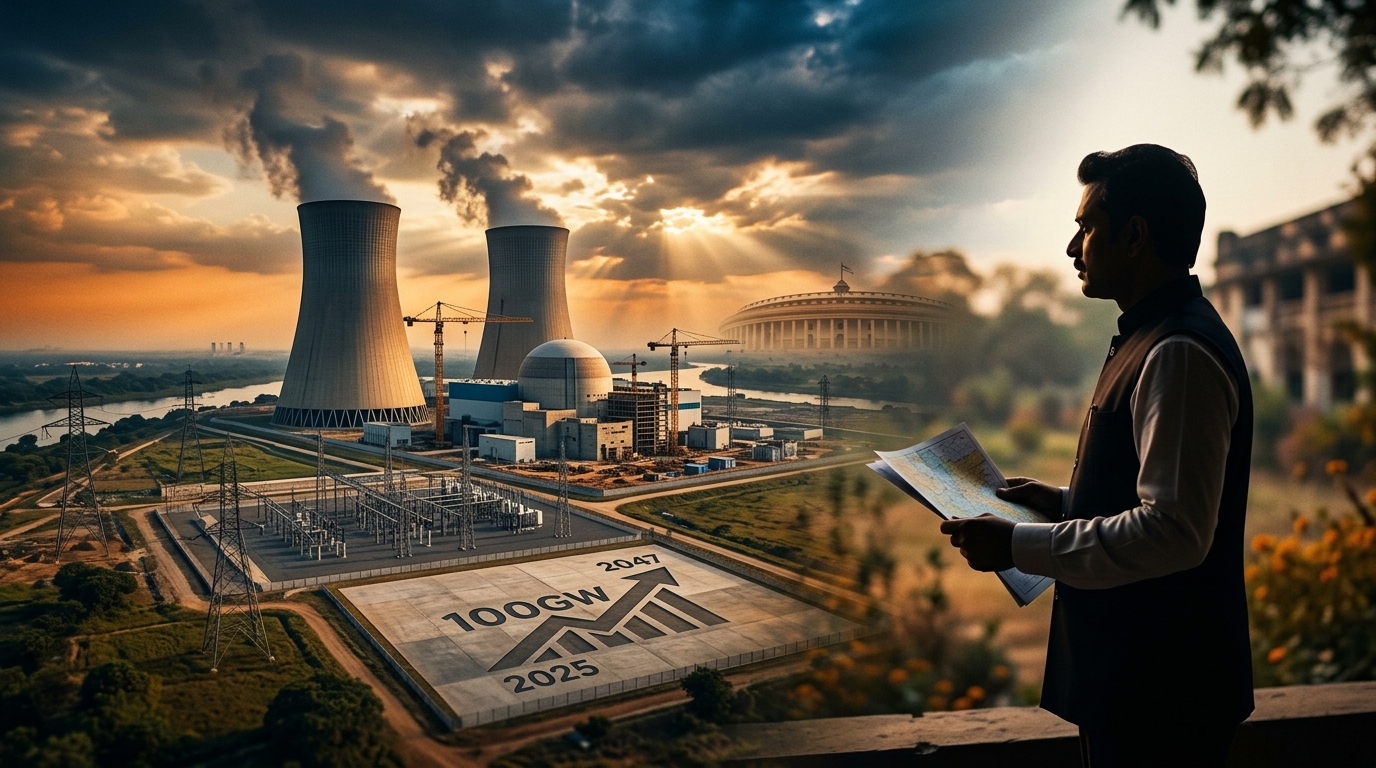
<p>2025‑26 <strong>Budget</strong> में, वित्त मंत्री <strong>Nirmala Sitharaman</strong> ने एक महत्वाकांक्षी लक्ष्य घोषित किया: भारत की स्थापित परमाणु क्षमता को <strong>8,180 MW</strong> से बढ़ाकर <strong>100 GW</strong> तक <strong>2047</strong> तक ले जाना। इसे साकार करने के लिए, सरकार ने SHANTI Act को तेज़ी से लागू किया, जिसने 1962 के <span class="key-term" data-definition="Atomic Energy Act — the original law governing all nuclear activities in India, placing them under the exclusive control of the Department of Atomic Energy (GS2: Polity)">Atomic Energy Act</span> और 2010 के <span class="key-term" data-definition="Civil Liability for Nuclear Damage Act — law that defines liability for nuclear accidents, previously limiting private investment (GS2: Polity)">CLNDA</span> को निरस्त किया।</p>
<h3>Key Developments (December 2025)</h3>
<ul>
<li>निजी कंपनियों को अब परमाणु ऊर्जा संयंत्र <em>निर्माण, स्वामित्व और संचालन</em> करने की अनुमति है।</li>
<li><span class="key-term" data-definition="Atomic Energy Regulatory Board — the statutory regulator for nuclear safety and security in India (GS2: Polity)">AERB</span> को वैधानिक स्थिति मिली, जिससे निगरानी मजबूत हुई।</li>
<li>देयता ढांचे में संशोधन किया गया ताकि घरेलू और विदेशी निवेशकों को आकर्षित किया जा सके।</li>
<li>1962 के <span class="key-term" data-definition="Atomic Energy Act — the original law governing all nuclear activities in India, placing them under the exclusive control of the Department of Atomic Energy (GS2: Polity)">Atomic Energy Act</span> और 2010 के <span class="key-term" data-definition="Civil Liability for Nuclear Damage Act — law that defines liability for nuclear accidents, previously limiting private investment (GS2: Polity)">CLNDA</span> को निरस्त किया गया।</li>
</ul>
<h3>Important Facts</h3>
<p>• जून 2025 तक, भारत की कुल उत्पादन क्षमता <strong>476 GW</strong> थी, जिसमें <strong>50 % गैर‑फॉसिल</strong> (नवीकरणीय 227 GW + परमाणु 8.8 GW) शामिल है।<br>
• नवीकरणीय उत्पादन ने <strong>403 TWh</strong> (कुल 1,824 TWh का 22 %) योगदान दिया, जबकि थर्मल (कोयला) ने बिजली का <strong>75 %</strong> भाग दिया।</p>
<p>• परमाणु का शेयर केवल <strong>3 %</strong> था, जबकि क्षमता का <strong>1.8 %</strong> था, जो इसकी बेसलोड भूमिका को दर्शाता है।</p>
<p>• <span class="key-term" data-definition="Viksit Bharat — the vision of a fully developed India by 2047, the 100‑year anniversary of independence (GS1: History)">Viksit Bharat</span> लक्ष्य को पूरा करने के लिए, कुल क्षमता को <strong>2,000 GW</strong> से अधिक होना चाहिए।</p>
<p>• वर्तमान परमाणु बेड़ा: <strong>24 प्लांट</strong> (NPCIL) कुल <strong>8,780 MW</strong> की क्षमता के साथ। डिज़ाइनों में <span class="key-term" data-definition="Pressurised Heavy Water Reactor — India’s indigenous reactor type using heavy water as moderator">Pressurised Heavy Water Reactor</span> शामिल हैं।</p>