Loading page, please wait…
HomeCurrent AffairsEditorialsGovt SchemesLearning ResourcesUPSC SyllabusPricingAboutBest UPSC AIUPSC AI ToolAI for UPSCUPSC ChatGPT

© 2026 Vaidra. All rights reserved.

PrivacyTerms
Vaidra Logo
Vaidra

Top 4 items + smart groups

UPSC GPT
New
Current Affairs
Daily Solutions
Daily Puzzle
Mains Evaluator

Version 2.0.0 • Built with ❤️ for UPSC aspirants

China Sets Up Cenling County in Xinjiang Near PoK & Afghanistan Border to curb Uyghur Militancy | GS1 UPSC Current Affairs April 2026
China Sets Up Cenling County in Xinjiang Near PoK & Afghanistan Border to curb Uyghur Militancy
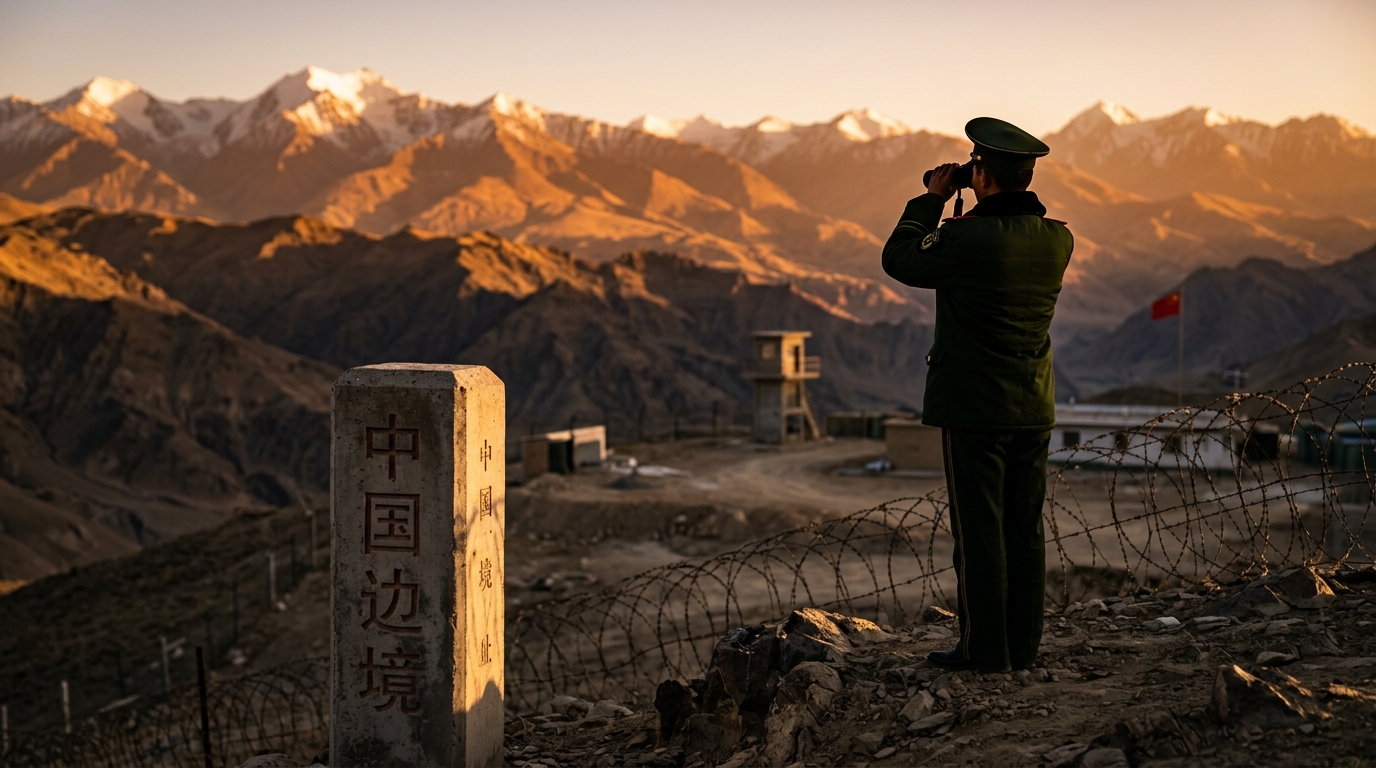
China has created a new county called Cenling in Xinjiang, near the Pakistan‑occupied Kashmir and Afghanistan borders, to bolster security along the Wakhan Corridor and curb infiltration by Uyghur separatist militants. The move highlights Beijing's use of administrative restructuring to address ethnic unrest and has strategic implications for India‑China‑Pakistan border dynamics.
Overview China has created a new county named Cenling in the volatile Xinjiang region, close to the borders of Pakistan-occupied Kashmir (PoK) and Afghanistan. The move is intended to strengthen security along the narrow Wakhan Corridor and curb infiltration by Uyghur separatist militants . Its proximity to the Karakoram mountain range highlights the strategic significance of the location. Key Developments Establishment of Cenling county in Xinjiang, marking a new administrative unit in a sensitive border area. Location chosen near the tri‑border region of China, PoK and Afghanistan to monitor cross‑border movements. Focus on securing the Wakhan Corridor , a historically porous route for militants and illicit flows. Objective to curb infiltration of Uyghur separatist militants into neighboring territories. Strategic positioning close to the Karakoram mountain range , which offers both logistical challenges and defensive advantages. Important Facts The newly formed county is officially named Cenling . It lies within the westernmost part of Xinjiang , a region that has witnessed repeated security operations against separatist elements. The county borders the disputed territory of Pakistan-occupied Kashmir and the Afghan frontier, making it a critical node for monitoring the Wakhan Corridor . The area is characterized by rugged terrain of the Karakoram , which historically has facilitated both trade and insurgent infiltration. UPSC Relevance For GS‑2 (Polity) aspirants, the creation of a new county illustrates how China employs administrative restructuring to address internal security challenges, especially ethnic unrest in Xinjiang . The move also underscores the geopolitical sensitivity of the India‑China‑Pakistan tri‑border area, a recurring theme in GS‑2 (Polity) and GS‑1 (Geography) papers. Understanding the strategic importance of the Wakhan Corridor and the Karakoram aids candidates in analysing border security dynamics and China’s counter‑insurgency policies. Way Forward India should closely monitor the security implications of the new Cenling county, especially any spill‑over effects on the disputed regions of PoK and the Afghan border. Diplomatic engagement with China on border confidence‑building measures, coupled with intelligence sharing on cross‑border militant networks, can help mitigate potential escalations. For UPSC preparation, candidates must track such administrative and security developments as they reflect broader themes of internal security, ethnic management, and Sino‑Indian strategic competition.
  1. Home
  2. Prepare
  3. Current Affairs
  4. China Sets Up Cenling County in Xinjiang Near PoK & Afghanistan Border to curb Uyghur Militancy
Login to bookmark articles
Login to mark articles as complete

Overview

gs.gs175% UPSC Relevance

China creates Cenling county in Xinjiang to plug militant routes along the China‑PoK‑Afghanistan border.

Key Facts

  1. In April 2026, China created a new county named Cenling in the westernmost part of Xinjiang.
  2. Cenling borders Pakistan‑occupied Kashmir (PoK) and the Afghan frontier, adjoining the narrow Wakhan Corridor.
  3. The county lies within the rugged Karakoram mountain range, a strategic high‑altitude zone.
  4. Primary objective: strengthen security and curb infiltration of Uyghur separatist militants across the tri‑border area.
  5. The move exemplifies China’s use of county‑level administrative restructuring to manage ethnic unrest and border security.
  6. Wakhan Corridor, a 350‑km narrow strip linking Afghanistan to China, has historically been a porous route for insurgents and illicit trade.

Background & Context

China’s establishment of Cenling county reflects a blend of geopolitical and internal‑security strategies. It aligns with the GS‑1 focus on strategic geography of border regions and GS‑2 emphasis on how states reorganise administrative units to address ethnic insurgency and cross‑border threats.

Mains Answer Angle

GS‑2 (Polity) – Discuss the role of administrative restructuring in China’s counter‑insurgency strategy, especially in Xinjiang’s border zones. The answer can also draw on GS‑1 (Geography) to analyse the strategic significance of the Wakhan Corridor.

Full Article

<h3>Overview</h3> <p>China has created a new <span class="key-term" data-definition="County — an administrative subdivision in China below the prefecture level, used to implement local governance and security measures (GS2: Polity).">county</span> named <strong>Cenling</strong> in the volatile <span class="key-term" data-definition="Xinjiang — an autonomous region in western China with a majority Uyghur population; a focus of ethnic security and separatist challenges (GS2: Polity).">Xinjiang</span> region, close to the borders of <span class="key-term" data-definition="Pakistan-occupied Kashmir (PoK) — the portion of the former princely state of Jammu & Kashmir administered by Pakistan; a flashpoint in India-China-Pakistan geopolitics (GS2: Polity).">Pakistan-occupied Kashmir</span> (PoK) and Afghanistan. The move is intended to strengthen security along the narrow <span class="key-term" data-definition="Wakhan Corridor — a narrow strip of Afghan territory linking Afghanistan to China, bordering Tajikistan and Pakistan; strategically significant for cross‑border movement (GS1: Geography).">Wakhan Corridor</span> and curb infiltration by <span class="key-term" data-definition="Uyghur separatist militants — armed groups seeking independence for Xinjiang, often linked to ethnic unrest and security operations (GS2: Polity).">Uyghur separatist militants</span>. Its proximity to the <span class="key-term" data-definition="Karakoram mountain range — a high mountain range spanning the borders of China, Pakistan, and India, containing key passes and strategic terrain (GS1: Geography).">Karakoram mountain range</span> highlights the strategic significance of the location.</p> <h3>Key Developments</h3> <ul> <li>Establishment of <strong>Cenling</strong> county in Xinjiang, marking a new administrative unit in a sensitive border area.</li> <li>Location chosen near the tri‑border region of China, PoK and Afghanistan to monitor cross‑border movements.</li> <li>Focus on securing the <strong>Wakhan Corridor</strong>, a historically porous route for militants and illicit flows.</li> <li>Objective to curb infiltration of <strong>Uyghur separatist militants</strong> into neighboring territories.</li> <li>Strategic positioning close to the <strong>Karakoram mountain range</strong>, which offers both logistical challenges and defensive advantages.</li> </ul> <h3>Important Facts</h3> <p>The newly formed county is officially named <strong>Cenling</strong>. It lies within the westernmost part of <span class="key-term" data-definition="Xinjiang — an autonomous region in western China with a majority Uyghur population; a focus of ethnic security and separatist challenges (GS2: Polity).">Xinjiang</span>, a region that has witnessed repeated security operations against separatist elements. The county borders the disputed territory of <span class="key-term" data-definition="Pakistan-occupied Kashmir (PoK) — the portion of the former princely state of Jammu & Kashmir administered by Pakistan; a flashpoint in India-China-Pakistan geopolitics (GS2: Polity).">Pakistan-occupied Kashmir</span> and the Afghan frontier, making it a critical node for monitoring the <span class="key-term" data-definition="Wakhan Corridor — a narrow strip of Afghan territory linking Afghanistan to China, bordering Tajikistan and Pakistan; strategically significant for cross‑border movement (GS1: Geography).">Wakhan Corridor</span>. The area is characterized by rugged terrain of the <span class="key-term" data-definition="Karakoram mountain range — a high mountain range spanning the borders of China, Pakistan, and India, containing key passes and strategic terrain (GS1: Geography).">Karakoram</span>, which historically has facilitated both trade and insurgent infiltration.</p> <h3>UPSC Relevance</h3> <p>For GS‑2 (Polity) aspirants, the creation of a new <span class="key-term" data-definition="County — an administrative subdivision in China below the prefecture level, used to implement local governance and security measures (GS2: Polity).">county</span> illustrates how China employs administrative restructuring to address internal security challenges, especially ethnic unrest in <span class="key-term" data-definition="Xinjiang — an autonomous region in western China with a majority Uyghur population; a focus of ethnic security and separatist challenges (GS2: Polity).">Xinjiang</span>. The move also underscores the geopolitical sensitivity of the India‑China‑Pakistan tri‑border area, a recurring theme in GS‑2 (Polity) and GS‑1 (Geography) papers. Understanding the strategic importance of the <span class="key-term" data-definition="Wakhan Corridor — a narrow strip of Afghan territory linking Afghanistan to China, bordering Tajikistan and Pakistan; strategically significant for cross‑border movement (GS1: Geography).">Wakhan Corridor</span> and the <span class="key-term" data-definition="Karakoram mountain range — a high mountain range spanning the borders of China, Pakistan, and India, containing key passes and strategic terrain (GS1: Geography).">Karakoram</span> aids candidates in analysing border security dynamics and China’s counter‑insurgency policies.</p> <h3>Way Forward</h3> <p>India should closely monitor the security implications of the new <strong>Cenling</strong> county, especially any spill‑over effects on the disputed regions of PoK and the Afghan border. Diplomatic engagement with China on border confidence‑building measures, coupled with intelligence sharing on cross‑border militant networks, can help mitigate potential escalations. For UPSC preparation, candidates must track such administrative and security developments as they reflect broader themes of internal security, ethnic management, and Sino‑Indian strategic competition.</p>
Read Original on hindu

Analysis

Practice Questions

GS1
Easy
Prelims MCQ

China’s administrative re‑organisation in Xinjiang

1 marks
4 keywords
GS2
Medium
Mains Short Answer

Administrative restructuring as a counter‑insurgency tool

10 marks
5 keywords
GS1
Hard
Mains Essay

Geopolitics and security of the Wakhan Corridor and Karakoram region

25 marks
6 keywords
Related:Daily•Weekly

Loading related articles...

Loading related articles...

Tip: Click articles above to read more from the same date, or use the back button to see all articles.

Quick Reference

Key Insight

China creates Cenling county in Xinjiang to plug militant routes along the China‑PoK‑Afghanistan border.

Key Facts

  1. In April 2026, China created a new county named Cenling in the westernmost part of Xinjiang.
  2. Cenling borders Pakistan‑occupied Kashmir (PoK) and the Afghan frontier, adjoining the narrow Wakhan Corridor.
  3. The county lies within the rugged Karakoram mountain range, a strategic high‑altitude zone.
  4. Primary objective: strengthen security and curb infiltration of Uyghur separatist militants across the tri‑border area.
  5. The move exemplifies China’s use of county‑level administrative restructuring to manage ethnic unrest and border security.
  6. Wakhan Corridor, a 350‑km narrow strip linking Afghanistan to China, has historically been a porous route for insurgents and illicit trade.

Background

China’s establishment of Cenling county reflects a blend of geopolitical and internal‑security strategies. It aligns with the GS‑1 focus on strategic geography of border regions and GS‑2 emphasis on how states reorganise administrative units to address ethnic insurgency and cross‑border threats.

Mains Angle

GS‑2 (Polity) – Discuss the role of administrative restructuring in China’s counter‑insurgency strategy, especially in Xinjiang’s border zones. The answer can also draw on GS‑1 (Geography) to analyse the strategic significance of the Wakhan Corridor.

Explore:Current Affairs·Editorial Analysis·Govt Schemes·Study Materials·Previous Year Questions·UPSC GPT