Overview
On 15 February 2026, Chief Minister A. Revanth Reddy clarified his statement “I am the king, I am the Minister” as a reaffirmation of his government’s commitment to the all‑round development of Scheduled Castes (SC) and Scheduled Tribes (ST). Speaking at a function commemorating Sant Sevalal’s birth anniversary, he linked the remark to the recent urban local body (ULB) elections where the ruling party secured over 85% of the municipal seats. The address highlighted a suite of welfare measures targeting marginalized communities, ranging from reservation in posts to infrastructure projects in tribal hamlets.
Key Developments
- Development 1: The government allocated 30% of posts to SCs, double their population share of 15%, and appointed four SC ministers and an SC Speaker.
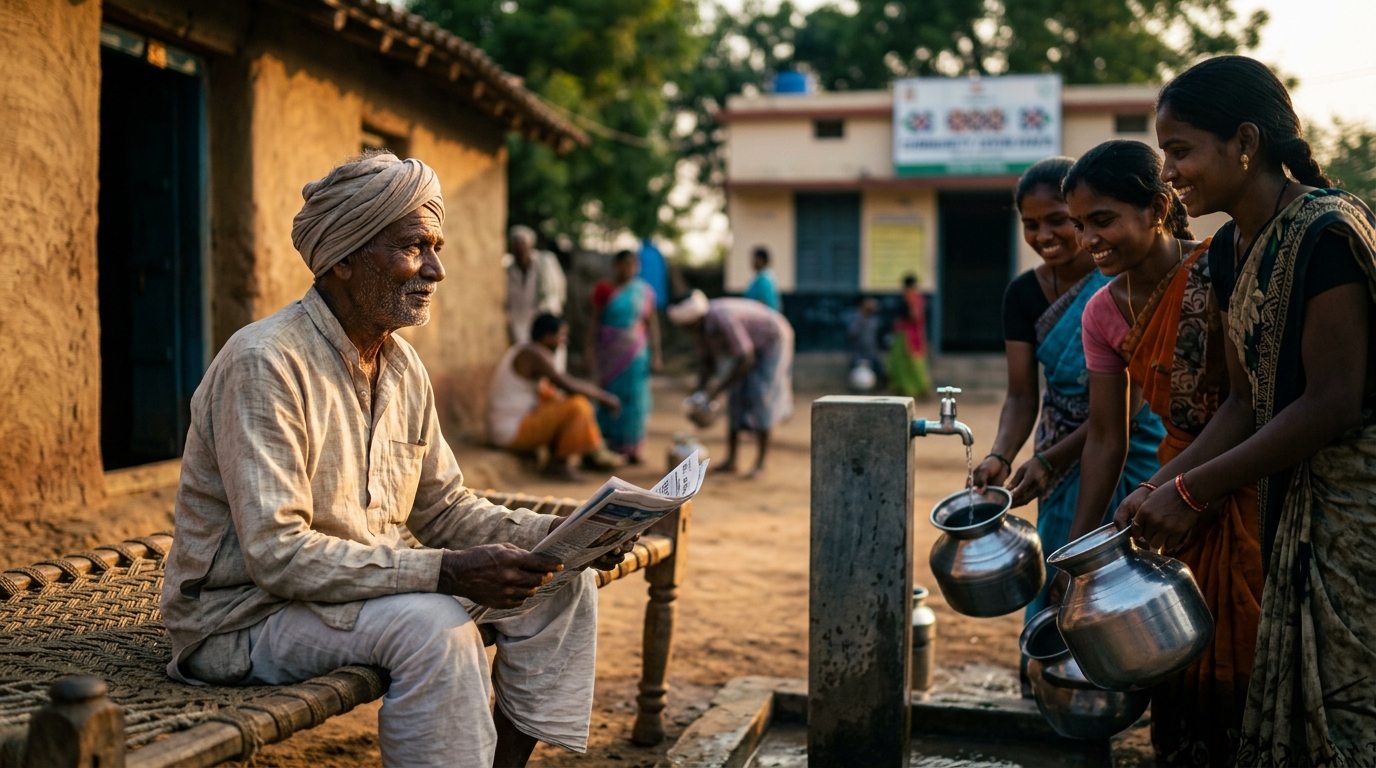
- Development 2: Infrastructure initiatives for tribal areas include laying BT roads, sanctioning a school per hamlet, constructing panchayat buildings, and installing solar‑powered drinking‑water pumps.
- Development 3: Social welfare schemes delivered fine rice to 3.15 crore poor via PDS, provided 200 units of free electricity and housing to 50 lakh families, and spent ₹9,000 crore on free bus travel for women.
Important Facts
- Fact 1: In the last two years, the state created 70,000 jobs for SC, ST and BC candidates, alongside facilitating Group‑I recruitments.
- Fact 2: Women Self‑Help Groups were empowered to operate solar power plants, aligning energy access with gender empowerment.
Exam Relevance
This episode touches upon multiple segments of the UPSC syllabus. In GS Paper II (Polity & Governance), it illustrates the use of reservation, decentralisation, and the role of state governments in implementing social justice policies. GS Paper III (Economy & Development) offers a case study of welfare financing, public distribution system (PDS) efficiency, and gender‑focused infrastructure. The political dynamics, especially the CM’s jibe at the opposition, are pertinent to GS Paper I (Indian Society & Social Justice) and the optional paper on Public Administration. Potential question angles include analysis of reservation efficacy, evaluation of rural‑urban connectivity schemes, and the political impact of welfare‑centric electoral strategies.
Way Forward
For sustained inclusive growth, the state must ensure that the allocated 30% SC posts translate into genuine decision‑making power, monitor the quality of infrastructure in tribal hamlets, and maintain fiscal prudence while scaling welfare programmes. Strengthening monitoring mechanisms, encouraging community participation, and integrating technology in service delivery will be crucial for replicating this model across other states.