Loading page, please wait…
HomeCurrent AffairsEditorialsGovt SchemesLearning ResourcesUPSC SyllabusPricingAboutBest UPSC AIUPSC AI ToolAI for UPSCUPSC ChatGPT

© 2026 Vaidra. All rights reserved.

PrivacyTerms
Vaidra Logo
Vaidra

Top 4 items + smart groups

UPSC GPT
New
Current Affairs
Daily Solutions
Daily Puzzle
Mains Evaluator

Version 2.0.0 • Built with ❤️ for UPSC aspirants

IAEA Reports Projectile Strike Near Iran's Bushehr Nuclear Power Plant – No Radiation Rise — UPSC Current Affairs | April 4, 2026
IAEA Reports Projectile Strike Near Iran's Bushehr Nuclear Power Plant – No Radiation Rise
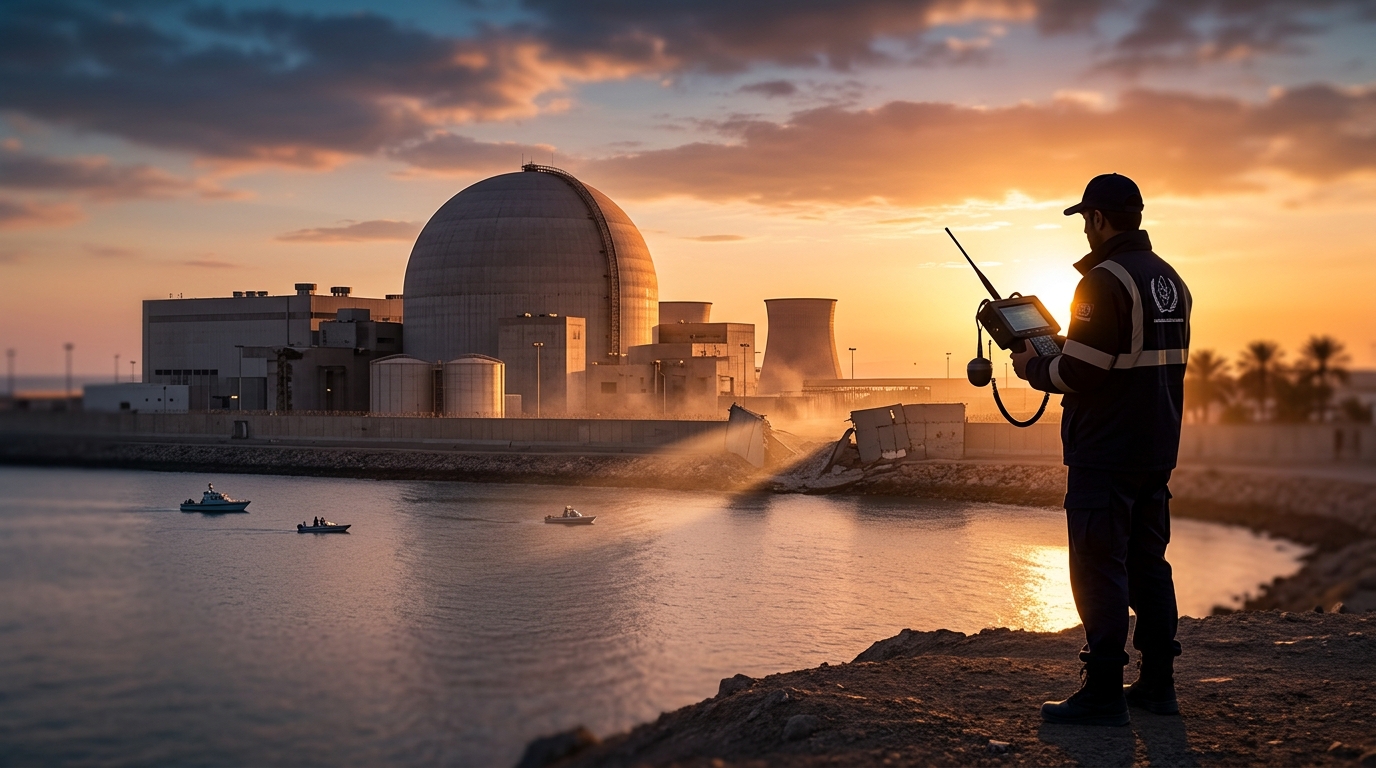
On April 4, 2026, the IAEA reported that a projectile struck near Iran’s Bushehr nuclear power plant, killing a security staff member and damaging a building, but no rise in radiation levels was detected. The incident highlights nuclear safety, IAEA monitoring, and the geopolitical sensitivities surrounding Iran’s nuclear programme, all of which are pertinent to UPSC GS III and GS II topics.
The IAEA confirmed on April 4, 2026 that a projectile landed close to the premises of Iran’s Bushehr nuclear power plant . The incident resulted in the death of a member of the site’s physical protection staff and caused shock‑wave damage to a building, but no rise in radiation levels was reported. Key Developments Iran informed the IAEA that a projectile struck near the Bushehr site, killing one security staff member. The blast produced shockwaves that damaged a building on the complex. IAEA’s monitoring indicated no increase in radiation levels after the incident. Iran’s state‑linked Tasnim news agency reported that the main reactors and power generation remained unaffected. Important Facts The Bushehr plant houses two VVER‑1000 reactors supplied by Russia, each with a capacity of 1,000 MW. The site is a strategic asset for Iran’s energy mix and a focal point of international scrutiny under the Joint Comprehensive Plan of Action (JCPOA). The IAEA’s rapid notification mechanism allows member states to receive timely safety updates, reinforcing the agency’s role in global nuclear governance. UPSC Relevance Understanding this incident is vital for several UPSC syllabus areas: GS III – Science & Technology : Role of the IAEA, nuclear safety protocols, and the significance of radiation monitoring. GS II – International Relations : Implications for Iran’s compliance with the JCPOA, regional security dynamics, and the response of the global non‑proliferation regime. GS IV – Ethics & Integrity : The ethical responsibility of states to protect civilian infrastructure and prevent escalation. Way Forward For policymakers, the incident underscores the need to: Strengthen physical security measures at nuclear installations, including perimeter surveillance and rapid response teams. Enhance IAEA’s inspection and verification mechanisms to assure the international community of safety compliance. Promote diplomatic engagement with Iran to address security concerns while maintaining the momentum of nuclear non‑proliferation dialogues. Continued vigilance and transparent reporting will be essential to prevent any escalation that could affect regional stability and global nuclear safety.
  1. Home
  2. Prepare
  3. Current Affairs
  4. IAEA Reports Projectile Strike Near Iran's Bushehr Nuclear Power Plant – No Radiation Rise
Login to bookmark articles
Login to mark articles as complete

Overview

IAEA confirms no radiation rise after projectile strike at Iran's Bushehr plant, raising nuclear security concerns

Key Facts

  1. IAEA reported on 4 April 2026 that a projectile hit near Bushehr nuclear power plant, killing one physical protection staff.
  2. Bushehr houses two Russian‑supplied VVER‑1000 reactors, each of 1,000 MW capacity, operational since 2011.
  3. Shock‑wave damage was confined to a building; radiation levels remained unchanged post‑incident.
  4. Iran’s Tasnim news agency confirmed reactors and power generation were unaffected.
  5. The incident tests IAEA’s rapid notification mechanism and Iran’s compliance with the JCPOA.

Background & Context

The Bushehr plant is Iran’s flagship civilian nuclear facility and a focal point of the JCPOA framework. Any breach of its physical security triggers scrutiny under global non‑proliferation norms and regional stability considerations.

UPSC Syllabus Connections

Prelims_GS•Physics and Chemistry in Everyday Life

Mains Answer Angle

In GS II, candidates can discuss the incident’s impact on Iran’s JCPOA commitments and regional security; in GS III, they can evaluate nuclear safety protocols and IAEA’s role in crisis communication.

Full Article

<p>The <span class="key-term" data-definition="International Atomic Energy Agency — the United Nations body that promotes peaceful nuclear energy, monitors nuclear safety and safeguards, and conducts inspections (GS3: International Relations/Science & Technology)">IAEA</span> confirmed on <strong>April 4, 2026</strong> that a projectile landed close to the premises of Iran’s <span class="key-term" data-definition="Bushehr nuclear power plant — Iran’s first commercial nuclear power station, situated on the Persian Gulf and operational since 2011 (GS3: Energy Security)">Bushehr nuclear power plant</span>. The incident resulted in the death of a member of the site’s <span class="key-term" data-definition="Physical protection staff — personnel responsible for safeguarding nuclear facilities against sabotage, intrusion or attack (GS3: Nuclear Security)">physical protection staff</span> and caused shock‑wave damage to a building, but no rise in <span class="key-term" data-definition="Radiation levels — the intensity of ionising radiation in an environment, a critical indicator for nuclear safety and public health (GS3: Environment/Health)">radiation levels</span> was reported.</p> <h3>Key Developments</h3> <ul> <li>Iran informed the IAEA that a <span class="key-term" data-definition="Projectile — a weapon or object launched towards a target, in this context likely a missile or shell (GS3: Defense/Strategic Studies)">projectile</span> struck near the Bushehr site, killing one security staff member.</li> <li>The blast produced shockwaves that damaged a building on the complex.</li> <li>IAEA’s monitoring indicated <strong>no increase in radiation levels</strong> after the incident.</li> <li>Iran’s state‑linked <span class="key-term" data-definition="Tasnim news agency — an Iranian news outlet affiliated with the Islamic Revolutionary Guard Corps, often used for official statements (GS2: Polity/Media)">Tasnim news agency</span> reported that the main reactors and power generation remained unaffected.</li> </ul> <h3>Important Facts</h3> <p>The Bushehr plant houses two VVER‑1000 reactors supplied by Russia, each with a capacity of 1,000 MW. The site is a strategic asset for Iran’s energy mix and a focal point of international scrutiny under the Joint Comprehensive Plan of Action (JCPOA). The IAEA’s rapid notification mechanism allows member states to receive timely safety updates, reinforcing the agency’s role in global nuclear governance.</p> <h3>UPSC Relevance</h3> <p>Understanding this incident is vital for several UPSC syllabus areas:</p> <ul> <li><strong>GS III – Science & Technology</strong>: Role of the IAEA, nuclear safety protocols, and the significance of radiation monitoring.</li> <li><strong>GS II – International Relations</strong>: Implications for Iran’s compliance with the JCPOA, regional security dynamics, and the response of the global non‑proliferation regime.</li> <li><strong>GS IV – Ethics & Integrity</strong>: The ethical responsibility of states to protect civilian infrastructure and prevent escalation.</li> </ul> <h3>Way Forward</h3> <p>For policymakers, the incident underscores the need to:</p> <ul> <li>Strengthen physical security measures at nuclear installations, including perimeter surveillance and rapid response teams.</li> <li>Enhance IAEA’s inspection and verification mechanisms to assure the international community of safety compliance.</li> <li>Promote diplomatic engagement with Iran to address security concerns while maintaining the momentum of nuclear non‑proliferation dialogues.</li> </ul> <p>Continued vigilance and transparent reporting will be essential to prevent any escalation that could affect regional stability and global nuclear safety.</p>
Read Original on hindu

Analysis

Practice Questions

GS2
Easy
Prelims MCQ

International nuclear safety and IAEA monitoring

1 marks
4 keywords
GS2
Medium
Mains Short Answer

IAEA role in nuclear safety and international governance

10 marks
5 keywords
GS2
Hard
Mains Essay

Nuclear security, regional conflict, and international regulatory frameworks

25 marks
6 keywords
Related:Daily•Weekly

Loading related articles...

Loading related articles...

Tip: Click articles above to read more from the same date, or use the back button to see all articles.

Explore:Current Affairs·Editorial Analysis·Govt Schemes·Study Materials·Previous Year Questions·UPSC GPT