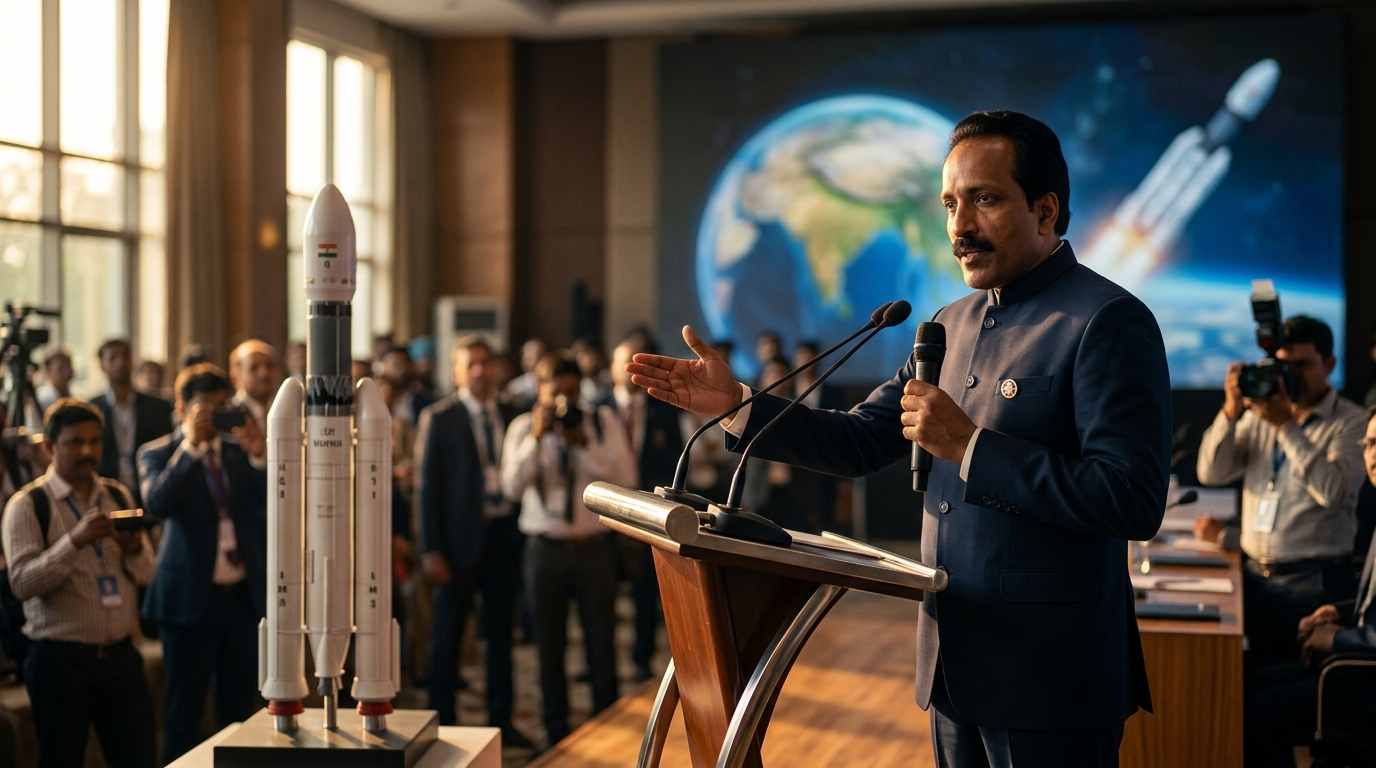
The ISRO Chairperson Dr V. Narayanan has indicated that the launch date for the first uncrewed mission of the Gaganyaan programme will be announced shortly. The mission, officially known as the HLVM3 G1/OM1 mission, was originally slated for the first quarter of 2026 but has experienced a delay.
Key Developments
- Announcement that the exact launch date will be disclosed soon, signalling progress after the delay.
- The mission remains the inaugural test flight for the Gaganyaan crewed programme, crucial for validating life‑support and orbital modules.
- Delay pushes the original Q1 2026 schedule, but ISRO assures technical readiness is being enhanced.
Important Facts
The HLVM3 G1/OM1 mission will test the orbital module, communication systems, and re‑entry capabilities without a crew. Successful completion is a prerequisite for the subsequent crewed flight, expected later in the decade. ISRO’s timeline adjustments reflect rigorous safety checks, a hallmark of its recent approach to high‑profile projects.
Exam Relevance
Understanding the Gaganyaan programme is vital for GS‑III (Science & Technology) and GS‑II (Polity) sections. The mission showcases India's indigenous space‑technology capabilities, contributing to strategic autonomy and soft power. It also illustrates the governance model of a public sector undertaking led by a technocratic chairperson, relevant for questions on institutional functioning and policy implementation.
Way Forward
ISRO is expected to release a definitive launch window within the next few weeks. Stakeholders, including the Department of Space and the Ministry of Defence, will monitor progress to ensure alignment with the broader national space agenda. Aspirants should track official releases, as the timeline will influence future policy discussions on crewed spaceflight, international collaborations, and technology transfer.