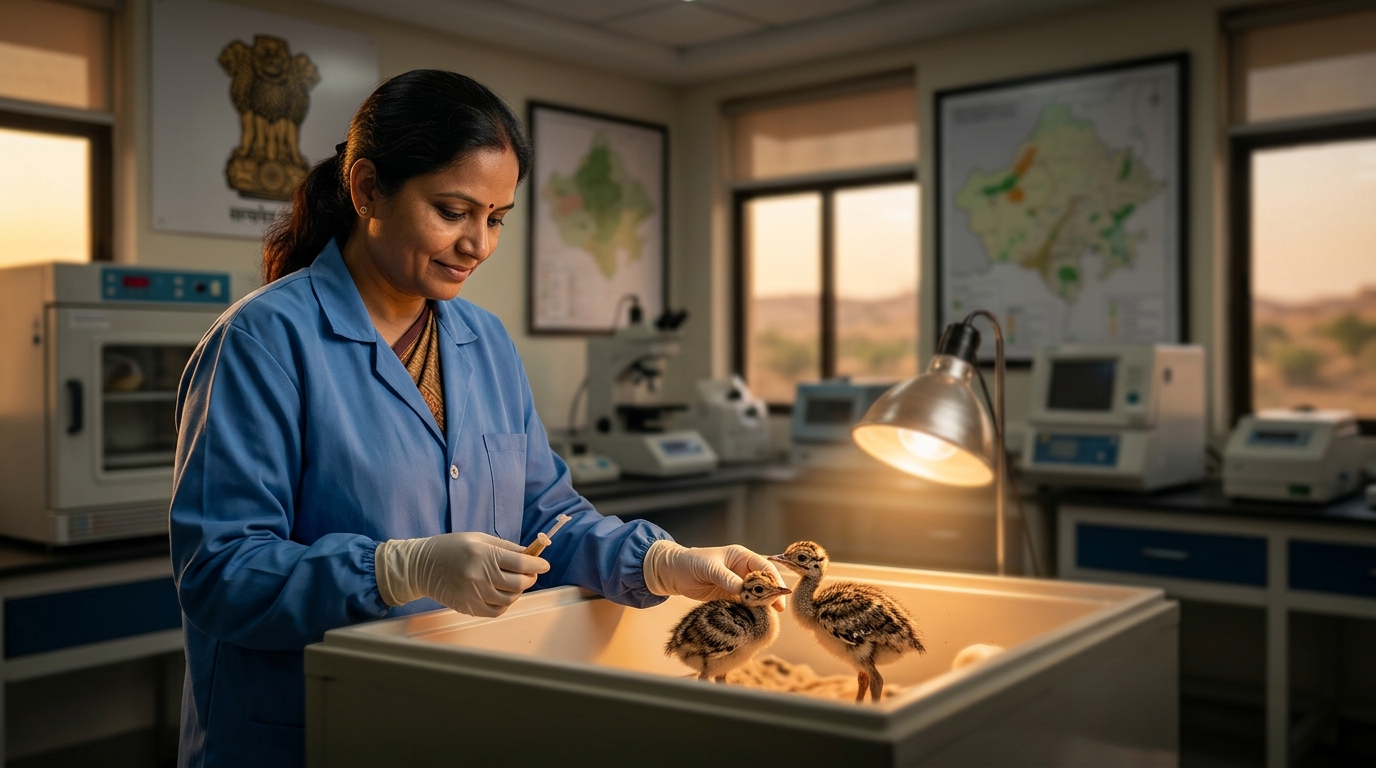
The Ministry of Environment, Forest and Climate Change (MoEFCC) reported a significant milestone in the conservation of the Great Indian Bustard (GIB). Two chicks hatched at the Conservation Breeding Centre in Rajasthan, bringing the total captive stock to 70 and marking the programme’s fourth year.
Key Developments
- Two chicks hatched this week – one from natural mating and the other via artificial insemination.
- The captive population now stands at 70 birds, a steady rise since the programme’s inception.
- Some of the year’s captive‑bred chicks are slated for soft release into the wild, initiating a new phase of the project.
- Union Minister Shri Bhupender Yadav praised the achievement on social media, attributing success to the environmentally‑sensitive leadership of Prime Minister Shri Narendra Modi and the efforts of the Rajasthan Forest Department.
Important Facts
The Great Indian Bustard, once widespread across the Indian sub‑continent, has suffered severe declines due to habitat loss, hunting, and collision with power lines. The captive breeding programme, launched under the Project Great Indian Bustard, aims to create a viable ex‑situ population that can supplement dwindling wild numbers.
Key technical interventions include:
- Use of both natural and assisted reproductive techniques to maximise genetic diversity.
- Establishment of predator‑free, semi‑natural enclosures that mimic the bird’s grassland habitat.
- Monitoring of health, behaviour, and breeding success through scientific protocols.
Exam Relevance
Understanding this programme is vital for GS‑3 (Environment) as it illustrates:
- Implementation of ex‑situ conservation strategies.
- Coordination between central ministries and state forest departments, reflecting the federal structure of wildlife governance.
- Policy linkages with the National Biodiversity Action Plan and the Wildlife Protection Act.
Way Forward
For the project to succeed, the following steps are essential:
- Scale‑up of soft‑release sites with adequate predator control and community participation.
- Strengthening of habitat restoration in the bird’s historic range, especially grassland management.
- Enhanced monitoring using satellite telemetry to track post‑release survival.
- Public awareness campaigns to reduce human‑wildlife conflict and garner local support.
Continued political commitment and adequate funding will determine whether the Great Indian Bustard can be pulled back from the brink of extinction.