Loading page, please wait…
HomeCurrent AffairsEditorialsGovt SchemesLearning ResourcesUPSC SyllabusPricingAboutBest UPSC AIUPSC AI ToolAI for UPSCUPSC ChatGPT

© 2026 Vaidra. All rights reserved.

PrivacyTerms
Vaidra Logo
Vaidra

Top 4 items + smart groups

UPSC GPT
New
Current Affairs
Daily Solutions
Daily Puzzle
Mains Evaluator

Version 2.0.0 • Built with ❤️ for UPSC aspirants

Russian Drone Strikes Damage Odesa Port Infrastructure, Trigger 380,000‑Consumer Blackouts in Northern Ukraine | GS2 UPSC Current Affairs April 2026
Russian Drone Strikes Damage Odesa Port Infrastructure, Trigger 380,000‑Consumer Blackouts in Northern Ukraine
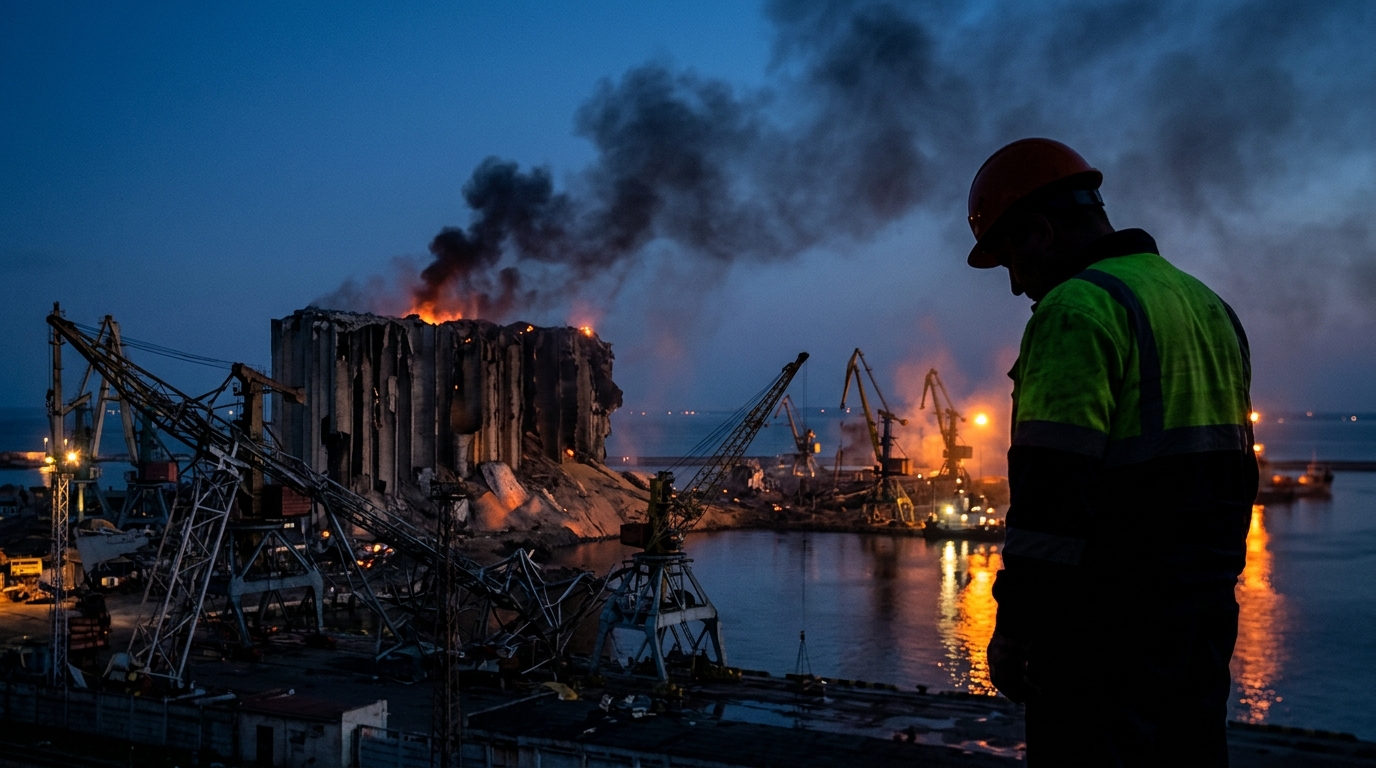
On April 18, 2026, Russian drone attacks on Ukraine's Odesa region damaged port facilities and agricultural warehouses, while causing blackouts for 380,000 consumers in the north. Governor Oleh Kiper reported no casualties, highlighting the strategic and economic implications of infrastructure vulnerability for UPSC aspirants.
Overview In the early hours of April 18, 2026 , a series of Russian attacks employing drones hit Ukraine's southern Odesa region . The strikes damaged key port infrastructure and caused widespread power outages in the country's north. Key Developments Drone‑borne munitions destroyed agricultural warehouses, supply depots and administrative buildings in Odesa. Electrical grids in northern Ukraine experienced blackouts affecting 380,000 consumers . Oleh Kiper confirmed no casualties. Important Facts The targeted facilities included: Multiple agricultural warehouses that store grain and other produce for export. Logistical depots supporting military and civilian supply chains. Regional administrative buildings that coordinate disaster response. While the attacks caused material damage, the absence of human loss was noted by the regional administration. UPSC Relevance These events illustrate several themes that recur in the UPSC syllabus: Geopolitics and security dynamics – The use of drones underscores the evolving nature of Russian attacks on Ukrainian territory, a case study for GS2 (International Relations) and GS3 (Security). Economic impact of infrastructure disruption – Damage to port infrastructure and the ensuing blackouts affect trade, agricultural exports, and regional economies, aligning with GS3 (Economy). Administrative response – The role of Oleh Kiper highlights the importance of state machinery in crisis management, a topic under GS2 (Polity). Way Forward Analysts suggest that Ukraine must bolster its civil‑defence infrastructure , diversify energy sources to reduce blackout risks, and enhance port security protocols . International partners are likely to increase assistance for rebuilding damaged logistics hubs, emphasizing the strategic significance of the Black Sea corridor.
  1. Home
  2. Prepare
  3. Current Affairs
  4. Russian Drone Strikes Damage Odesa Port Infrastructure, Trigger 380,000‑Consumer Blackouts in Northern Ukraine
Must Review
Login to bookmark articles
Login to mark articles as complete

Overview

gs.gs280% UPSC Relevance

Russian drone raids cripple Odesa port and plunge 380,000 north Ukrainians into blackout, raising security and economic stakes.

Key Facts

  1. On 18 April 2026, Russian drones struck Odesa region in the early hours, targeting port infrastructure.
  2. The attacks destroyed agricultural warehouses, logistical depots and regional administrative buildings in Odesa.
  3. Power grids in northern Ukraine suffered blackouts, affecting 380,000 domestic consumers.
  4. Governor Oleh Kiper confirmed no human casualties despite material damage.
  5. The strikes underscore Russia's reliance on unmanned aerial vehicles to hit economic and strategic assets.

Background & Context

The drone raids form part of Russia's broader campaign to cripple Ukraine's export capacity and energy security, highlighting the vulnerability of critical civilian infrastructure in modern hybrid warfare and its repercussions on the Ukrainian economy and governance.

Mains Answer Angle

GS2 (International Relations) – analyse how targeted attacks on critical infrastructure affect national security and economic resilience; possible question: "Assess the impact of Russian drone strikes on Ukraine's port and power infrastructure and suggest policy measures to enhance resilience."

Full Article

<h3>Overview</h3> <p>In the early hours of <strong>April 18, 2026</strong>, a series of <span class="key-term" data-definition="Russian attacks — military strikes launched by Russia, often targeting strategic infrastructure; relevant to GS2: International Relations and GS3: Security">Russian attacks</span> employing <span class="key-term" data-definition="Drones — unmanned aerial vehicles used for surveillance or strike missions; increasingly significant in modern warfare (GS2: International Relations)">drones</span> hit Ukraine's southern <span class="key-term" data-definition="Odesa region — a southern administrative division of Ukraine with strategic Black Sea ports; important for GS3: Economy and GS2: International Relations">Odesa region</span>. The strikes damaged key <span class="key-term" data-definition="Port infrastructure — facilities such as docks, warehouses, and logistics hubs essential for trade; critical to a nation's economic health (GS3: Economy)">port infrastructure</span> and caused widespread power outages in the country's north.</p> <h3>Key Developments</h3> <ul> <li>Drone‑borne munitions destroyed agricultural warehouses, supply depots and administrative buildings in Odesa.</li> <li>Electrical grids in northern Ukraine experienced <span class="key-term" data-definition="Blackouts — loss of electricity supply affecting households and industry; a measure of infrastructure vulnerability (GS3: Economy)">blackouts</span> affecting <strong>380,000 consumers</strong>.</li> <li><span class="key-term" data-definition="Oleh Kiper — the appointed governor of Odesa region, representing central authority in Ukraine's administrative hierarchy (GS2: Polity)">Oleh Kiper</span> confirmed no casualties.</li> </ul> <h3>Important Facts</h3> <p>The targeted facilities included:</p> <ul> <li>Multiple <strong>agricultural warehouses</strong> that store grain and other produce for export.</li> <li>Logistical <strong>depots</strong> supporting military and civilian supply chains.</li> <li>Regional <strong>administrative buildings</strong> that coordinate disaster response.</li> </ul> <p>While the attacks caused material damage, the absence of human loss was noted by the regional administration.</p> <h3>UPSC Relevance</h3> <p>These events illustrate several themes that recur in the UPSC syllabus:</p> <ul> <li><strong>Geopolitics and security dynamics</strong> – The use of drones underscores the evolving nature of <span class="key-term" data-definition="Russian attacks — military strikes launched by Russia, often targeting strategic infrastructure; relevant to GS2: International Relations and GS3: Security">Russian attacks</span> on Ukrainian territory, a case study for GS2 (International Relations) and GS3 (Security).</li> <li><strong>Economic impact of infrastructure disruption</strong> – Damage to <span class="key-term" data-definition="Port infrastructure — facilities such as docks, warehouses, and logistics hubs essential for trade; critical to a nation's economic health (GS3: Economy)">port infrastructure</span> and the ensuing <span class="key-term" data-definition="Blackouts — loss of electricity supply affecting households and industry; a measure of infrastructure vulnerability (GS3: Economy)">blackouts</span> affect trade, agricultural exports, and regional economies, aligning with GS3 (Economy).</li> <li><strong>Administrative response</strong> – The role of <span class="key-term" data-definition="Oleh Kiper — the appointed governor of Odesa region, representing central authority in Ukraine's administrative hierarchy (GS2: Polity)">Oleh Kiper</span> highlights the importance of state machinery in crisis management, a topic under GS2 (Polity).</li> </ul> <h3>Way Forward</h3> <p>Analysts suggest that Ukraine must bolster its <strong>civil‑defence infrastructure</strong>, diversify energy sources to reduce blackout risks, and enhance <strong>port security protocols</strong>. International partners are likely to increase assistance for rebuilding damaged logistics hubs, emphasizing the strategic significance of the Black Sea corridor.</p>
Read Original on hindu

Analysis

Practice Questions

GS2
Easy
Prelims MCQ

Impact of infrastructure attacks on civilian population

1 marks
3 keywords
GS3
Medium
Mains Short Answer

Infrastructure resilience and economic policy

10 marks
4 keywords
GS2
Hard
Mains Essay

Drone warfare and international security

25 marks
5 keywords
Related:Daily•Weekly

Loading related articles...

Loading related articles...

Tip: Click articles above to read more from the same date, or use the back button to see all articles.

Quick Reference

Key Insight

Russian drone raids cripple Odesa port and plunge 380,000 north Ukrainians into blackout, raising security and economic stakes.

Key Facts

  1. On 18 April 2026, Russian drones struck Odesa region in the early hours, targeting port infrastructure.
  2. The attacks destroyed agricultural warehouses, logistical depots and regional administrative buildings in Odesa.
  3. Power grids in northern Ukraine suffered blackouts, affecting 380,000 domestic consumers.
  4. Governor Oleh Kiper confirmed no human casualties despite material damage.
  5. The strikes underscore Russia's reliance on unmanned aerial vehicles to hit economic and strategic assets.

Background

The drone raids form part of Russia's broader campaign to cripple Ukraine's export capacity and energy security, highlighting the vulnerability of critical civilian infrastructure in modern hybrid warfare and its repercussions on the Ukrainian economy and governance.

Mains Angle

GS2 (International Relations) – analyse how targeted attacks on critical infrastructure affect national security and economic resilience; possible question: "Assess the impact of Russian drone strikes on Ukraine's port and power infrastructure and suggest policy measures to enhance resilience."

Explore:Current Affairs·Editorial Analysis·Govt Schemes·Study Materials·Previous Year Questions·UPSC GPT