<h3>Overview</h3>
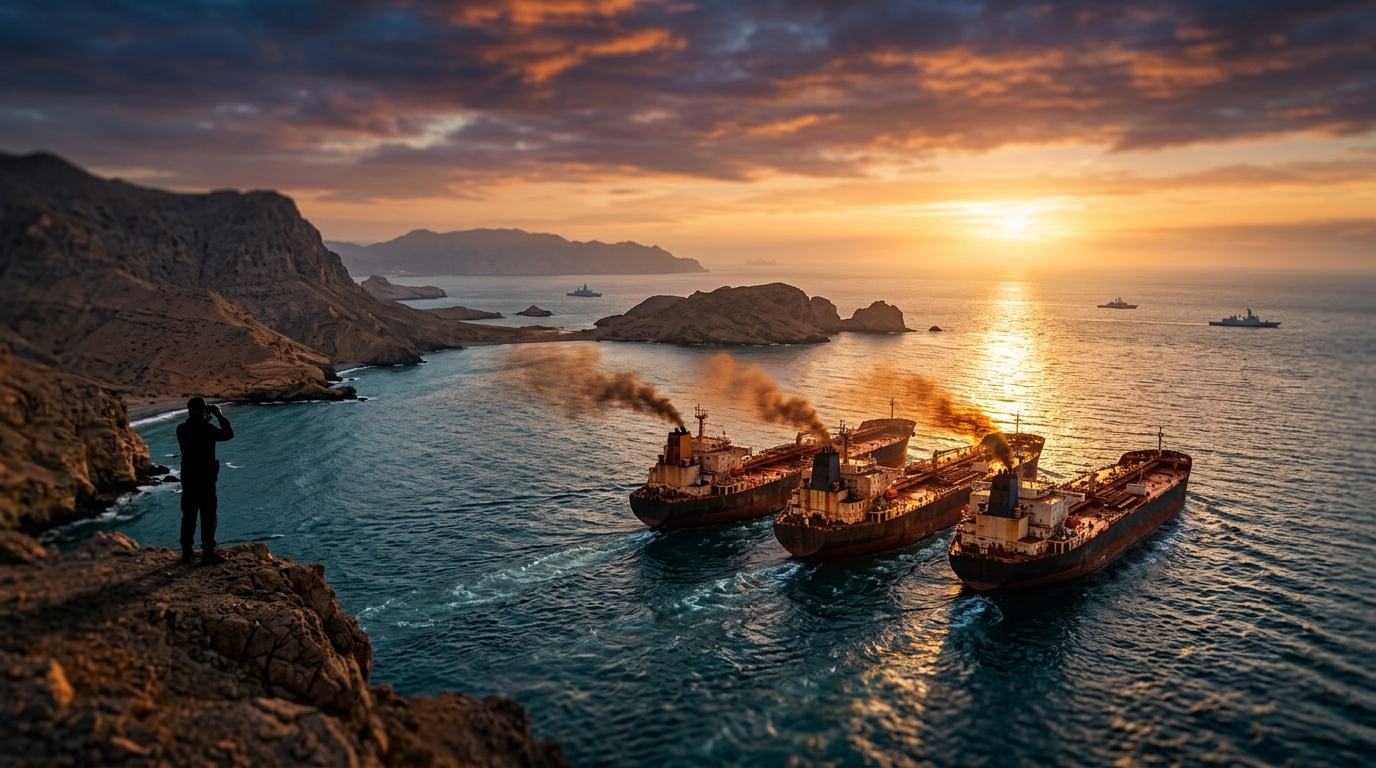
<p>On <strong>15 April 2026</strong>, three Iranian oil tankers – <strong>Deep Sea</strong>, <strong>Sonia I</strong> and <strong>Diona</strong> – carrying roughly <strong>five million barrels of crude</strong> became the first loaded vessels to navigate the <span class="key-term" data-definition="Strait of Hormuz — a narrow waterway between Oman and Iran that is a critical chokepoint for global oil shipments; its security is a key concern in international relations (GS3: Economy, GS2: Polity)">Strait of Hormuz</span> after the United States imposed a <span class="key-term" data-definition="U.S. blockade — a set of restrictions imposed by the United States to prevent the movement of sanctioned Iranian oil, reflecting the use of economic coercion in foreign policy (GS2: Polity, GS3: Economy)">U.S. blockade</span>. The movement was reported by maritime analytics firm <span class="key-term" data-definition="Kpler — a maritime data analytics firm that tracks vessel movements and provides real‑time information on global oil logistics (GS3: Economy)">Kpler</span> on <strong>17 April 2026</strong>.</p>
<h3>Key Developments</h3>
<ul>
<li>The three tankers departed from <span class="key-term" data-definition="Kharg Island — Iran’s principal oil export terminal in the Persian Gulf, where crude is loaded onto tankers for overseas shipment (GS3: Economy)">Kharg Island</span> after loading on <strong>2, 8 and 9 April 2026</strong> respectively.</li>
<li>All three vessels are subject to <span class="key-term" data-definition="U.S. sanctions — economic measures imposed by the United States to restrict trade and financial transactions with designated entities, often used to achieve geopolitical objectives (GS2: Polity, GS3: Economy)">U.S. sanctions</span>, limiting their access to Western insurance and financing.</li>
<li>The passage marks the first sanctioned Iranian crude shipment through the strategic waterway since the blockade became operational in early 2026.</li>
</ul>
<h3>Important Facts</h3>
<p>According to <span class="key-term" data-definition="Kpler — a maritime data analytics firm that tracks vessel movements and provides real‑time information on global oil logistics (GS3: Economy)">Kpler</span>, the three tankers together hold about <strong>5 million barrels</strong> of crude, representing a modest share of Iran’s total export capacity but a significant signal of Tehran’s intent to keep oil flowing despite pressure. The vessels are flagged under various registries, yet all are listed on the U.S. Treasury’s Specially Designated Nationals (SDN) list, meaning they cannot obtain standard maritime insurance from major providers.</p>
<h3>UPSC Relevance</h3>
<p>The episode illustrates several themes that recur in the UPSC syllabus: <br/>• <strong>Geopolitics of energy</strong> – control over the <span class="key-term" data-definition="Strait of Hormuz — a narrow waterway between Oman and Iran that is a critical chokepoint for global oil shipments; its security is a key concern in international relations (GS3: Economy, GS2: Polity)">Strait of Hormuz</span> influences global oil prices and can affect India’s energy security (GS3). <br/>• <strong>Sanctions regime</strong> – the use of <span class="key-term" data-definition="U.S. sanctions — economic measures imposed by the United States to restrict trade and financial transactions with designated entities, often used to achieve geopolitical objectives (GS2: Polity, GS3: Economy)">U.S. sanctions</span> as a tool of foreign policy demonstrates how economic coercion is employed to achieve strategic objectives (GS2). <br/>• <strong>Maritime monitoring</strong> – firms like <span class="key-term" data-definition="Kpler — a maritime data analytics firm that tracks vessel movements and provides real‑time information on global oil logistics (GS3: Economy)">Kpler</span> provide data that policymakers use to assess compliance and anticipate market impacts (GS3). <br/>• <strong>Implications for India</strong> – any disruption in oil flows through the Gulf can affect India’s import bills, balance of payments, and diplomatic posture towards both Iran and the United States (GS3, GS2).</p>
<h3>Way Forward</h3>
<p>Analysts suggest that India should continue to monitor the situation through diplomatic channels, maintain strategic petroleum reserves, and diversify import sources to mitigate supply shocks. Simultaneously, the government must balance its strategic partnership with the United States against its long‑standing energy ties with Iran, ensuring that any policy response aligns with broader foreign‑policy objectives and domestic energy security considerations.</p>