Loading page, please wait…
HomeCurrent AffairsEditorialsGovt SchemesLearning ResourcesUPSC SyllabusPricingAboutBest UPSC AIUPSC AI ToolAI for UPSCUPSC ChatGPT

© 2026 Vaidra. All rights reserved.

PrivacyTerms
Vaidra Logo
Vaidra

Top 4 items + smart groups

UPSC GPT
New
Current Affairs
Daily Solutions
Daily Puzzle
Mains Evaluator

Version 2.0.0 • Built with ❤️ for UPSC aspirants

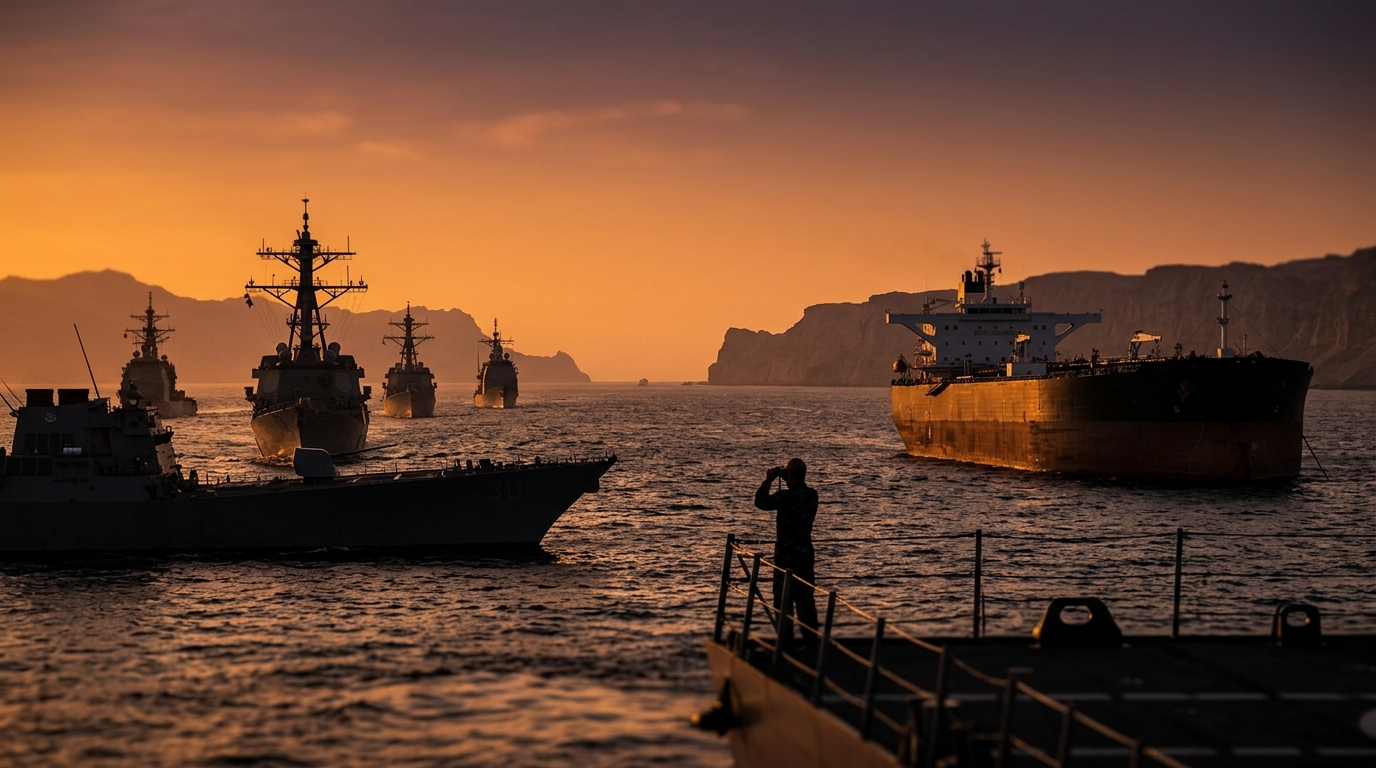
U.S. Naval Blockade of Strait of Hormuz Slashes Oil Tanker Transits – Global Energy Shock | GS2 UPSC Current Affairs April 2026
U.S. Naval Blockade of Strait of Hormuz Slashes Oil Tanker Transits – Global Energy Shock
Since late February 2026, the U.S. imposed a naval blockade on the Strait of Hormuz after strikes on Iran, sharply cutting oil tanker transits from about 130 vessels daily to just a few. The International Energy Agency warns the disruption rivals the 1970s oil shocks, underscoring its significance for global energy security and UPSC topics on geopolitics, economics, and maritime law.
Overview Since late February 2026 , the Strait of Hormuz has become the flashpoint of a deepening energy and security crisis. The tension escalated after President Donald Trump ordered a U.S. naval blockade of vessels bound for or from Iran . The move followed U.S. and Israeli strikes on Iranian targets, prompting Tehran to tighten restrictions on the waterway. Key Developments U.S. forces began intercepting and turning back commercial tankers heading to Iranian ports, effectively creating a blockade. The International Energy Agency (IEA) warned that the disruption is “more severe than the oil shocks of the 1970s.” Daily transits fell dramatically from roughly 130 vessels to only a handful on several days. A tentative cease‑fire in April 2026 allowed a limited number of ships to pass, but the threat of renewed hostilities keeps most tankers away. Important Facts The blockade has immediate repercussions for global energy flows . Oil prices spiked as markets reacted to the reduced supply route, echoing the price volatility experienced during the 1970s oil shocks . The IEA’s assessment underscores the strategic importance of the strait, which carries about 20 % of the world’s petroleum . Even a short‑term reduction in tanker traffic can ripple through economies dependent on oil imports. UPSC Relevance Understanding this crisis is vital for several UPSC dimensions: Geopolitics (GS2) : The incident illustrates how maritime chokepoints influence power dynamics in the Middle East and affect India’s energy security. Energy Economics (GS3) : The sharp decline in oil transit volumes demonstrates supply‑side shocks and their impact on global price stability. International Organisations (GS3) : The IEA’s role as a monitoring body highlights the importance of multilateral institutions in assessing and communicating energy risks. Security Studies (GS4) : The use of a naval blockade as a coercive instrument raises questions about the legality under international law and the doctrine of freedom of navigation. Way Forward Policymakers must balance immediate security concerns with long‑term energy stability. Potential steps include: Diplomatic engagement to sustain the cease‑fire and expand safe‑passage corridors. Diversifying oil import routes for India, such as increasing reliance on the Southern Sea‑Lanes and strategic petroleum reserves. Strengthening regional cooperation with Gulf Cooperation Council (GCC) members to mitigate supply disruptions. Monitoring IEA reports for real‑time data to inform domestic energy policy and price management. For UPSC aspirants, tracking the evolution of this crisis will aid in answering questions on energy security, maritime law, and international diplomatic strategies.
  1. Home
  2. Prepare
  3. Current Affairs
  4. U.S. Naval Blockade of Strait of Hormuz Slashes Oil Tanker Transits – Global Energy Shock
Login to bookmark articles
Login to mark articles as complete

Overview

gs.gs276% UPSC Relevance

US blockade of Hormuz threatens oil supply, testing India’s energy security and maritime law

Key Facts

  1. Late February 2026: US President ordered a naval blockade of vessels bound for or from Iran in the Strait of Hormuz.
  2. Daily oil‑tanker transits fell from about 130 vessels to single digits within weeks of the blockade.
  3. The Strait of Hormuz carries roughly 20% of the world’s petroleum trade.
  4. The International Energy Agency (IEA) warned the disruption is “more severe than the oil shocks of the 1970s.”
  5. A tentative cease‑fire in April 2026 permitted limited ship movements, but the threat of renewed hostilities persists.
  6. The blockade followed coordinated US‑Israeli strikes on Iranian strategic targets, heightening regional tensions.

Background & Context

The Hormuz crisis underscores how maritime chokepoints shape global geopolitics (GS2) and trigger supply‑side shocks that affect oil prices and inflation (GS3). It also highlights the role of multilateral bodies like the IEA in monitoring energy security and raises legal questions about the legitimacy of naval blockades under international law (GS4).

Mains Answer Angle

GS2 – Candidates can be asked to evaluate the implications of the Hormuz blockade for India’s energy security and to suggest policy measures to mitigate such geopolitical risks.

Full Article

<h3>Overview</h3> <p>Since <strong>late February 2026</strong>, the <span class="key-term" data-definition="Narrow waterway linking the Persian Gulf with the Gulf of Oman, through which a significant share of the world’s oil passes (GS3: Economy)">Strait of Hormuz</span> has become the flashpoint of a deepening energy and security crisis. The tension escalated after <span class="key-term" data-definition="45th President of the United States (2021‑2025), whose foreign‑policy decisions impact global geopolitics (GS2: Polity)">President Donald Trump</span> ordered a <span class="key-term" data-definition="Use of naval forces to prevent ships from entering or leaving ports, often employed as a coercive tool in international disputes (GS2: Polity)">U.S. naval blockade</span> of vessels bound for or from <span class="key-term" data-definition="Islamic Republic in the Middle East, a major oil‑producing nation and regional power (GS2: Polity)">Iran</span>. The move followed U.S. and Israeli strikes on Iranian targets, prompting Tehran to tighten restrictions on the waterway.</p> <h3>Key Developments</h3> <ul> <li>U.S. forces began intercepting and turning back commercial tankers heading to Iranian ports, effectively creating a blockade.</li> <li>The <span class="key-term" data-definition="Intergovernmental organization that monitors global energy markets and advises governments on policy (GS3: Economy)">International Energy Agency (IEA)</span> warned that the disruption is “more severe than the oil shocks of the 1970s.”</li> <li>Daily transits fell dramatically from roughly <strong>130 vessels</strong> to only a handful on several days.</li> <li>A tentative cease‑fire in <strong>April 2026</strong> allowed a limited number of ships to pass, but the threat of renewed hostilities keeps most tankers away.</li> </ul> <h3>Important Facts</h3> <p>The blockade has immediate repercussions for <strong>global energy flows</strong>. Oil prices spiked as markets reacted to the reduced supply route, echoing the price volatility experienced during the <span class="key-term" data-definition="Period of severe oil price increases in the 1970s that led to economic stagflation worldwide (GS3: Economy)">1970s oil shocks</span>. The IEA’s assessment underscores the strategic importance of the strait, which carries about <strong>20 % of the world’s petroleum</strong>. Even a short‑term reduction in tanker traffic can ripple through economies dependent on oil imports.</p> <h3>UPSC Relevance</h3> <p>Understanding this crisis is vital for several UPSC dimensions:</p> <ul> <li><strong>Geopolitics (GS2)</strong>: The incident illustrates how maritime chokepoints influence power dynamics in the Middle East and affect India’s energy security.</li> <li><strong>Energy Economics (GS3)</strong>: The sharp decline in oil transit volumes demonstrates supply‑side shocks and their impact on global price stability.</li> <li><strong>International Organisations (GS3)</strong>: The IEA’s role as a monitoring body highlights the importance of multilateral institutions in assessing and communicating energy risks.</li> <li><strong>Security Studies (GS4)</strong>: The use of a naval blockade as a coercive instrument raises questions about the legality under international law and the doctrine of freedom of navigation.</li> </ul> <h3>Way Forward</h3> <p>Policymakers must balance immediate security concerns with long‑term energy stability. Potential steps include:</p> <ul> <li>Diplomatic engagement to sustain the cease‑fire and expand safe‑passage corridors.</li> <li>Diversifying oil import routes for India, such as increasing reliance on the <em>Southern Sea‑Lanes</em> and strategic petroleum reserves.</li> <li>Strengthening regional cooperation with Gulf Cooperation Council (GCC) members to mitigate supply disruptions.</li> <li>Monitoring IEA reports for real‑time data to inform domestic energy policy and price management.</li> </ul> <p>For UPSC aspirants, tracking the evolution of this crisis will aid in answering questions on energy security, maritime law, and international diplomatic strategies.</p>
Read Original on hindu

Analysis

Practice Questions

GS2
Easy
Prelims MCQ

Strategic importance of the Strait of Hormuz

1 marks
3 keywords
GS3
Medium
Mains Short Answer

Energy security and oil price volatility

10 marks
4 keywords
GS2
Hard
Mains Essay

Maritime security, international law and energy geopolitics

25 marks
6 keywords
Related:Daily•Weekly

Loading related articles...

Loading related articles...

Tip: Click articles above to read more from the same date, or use the back button to see all articles.

Quick Reference

Key Insight

US blockade of Hormuz threatens oil supply, testing India’s energy security and maritime law

Key Facts

  1. Late February 2026: US President ordered a naval blockade of vessels bound for or from Iran in the Strait of Hormuz.
  2. Daily oil‑tanker transits fell from about 130 vessels to single digits within weeks of the blockade.
  3. The Strait of Hormuz carries roughly 20% of the world’s petroleum trade.
  4. The International Energy Agency (IEA) warned the disruption is “more severe than the oil shocks of the 1970s.”
  5. A tentative cease‑fire in April 2026 permitted limited ship movements, but the threat of renewed hostilities persists.
  6. The blockade followed coordinated US‑Israeli strikes on Iranian strategic targets, heightening regional tensions.

Background

The Hormuz crisis underscores how maritime chokepoints shape global geopolitics (GS2) and trigger supply‑side shocks that affect oil prices and inflation (GS3). It also highlights the role of multilateral bodies like the IEA in monitoring energy security and raises legal questions about the legitimacy of naval blockades under international law (GS4).

Mains Angle

GS2 – Candidates can be asked to evaluate the implications of the Hormuz blockade for India’s energy security and to suggest policy measures to mitigate such geopolitical risks.

Explore:Current Affairs·Editorial Analysis·Govt Schemes·Study Materials·Previous Year Questions·UPSC GPT