US Submarine Sinks Iranian Warship Near Sri Lanka – Implications for UNCLOS, EEZ & High Seas Treaty — UPSC Current Affairs | March 12, 2026
US Submarine Sinks Iranian Warship Near Sri Lanka – Implications for UNCLOS, EEZ & High Seas Treaty
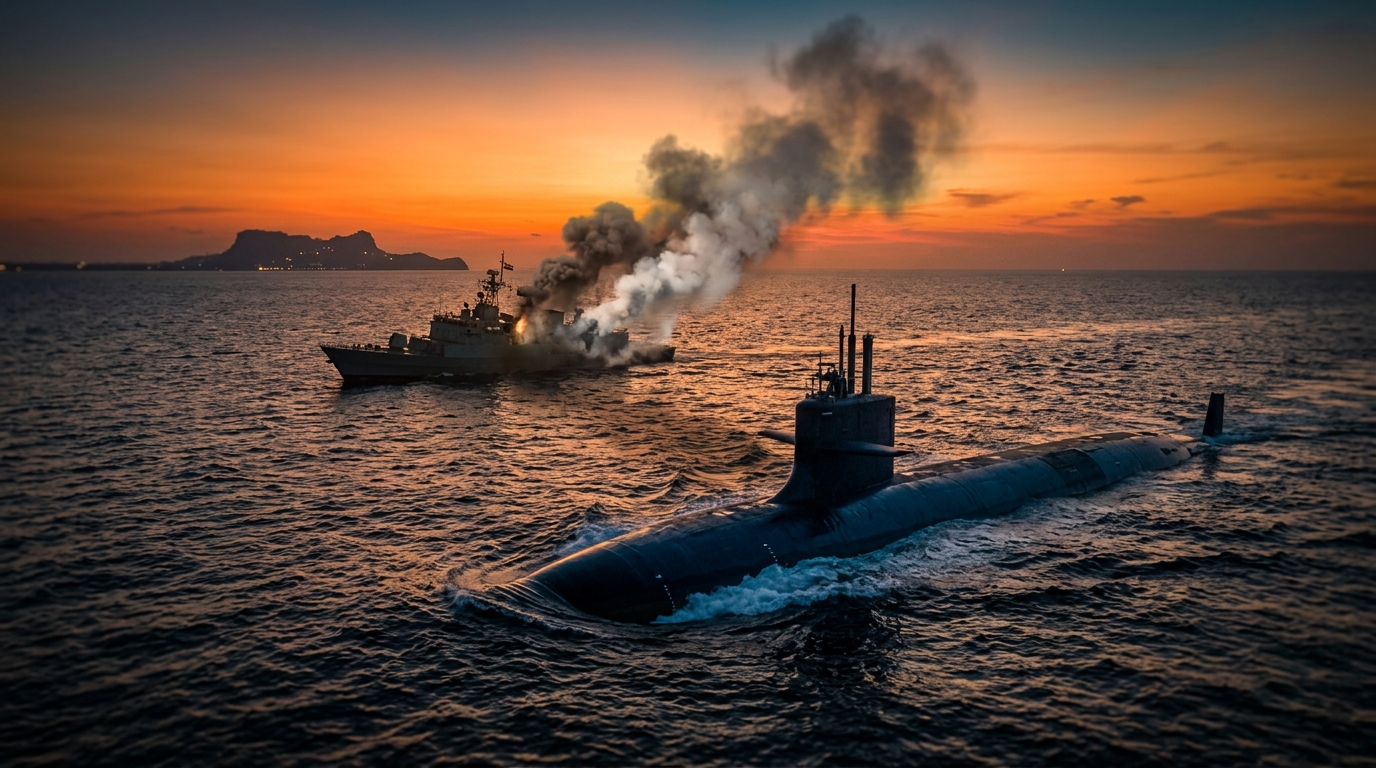
On 4 March 2026 a US submarine torpedoed the Iranian warship IRIS Dena near Sri Lanka, raising issues under the <span class="key-term" data-definition="UNCLOS — comprehensive treaty governing rights and duties of states in maritime zones (GS2: Polity)">UNCLOS</span> framework, especially the limits of territorial seas and EEZs. The incident underscores the relevance of maritime conventions such as the <span class="key-term" data-definition="High Seas Treaty — 2023 treaty to protect marine biodiversity beyond national jurisdiction (GS2: Polity)">High Seas Treaty</span>, SOLAS, and MARPOL for UPSC aspirants preparing for GS 2 and GS 1.
Overview On 4 March 2026 , a US submarine torpedoed the Iranian warship IRIS Dena off the coast of Sri Lanka, outside Sri Lanka’s maritime boundary. The vessel had just returned from the International Fleet Review and MILAN‑2026 , a multilateral naval exercise organised by the Indian Navy. The incident brings into focus the legal framework governing the seas, especially the UNCLOS and newer instruments such as the High Seas Treaty . Key Developments US submarine action raises questions on the applicability of law of naval warfare and whether a warship is a legitimate target. India, a signatory to UNCLOS , had ratified it in 1995, while the US remains a non‑signatory. The incident occurred in waters beyond Sri Lanka’s Territorial Sea , highlighting the relevance of the EEZ and high‑seas regime. India’s participation in the High Seas Treaty (signed on 25 Sept 2024) underscores its commitment to global ocean governance. Important Maritime Instruments UNCLOS defines the legal status of maritime zones: Territorial Sea : full sovereignty for the coastal state. EEZ : exclusive rights over natural resources. High seas (beyond EEZs) are open to all states for navigation, overflight, fishing, scientific research, and laying of under‑sea cables. Other key conventions: SOLAS : ensures safety of merchant vessels; India is a signatory. MARPOL : tackles ship‑borne pollution; India is a signatory. Ballast Water Management Convention : India has not yet ratified. UPSC Relevance Understanding maritime law is essential for GS 2 (International Relations) and GS 1 (Geography). Questions on UNCLOS , EEZ demarcation, and the High Seas Treaty have featured in recent UPSC papers. The US‑Iran naval incident can be used to test knowledge of the law of naval warfare and the distinction between peacetime and wartime maritime regimes. Way Forward India should expedite ratification of the Ballast Water Management Convention to strengthen its marine environmental credentials. Active participation in the implementation of the High Seas Treaty —especially in designating marine protected areas and conducting environmental impact assessments—will enhance India’s standing in global ocean governance. Regular monitoring of naval exercises like MILAN‑2026 can provide practical insights into the application of maritime law during peacetime collaborations.
Must Review
Login to bookmark articles
Login to mark articles as complete
Overview
US‑Iran naval clash challenges UNCLOS, EEZ rights and High‑Seas treaty – UPSC focus
Key Facts
4 March 2026: US submarine torpedoed Iranian warship IRIS Dena near Sri Lanka.
Incident occurred outside Sri Lanka’s 12‑nm territorial sea but within its 200‑nm EEZ.
India and Iran are parties to UNCLOS; the United States has signed but not ratified the convention.
High Seas Treaty (BBNJ Agreement) adopted in 2023; India ratified it on 25 Sept 2024.
India is a signatory to SOLAS (1974) and MARPOL (1973); it has not yet ratified the Ballast Water Management Convention.
MILAN‑2026, the 13th edition of the Indian‑hosted multilateral naval exercise, involved 74 countries.
The episode raises questions on the law of naval warfare and the legitimacy of targeting warships in another state’s EEZ.
Background & Context
The incident sits at the intersection of maritime law (UNCLOS), environmental governance (High‑Seas Treaty, SOLAS, MARPOL) and strategic geopolitics, all core to GS‑2 (International Relations) and GS‑3 (Environment & Biodiversity). It tests India’s ability to safeguard its EEZ rights while adhering to global ocean‑governance commitments.
UPSC Syllabus Connections
Essay•Environment and SustainabilityEssay•International Relations and GeopoliticsPrelims_GS•International Current AffairsGS3•Conservation, environmental pollution and degradationPrelims_GS•Ecology and BiodiversityPrelims_GS•Public Policy and Rights IssuesPrelims_GS•Environmental Issues and Climate ChangeGS4•Ethical issues in international relations and fundingPrelims_GS•Physical Geography of IndiaPrelims_GS•World Geography
Mains Answer Angle
In a Mains answer, discuss how the US‑Iran clash underscores the need for robust EEZ enforcement, adherence to UNCLOS norms, and proactive participation in the High‑Seas Treaty – a typical GS‑2/GS‑3 question on maritime security and environmental diplomacy.