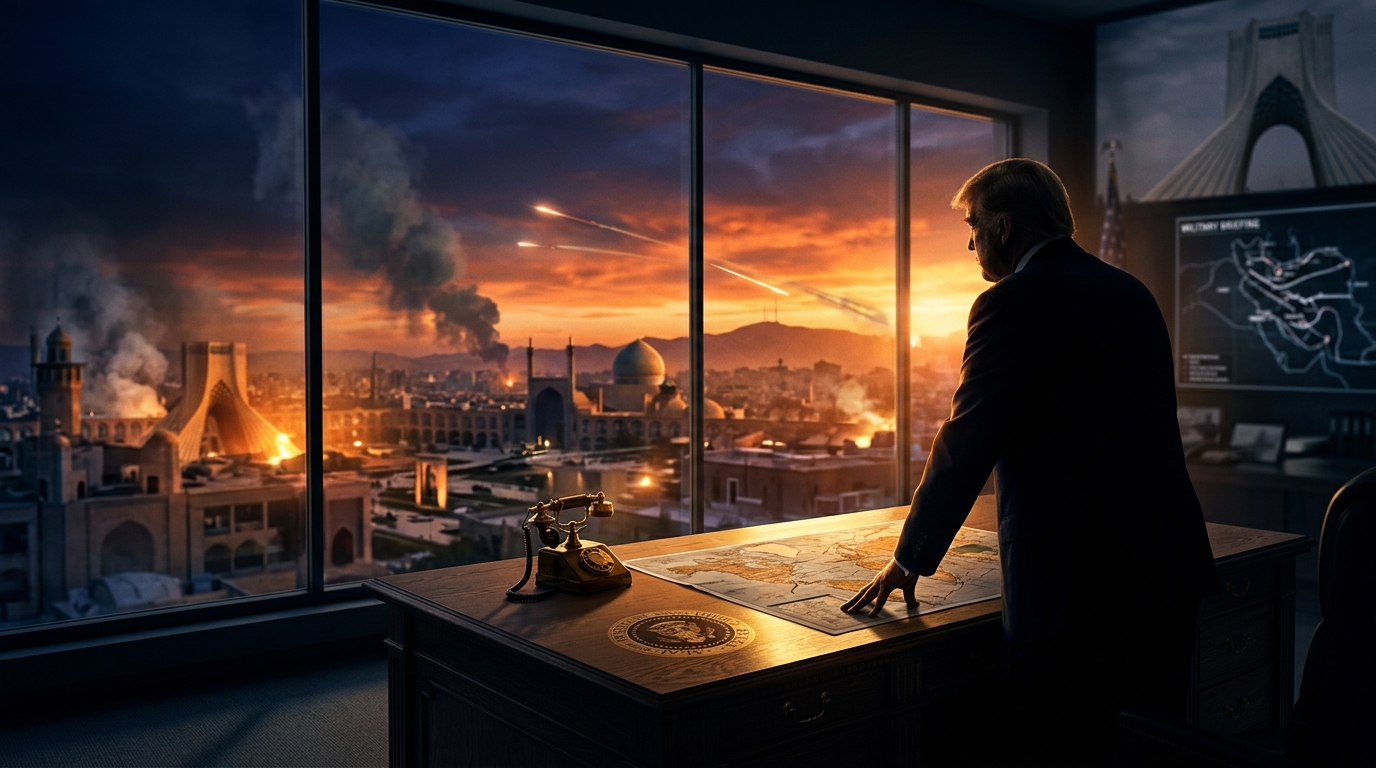
The United States, in coordination with Israel, escalated aerial and naval attacks on Iran on 10 March 2026, marking the most intense day of strikes since the conflict began over ten days ago. Pentagon officials said the campaign will continue as long as Donald Trump decides, underscoring the central role of executive discretion in foreign‑policy execution.
Key Developments
- Defense Secretary Pete Hegseth announced that today’s operations constitute the "most intense day of strikes inside Iran".
- Trump was described as the "throttle controller" of the war, with no public indication of whether the conflict is at its beginning, middle, or end.
- U.S. forces targeted Iran's navy using artillery, fighter jets, bombers, and sea‑launched missiles.
- Iran vowed to block all oil exports via the Gulf for the war’s duration; Trump warned of "death, fire, and fury" if Tehran interferes with crude shipments.
- U.S. troops are hunting mine‑laying vessels and mine‑storage facilities to prevent maritime disruption.
- Iran allegedly moved rocket launchers into civilian areas, including near schools and hospitals, to deter U.S. strikes.
- An earlier strike hit an elementary school in Minab, reportedly killing over 150 people; Trump suggested Iran might have fired a Tomahawk missile, a claim disputed by Iran.
Important Facts
- Conflict involves a U.S.-Israeli war against the Islamic Republic of Iran.
- Strategic objectives include crippling Iran’s naval capabilities and securing uninterrupted oil flow through the Persian Gulf.
- Civilian casualties have risen sharply, raising international humanitarian concerns.
Exam Relevance
This development touches upon multiple GS papers: GS2 (Polity & International Relations) – understanding US‑Iran dynamics, executive control of war, and alliance politics; GS3 (Economy) – implications for global oil markets and maritime trade; and GS4 (Ethics) – civilian protection in armed conflict and the legality of targeting civilian infrastructure.
Way Forward
For policymakers, the immediate priority is de‑escalation to prevent further civilian loss and safeguard energy supplies. Diplomatic channels, possibly via the United Nations, should be activated to mediate a cease‑fire. Long‑term, India and other regional players must monitor the impact on oil prices and maritime security, while preparing contingency plans for any disruption in Gulf shipping lanes.