Loading page, please wait…
HomeCurrent AffairsEditorialsGovt SchemesLearning ResourcesUPSC SyllabusPricingAboutBest UPSC AIUPSC AI ToolAI for UPSCUPSC ChatGPT

© 2026 Vaidra. All rights reserved.

PrivacyTerms
Vaidra Logo
Vaidra

Top 4 items + smart groups

UPSC GPT
New
Current Affairs
Daily Solutions
Daily Puzzle
Mains Evaluator

Version 2.0.0 • Built with ❤️ for UPSC aspirants

प्राचीन व्यापार मार्ग – Silk Road, Tea‑Horse Road, Grand Trunk, Incense & Spice – UPSC Overview | GS1 UPSC Current Affairs April 2026
प्राचीन व्यापार मार्ग – Silk Road, Tea‑Horse Road, Grand Trunk, Incense & Spice – UPSC Overview
प्राचीन व्यापार मार्ग—जिसमें Silk Road, Tea‑Horse Road, Grand Trunk Road, Incense Route और Spice Route शामिल हैं—ने भारत को मध्य एशिया, मध्य पूर्व और यूरोप से जोड़ा, वस्तुओं, विचारों और धर्मों को एक सहस्राब्दी से अधिक समय तक ले जाता रहा। इनके उद्भव Han और Tang जैसी राजवंशों के तहत, Mongol Empire के तहत शिखर, और समुद्री मार्गों के उदय के साथ अंत, UPSC इतिहास और भूगोल के लिए महत्वपूर्ण हैं, जो व्यापार और सांस्कृतिक आदान‑प्रदान पर भूगोल के स्थायी प्रभाव को दर्शाते हैं।
Ancient Trade Routes that Shaped Civilisations Long before modern highways and shipping lanes, a series of overland and maritime corridors linked the Indian sub‑continent with Central Asia, the Middle East and Europe. These routes moved not only commodities such as silk, tea, spices and incense, but also ideas, religions and technologies, leaving a lasting imprint on world history and on the UPSC syllabus. Key Developments Silk Road – Originated under the Han dynasty in the 2nd century BCE. Connected Chang’an with Rome, passing through Central Asian hubs like Samarkand and Bukhara, and Indian nodes such as Taxila and Peshawar. Peaked under the Mongol Empire , and declined after 15th‑century sea routes emerged. Tea Horse Road – A mountainous network that began in southwest China (Dali, Lijiang) and reached Lhasa, then branched into India, Nepal and Bangladesh. The route facilitated the exchange of tea for horses, a critical military resource for China. Its origin dates to the Tang dynasty (618‑907 CE) and is documented by Buddhist monk Yijing . Grand Trunk Road – Built by Sher Shah Suri as the Shahi Road, later renamed by the British. Extends over 2,500 km from Bengal to Peshawar, and today runs from Chittagong (Bangladesh) to Kabul (Afghanistan). Recognised by UNESCO as a heritage corridor. Incense (Caravan) Route – Originated in ancient Yemen, transporting frankincense and myrrh from the Arabian Peninsula to the Mediterranean. Developed from the 2nd millennium BCE to the 6th century CE, it fostered early urbanisation in South Arabia. Spice Route – Linked the pepper‑growing Western Ghats of Kerala with ports on the Malabar Coast. At its height, the port of Muziris (now in Kerala)
  1. Home
  2. Prepare
  3. Current Affairs
  4. प्राचीन व्यापार मार्ग – Silk Road, Tea‑Horse Road, Grand Trunk, Incense & Spice – UPSC Overview
Login to bookmark articles
Login to mark articles as complete

Overview

gs.gs176% UPSC Relevance

Ancient trade corridors underpin today’s India‑Eurasia connectivity and UPSC relevance.

Key Facts

  1. Silk Road was formalised under the Han dynasty in the 2nd century BCE, linking Chang’an with Rome via Central Asian hubs.
  2. The Silk Road remained active for about 15 centuries, peaking under the 13th‑century Mongol Empire and declining after 15th‑century sea routes.
  3. Tea‑Horse Road originated in the Tang dynasty, traversed elevations up to 10,000 ft and required porters to carry loads of up to 150 kg of tea.
  4. Grand Trunk Road, built by Sher Shah Suri in the 16th century as the Shahi Road, stretches over 2,500 km from Bengal to Peshawar and is a UNESCO heritage corridor.
  5. Incense (Caravan) Route began in ancient Yemen, moving frankincense and myrrh from the 2nd millennium BCE to the 6th century CE Mediterranean world.
  6. Spice Route connected the pepper‑rich Western Ghats of Kerala with the Malabar ports; Muziris attracted Roman, Arab and Chinese merchants, earning pepper the title “king of spices”.

Background & Context

These corridors illustrate how geography shaped ancient economies, facilitated the diffusion of religions, technologies and commodities, and laid the foundation for trans‑regional interactions. In the UPSC syllabus they intersect with GS‑1 (ancient‑medieval history), GS‑2 (geography of trade corridors) and IR (historical roots of contemporary connectivity initiatives).

UPSC Syllabus Connections

GS2•India and its neighborhood relationsPrelims_GS•Ancient IndiaEssay•Education, Knowledge and CultureGS1•Significant events, personalities and issues from mid-18th century to presentGS3•Major crops, cropping patterns, irrigation and agricultural producePrelims_GS•Social and Economic Geography of IndiaGS1•Distribution of Key Natural ResourcesEssay•Economy, Development and InequalityGS3•Infrastructure - Energy, Ports, Roads, Airports, RailwaysGS1•Salient features of World's Physical Geography

Mains Answer Angle

In a Mains answer, candidates can analyse the role of ancient trade routes in cultural diffusion and link it to modern initiatives like the International North‑South Transport Corridor, addressing GS‑1 (historical impact) and GS‑2 (economic geography).
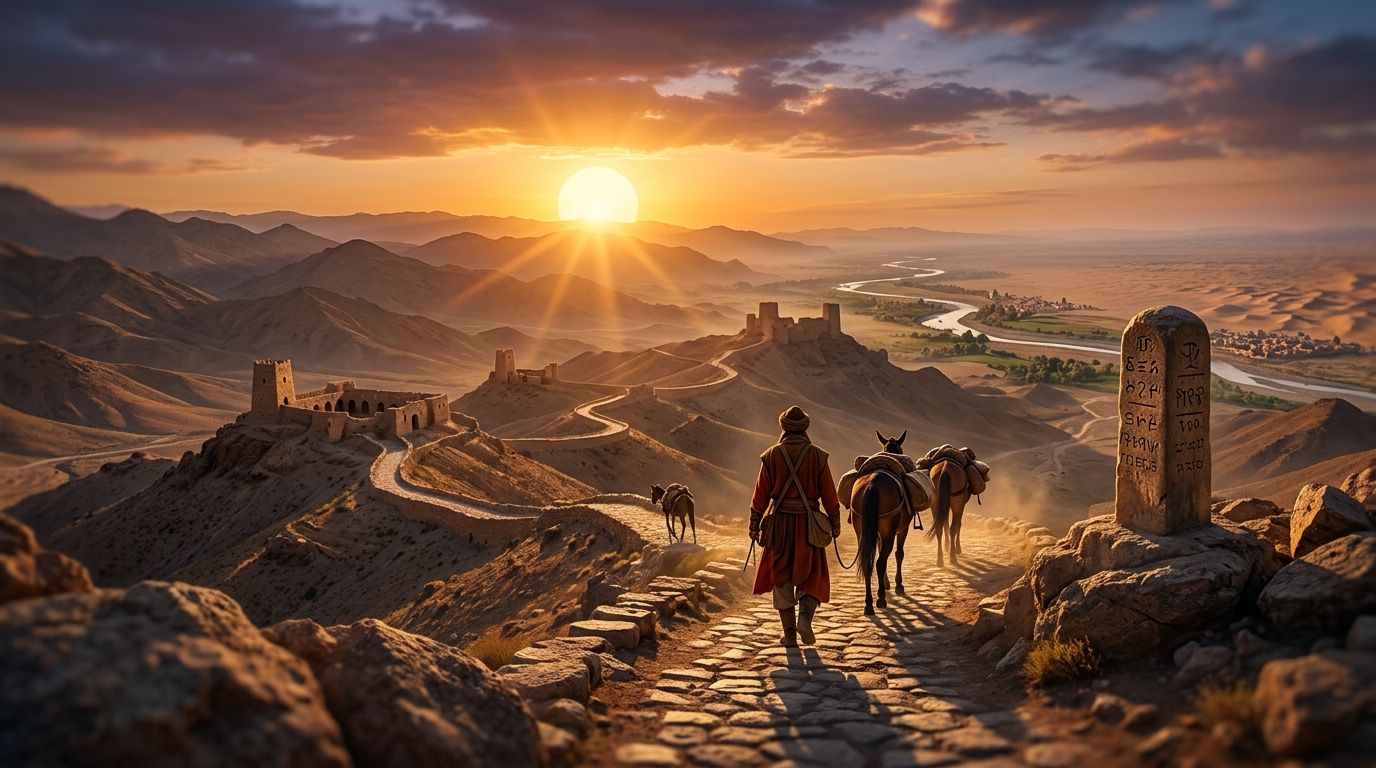
Full Article

<h2>Ancient Trade Routes that Shaped Civilisations</h2> <p>Long before modern highways and shipping lanes, a series of overland and maritime corridors linked the Indian sub‑continent with Central Asia, the Middle East and Europe. These routes moved not only commodities such as silk, tea, spices and incense, but also ideas, religions and technologies, leaving a lasting imprint on world history and on the UPSC syllabus.</p> <h3>Key Developments</h3> <ul> <li><strong>Silk Road</strong> – Originated under the <span class="key-term" data-definition="Han dynasty — Chinese imperial dynasty (206 BCE–220 CE) under which the Silk Road was formalised by Emperor Wudi, marking early Indo‑Eurasian connectivity (GS1: History)">Han dynasty</span> in the 2nd century BCE. Connected <span class="key-term" data-definition="Chang’an (modern Xi’an) – capital of the Western Han, the western terminus of the Silk Road (GS1: History)">Chang’an</span> with Rome, passing through Central Asian hubs like Samarkand and Bukhara, and Indian nodes such as Taxila and Peshawar. Peaked under the <span class="key-term" data-definition="Mongol Empire — 13th‑century empire that unified much of Eurasia, boosting Silk Road trade by providing security across vast territories (GS1: History)">Mongol Empire</span>, and declined after 15th‑century sea routes emerged.</li> <li><strong>Tea Horse Road</strong> – A mountainous network that began in southwest China (Dali, Lijiang) and reached Lhasa, then branched into India, Nepal and Bangladesh. The route facilitated the exchange of tea for horses, a critical military resource for China. Its origin dates to the Tang dynasty (618‑907 CE) and is documented by Buddhist monk <span class="key-term" data-definition="Yijing – Tang‑era monk whose travelogues provide early evidence of Tea‑Horse trade (GS1: History)">Yijing</span>.</li> <li><strong>Grand Trunk Road</strong> – Built by <span class="key-term" data-definition="Sher Shah Suri – 16th‑century ruler who constructed the Shahi Road linking the Indus to Bengal (GS1: History, GS2: Polity)">Sher Shah Suri</span> as the Shahi Road, later renamed by the British. Extends over 2,500 km from Bengal to Peshawar, and today runs from Chittagong (Bangladesh) to Kabul (Afghanistan). Recognised by <span class="key-term" data-definition="UNESCO — United Nations Educational, Scientific and Cultural Organization, which designates world heritage sites and recognises historic routes like the Grand Trunk Road (GS3: International Relations)">UNESCO</span> as a heritage corridor.</li> <li><strong>Incense (Caravan) Route</strong> – Originated in ancient Yemen, transporting frankincense and myrrh from the Arabian Peninsula to the Mediterranean. Developed from the 2nd millennium BCE to the 6th century CE, it fostered early urbanisation in South Arabia.</li> <li><strong>Spice Route</strong> – Linked the pepper‑growing Western Ghats of Kerala with ports on the Malabar Coast. At its height, the port of Muziris (now in Kerala)
Read Original on indianexpress

Analysis

Practice Questions

Prelims
Easy
Prelims MCQ

सिल्क रोड – मंगोल साम्राज्य के तहत शिखर

1 marks
4 keywords
GS1
Medium
Mains Short Answer

ग्रैंड ट्रंक रोड – राजनीतिक एकीकरण

10 marks
5 keywords
GS2
Hard
Mains Essay

आधुनिक भू-राजनीति पर प्राचीन व्यापार मार्गों की विरासत

25 marks
5 keywords
Related:Daily•Weekly

Loading related articles...

Loading related articles...

Tip: Click articles above to read more from the same date, or use the back button to see all articles.

Quick Reference

Key Insight

Ancient trade corridors underpin today’s India‑Eurasia connectivity and UPSC relevance.

Key Facts

  1. Silk Road was formalised under the Han dynasty in the 2nd century BCE, linking Chang’an with Rome via Central Asian hubs.
  2. The Silk Road remained active for about 15 centuries, peaking under the 13th‑century Mongol Empire and declining after 15th‑century sea routes.
  3. Tea‑Horse Road originated in the Tang dynasty, traversed elevations up to 10,000 ft and required porters to carry loads of up to 150 kg of tea.
  4. Grand Trunk Road, built by Sher Shah Suri in the 16th century as the Shahi Road, stretches over 2,500 km from Bengal to Peshawar and is a UNESCO heritage corridor.
  5. Incense (Caravan) Route began in ancient Yemen, moving frankincense and myrrh from the 2nd millennium BCE to the 6th century CE Mediterranean world.
  6. Spice Route connected the pepper‑rich Western Ghats of Kerala with the Malabar ports; Muziris attracted Roman, Arab and Chinese merchants, earning pepper the title “king of spices”.

Background

These corridors illustrate how geography shaped ancient economies, facilitated the diffusion of religions, technologies and commodities, and laid the foundation for trans‑regional interactions. In the UPSC syllabus they intersect with GS‑1 (ancient‑medieval history), GS‑2 (geography of trade corridors) and IR (historical roots of contemporary connectivity initiatives).

UPSC Syllabus

  • GS2 — India and its neighborhood relations
  • Prelims_GS — Ancient India
  • Essay — Education, Knowledge and Culture
  • GS1 — Significant events, personalities and issues from mid-18th century to present
  • GS3 — Major crops, cropping patterns, irrigation and agricultural produce
  • Prelims_GS — Social and Economic Geography of India
  • GS1 — Distribution of Key Natural Resources
  • Essay — Economy, Development and Inequality
  • GS3 — Infrastructure - Energy, Ports, Roads, Airports, Railways
  • GS1 — Salient features of World's Physical Geography
Explore:Current Affairs·Editorial Analysis·Govt Schemes·Study Materials·Previous Year Questions·UPSC GPT

Mains Angle

In a Mains answer, candidates can analyse the role of ancient trade routes in cultural diffusion and link it to modern initiatives like the International North‑South Transport Corridor, addressing GS‑1 (historical impact) and GS‑2 (economic geography).