Loading page, please wait…
HomeCurrent AffairsEditorialsGovt SchemesLearning ResourcesUPSC SyllabusPricingAboutBest UPSC AIUPSC AI ToolAI for UPSCUPSC ChatGPT

© 2026 Vaidra. All rights reserved.

PrivacyTerms
Vaidra Logo
Vaidra

Top 4 items + smart groups

UPSC GPT
New
Current Affairs
Daily Solutions
Daily Puzzle
Mains Evaluator

Version 2.0.0 • Built with ❤️ for UPSC aspirants

Supreme Court to Hold Rajasthan, MP, UP Officials Vicariously Liable for Damage in Chambal Sanctuary — UPSC Current Affairs | March 20, 2026
Supreme Court to Hold Rajasthan, MP, UP Officials Vicariously Liable for Damage in Chambal Sanctuary
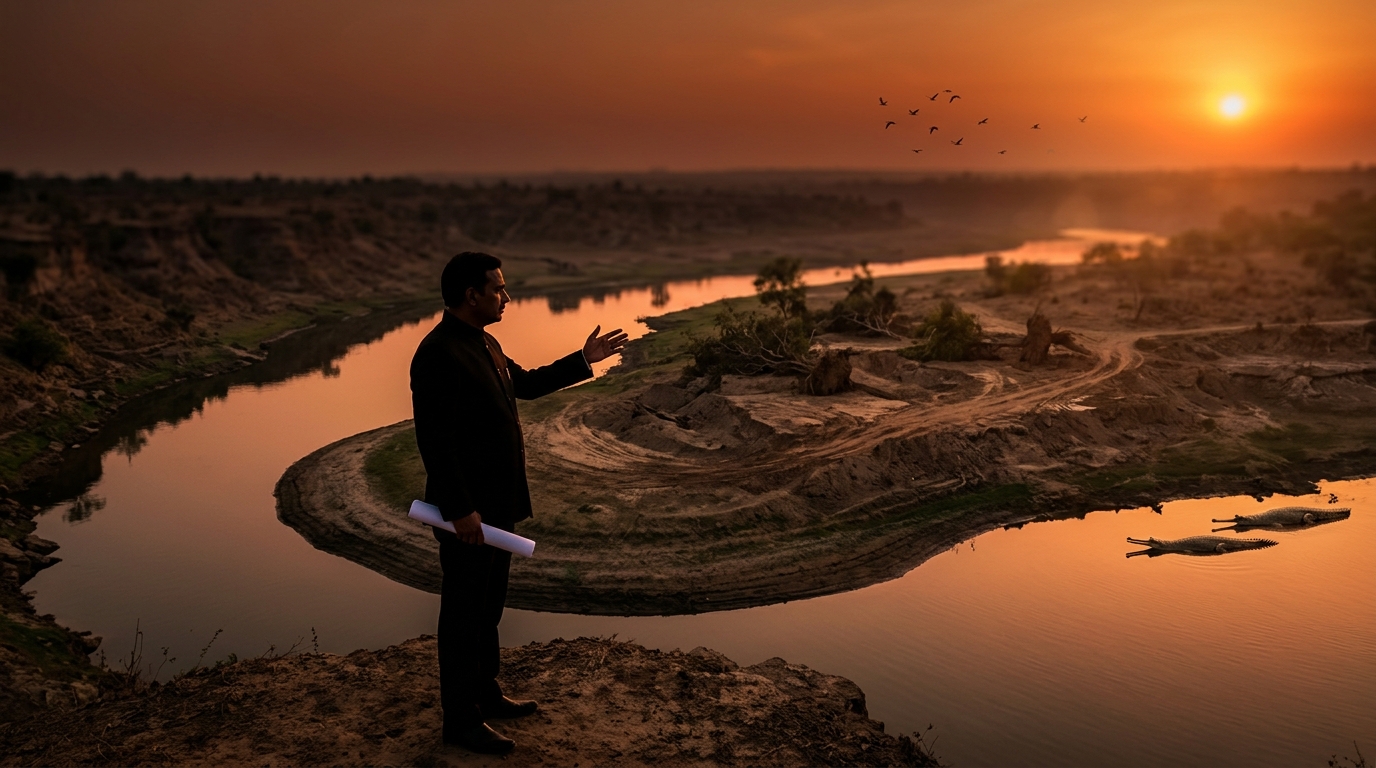
On 21 March 2026, the Supreme Court, hearing a suo motu case, signalled that officials of Rajasthan, Madhya Pradesh and Uttar Pradesh could be held vicariously liable for habitat destruction in the National Chambal Sanctuary caused by illegal sand mining. The move underscores judicial activism in environmental governance and highlights key concepts like vicarious liability and federal‑state accountability, crucial for UPSC preparation.
Overview The Supreme Court on 21 March 2026 expressed its intent to hold state officials from Rajasthan , Madhya Pradesh and Uttar Pradesh vicariously liable for the degradation of wildlife habitats in the National Chambal Sanctuary . The bench, comprising Justices Vikram Nath and Justice Sandeep Mehta , is hearing a suo motu case concerning rampant illegal sand mining . Key Developments The Court will consider imposing vicarious liability on state officials for failure to curb sand mining. Petitioners allege that the officials’ "lethargy and inaction" have led to irreversible damage to the sanctuary’s wildlife habitat . The bench has directed the concerned state governments to submit a detailed action plan within four weeks. Important Facts The sanctuary spans parts of Rajasthan, Madhya Pradesh and Uttar Pradesh, covering approximately 500 sq km . Over the past two years, satellite imagery shows a 30% increase in sand extraction sites, leading to riverbank erosion and loss of nesting grounds for the critically endangered Gharial . The Supreme Court’s intervention follows multiple complaints filed by environmental NGOs and local communities. UPSC Relevance This case touches upon several core areas of the UPSC syllabus: Environmental Governance : Role of judiciary in enforcing environmental laws (e.g., Wildlife Protection Act, 1972 ). Federal Structure : Interaction between central judiciary and state executive machinery. Legal Concepts : Understanding of vicarious liability and suo motu powers. Conservation Challenges : Impact of unregulated mining on river ecosystems and biodiversity. Way Forward For aspirants, it is essential to monitor the Court’s final order and subsequent state actions. Key steps likely to be recommended include: Strengthening the enforcement machinery of the State Forest Departments and Water Resources Boards . Introducing a transparent licensing regime for sand extraction, with periodic audits. Community‑based monitoring through People’s Courts or local NGOs. Integrating the sanctuary’s management plan with the National River Conservation Plan . Understanding this development helps candidates answer questions on environmental jurisprudence, federal‑state relations, and sustainable resource management.
  1. Home
  2. Prepare
  3. Current Affairs
  4. Supreme Court to Hold Rajasthan, MP, UP Officials Vicariously Liable for Damage in Chambal Sanctuary
Must Review
Login to bookmark articles
Login to mark articles as complete

Overview

Supreme Court to hold state officials vicariously liable for sand‑mining damage in Chambal

Key Facts

  1. Supreme Court, on 21 March 2026, issued a suo motu notice on illegal sand mining in the National Chambal Sanctuary.
  2. The bench comprising Justices Vikram Nath and Sandeep Mehta may impose vicarious liability on officials of Rajasthan, Madhya Pradesh and Uttar Pradesh.
  3. National Chambal Sanctuary spans ~500 sq km across the three states; satellite data shows a 30% rise in sand‑extraction sites over the last two years.
  4. Petitioners allege violation of the Wildlife Protection Act, 1972 and the National River Conservation Plan.
  5. The Court directed the three state governments to submit a detailed anti‑mining action plan within four weeks.

Background & Context

The case underscores the judiciary’s proactive role in environmental governance, linking constitutional duty (Article 48A) with statutory frameworks like the Wildlife Protection Act. It also highlights federal‑state dynamics where central courts can hold state executives accountable for ecological degradation.

UPSC Syllabus Connections

Prelims_GS•Ecology and Biodiversity

Mains Answer Angle

GS‑II (Environment & Ecology) – Discuss the effectiveness of judicial interventions in curbing illegal mining and protecting riverine biodiversity, using the Chambal case as a reference.

Full Article

Read Original on livelaw

Analysis

Practice Questions

GS1
Easy
Prelims MCQ

Legal concepts – vicarious liability

1 marks
3 keywords
GS2
Medium
Mains Short Answer

Environmental governance – judicial interventions

5 marks
4 keywords
GS2
Hard
Mains Essay

Environmental jurisprudence & federal‑state relations

25 marks
5 keywords
Related:Daily•Weekly

Loading related articles...

Loading related articles...

Tip: Click articles above to read more from the same date, or use the back button to see all articles.

Explore:Current Affairs·Editorial Analysis·Govt Schemes·Study Materials·Previous Year Questions·UPSC GPT